Reason links to this report in the Atlanta paper about the next big thing - liability claims against soda makers.
I thought I was an expert on Big Macs, but I have even more experience drinking Coca-Cola. My opinion? The cola marketing has no effect on anyone, so I suggest that you have a Coke and a smile.
Wednesday, November 30, 2005


After-acquired evidence as a defense to the merits in employment contract cases
According to this post from one of the Branham & Day blogs, the Tennessee Supreme Court held in Teter v. Republic Parking System, Inc., that after-acquired evidence can be presented as a defense to the merits of a claim for breach of an employment contract, but the burden of proof is on the employer.
What this means is that where the employee can only be fired "for cause," even if the cause the employer had in mind is insufficient or can't be proven, the employer can take discovery to find some other cause that it didn't even know about at the time of the dismissal.
I have argued for something similar under Virginia law, citing some old cases. At one hearing, the other lawyer argued, oh, those cases are old. The judge asked whether counsel believed that the age of enlightenment had reached the Supreme Court of Virginia only some time after those cases were decided.
What this means is that where the employee can only be fired "for cause," even if the cause the employer had in mind is insufficient or can't be proven, the employer can take discovery to find some other cause that it didn't even know about at the time of the dismissal.
I have argued for something similar under Virginia law, citing some old cases. At one hearing, the other lawyer argued, oh, those cases are old. The judge asked whether counsel believed that the age of enlightenment had reached the Supreme Court of Virginia only some time after those cases were decided.
On the writers and the Baseball Hall of Fame
This column from the Norfolk paper explains that the ballot for this the last year when the baseball writers could vote in Pete Rose to the Baseball Hall of Fame does not have his name on it, and so he's left with the veterans if he is to ever get into the Hall.
Some of my friends are passionate about Pete, I am not. Years ago, there was a Pizzeria Uno on King Street in Old Town Alexandria, and upstairs they had a life-sized picture of Pete from the 1975 World Series, with one arm slung around Fred Lynn of the Red Sox, happy as a clam, and with the other hand giving the photographer the finger. That sums him up for me: great baseball man, poor impulse control.
Among those who actually are on the ballot, with not much chance of success, is Dave Parker, who would get my vote just for his throw from right field to home plate during the 1979 All-Star game in the Seattle Kingdome that was shown every week during the closing credits of Mel Allen's This Week in Baseball, with that great violin and horn music in the background (a six second snippet of which can be heard here, where they are selling it for downloading to cellphones). He did it in slow motion, a strike from 300 feet, every Saturday.
Some of my friends are passionate about Pete, I am not. Years ago, there was a Pizzeria Uno on King Street in Old Town Alexandria, and upstairs they had a life-sized picture of Pete from the 1975 World Series, with one arm slung around Fred Lynn of the Red Sox, happy as a clam, and with the other hand giving the photographer the finger. That sums him up for me: great baseball man, poor impulse control.
Among those who actually are on the ballot, with not much chance of success, is Dave Parker, who would get my vote just for his throw from right field to home plate during the 1979 All-Star game in the Seattle Kingdome that was shown every week during the closing credits of Mel Allen's This Week in Baseball, with that great violin and horn music in the background (a six second snippet of which can be heard here, where they are selling it for downloading to cellphones). He did it in slow motion, a strike from 300 feet, every Saturday.
You're doing a great job, Brownie?
I never knew or had forgotten until I read this Post article on the McConnell-Deeds race that the head of the State Board of Elections in Virginia is named Michael Brown.
On my youthful appearance
I am 41, and have greying hair, but people think I am younger.
A while back, someone called me to help them out with a small project, because they had been told by their regular lawyer that I was "the expert."
When we met, the client contact was surprised by my appearance. You're not at all what I expected, the contact said, I thought you were about 60.
Perhaps they were expecting "the expert" to look more like this.
A while back, someone called me to help them out with a small project, because they had been told by their regular lawyer that I was "the expert."
When we met, the client contact was surprised by my appearance. You're not at all what I expected, the contact said, I thought you were about 60.
Perhaps they were expecting "the expert" to look more like this.
On the efficacy of federal mandatory minimum sentences
The Roanoke Times reports here: "A Roanoke County man who ordered child pornography through the mail was sentenced Tuesday to 15 years in prison, the mandatory minimum for a previously convicted child molester. But U.S. District Court Judge James Turk told prosecutors that he would have levied a lighter sentence if he could, because he was unconvinced that Dennis Marco Mills, 48, had molested more children since his last conviction."
An expert for the government testified "that watching child pornography is the first rung on a ladder to molesting again." The U.S. Attorney argued "that someone would get a life sentence . . . and that the prosecution hoped it was Mills, a three-time convicted sex offender, rather than some future victim of his."
This is an interesting case, as the issues raised go the heart of what is sentencing all about. To what extent is the goal of sentencing to punish the accused for what he has done, as opposed to preventing him from doing what he might do? Also, the case is interesting from the point of view of mandatory minimum sentences, fixed by the legislature. From Judge Turk's comments, it appears that reasonable minds could disagree widely as to what sentence is appropriate in this case. Is society better served when the legislature makes a blanket decision about the minimum jail time for such cases, or should someone in the position of the judge be able to fashion an appropriate sentence based on the particular evidence in each individual case?
An expert for the government testified "that watching child pornography is the first rung on a ladder to molesting again." The U.S. Attorney argued "that someone would get a life sentence . . . and that the prosecution hoped it was Mills, a three-time convicted sex offender, rather than some future victim of his."
This is an interesting case, as the issues raised go the heart of what is sentencing all about. To what extent is the goal of sentencing to punish the accused for what he has done, as opposed to preventing him from doing what he might do? Also, the case is interesting from the point of view of mandatory minimum sentences, fixed by the legislature. From Judge Turk's comments, it appears that reasonable minds could disagree widely as to what sentence is appropriate in this case. Is society better served when the legislature makes a blanket decision about the minimum jail time for such cases, or should someone in the position of the judge be able to fashion an appropriate sentence based on the particular evidence in each individual case?
Tuesday, November 29, 2005
Warner grants clemency to Lovitt
The AP is reporting that earlier this afternoon, Governor Warner granted clemency in the case of Robin Lovitt, who was scheduled to be executed this week for a murder committed in 1998.
This is the case where the court clerk is accused of throwing out part of the evidence which could have exonerated the defendant (or not) if it was available for modern DNA testing today.
This is the case where the court clerk is accused of throwing out part of the evidence which could have exonerated the defendant (or not) if it was available for modern DNA testing today.
Judge Conrad substitutes U.S. as sole defendant in defamation case against Rep. Rahal
In Chapman v. Rahall, Judge Conrad of the W.D. Va. ruled that the United States was the sole proper defendant for the claims against West Virginia Congressman Nick Rahall for stuff he said on TV about the plaintiff, under the Federal Tort Claims Act as amended by the Westfall Act.
This outcome likely does in the plaintiff, either because of failure to exhaust administrative remedies for an FTCA claim or because of the intentional act exclusions to the liability of the United States under the FTCA.
Interesting that there was no discussion of the constitutional immunity of congressman under the U.S. Constitution's speech and debate clause. Years ago, the Supreme Court held in Hutchinson v. Proxmire, 443 U.S. 111 (1979), that the immunity under the Speech and Debate clause did not extend to statements made by Senator Proxmire in his press releases and newsletters.
This outcome likely does in the plaintiff, either because of failure to exhaust administrative remedies for an FTCA claim or because of the intentional act exclusions to the liability of the United States under the FTCA.
Interesting that there was no discussion of the constitutional immunity of congressman under the U.S. Constitution's speech and debate clause. Years ago, the Supreme Court held in Hutchinson v. Proxmire, 443 U.S. 111 (1979), that the immunity under the Speech and Debate clause did not extend to statements made by Senator Proxmire in his press releases and newsletters.
Judge Urbanski on attorneys' fees and court costs in a Lanham Act case
In Southprint, Inc. v. H3, Inc., Magistrate Judge Urbanski of the W.D. Va. denied the winner's request for attorneys' fees in a Lanham Act case and also denied about half of the plaintiff's claim for court costs under Rule 54.
In particular, the expedited process server fee was denied, and costs were allowed only for those depositions that "were submitted and necessary in rendering a decision on the motion for summary judgment." Judge Urbanski also booted the claims for court reporter extras like condensed transcripts, transcripts on disc, and postage or shipping costs. Also, the judge booted the claim for a transcript of the court hearing on the motion for summary judgment. The court also allowed a fraction of the plaintiff's copying costs, which was a new one on me. Copy costs? Anyhow, the judge is right on all counts, so far as I know.
In particular, the expedited process server fee was denied, and costs were allowed only for those depositions that "were submitted and necessary in rendering a decision on the motion for summary judgment." Judge Urbanski also booted the claims for court reporter extras like condensed transcripts, transcripts on disc, and postage or shipping costs. Also, the judge booted the claim for a transcript of the court hearing on the motion for summary judgment. The court also allowed a fraction of the plaintiff's copying costs, which was a new one on me. Copy costs? Anyhow, the judge is right on all counts, so far as I know.
SW Virginia law list of books
Here is an Amazon list mostly of books I've read or written about on this blog, about Virginia trials or cases or lawyers. I'm sure that there are a few more such books out there, send me a line if I've missed some of the more obvious titles.
Also, check out Chad's post re: readings on Virginia politics.
Also, check out Chad's post re: readings on Virginia politics.
Who says removal from state court in Virginia is a good thing
According to this Bacon's post, the Chamber of Commerce says that Virginia has the No. 4 best legal system in the country, trailing only those jurisprudential Edens situated in Delaware, Nebraska, and North Dakota.
Double reversal in the Virginia removal case
In the Roche v. Lincoln Property case, the plaintiffs brought their products liability case in state court in Virginia, the defendants removed the case to the E.D. Va., the trial court judge slammed the plaintiffs' case by booting their expert testimony under Daubert and granting summary judgment on the merits for lack of evidence, the plaintiffs appealed to the Fourth Circuit on issues related to the removal, the Fourth Circuit reversed the judgment for the defendant on jurisdictional grounds, and finally, in today's unanimous opinion, the Supreme Court reversed the decision by the Fourth Circuit, concluding that the propriety of removal was to be determined based on the actual, rather than the potential, defendants to the state court case.
One interesting footnote from the case says: "The Roches state that they preferred to litigate in state court for two principal reasons: Virginia does not permit summary judgment based on affidavits or deposition testimony, and Virginia has not adopted the rule of Daubert v. Merrell Dow Pharmaceuticals, Inc., 509 U.S. 579 (1993), to assess expert evidence." Hey, no kidding, since they were subsequently zapped in federal court by Daubert and summary judgment practice.
One interesting footnote from the case says: "The Roches state that they preferred to litigate in state court for two principal reasons: Virginia does not permit summary judgment based on affidavits or deposition testimony, and Virginia has not adopted the rule of Daubert v. Merrell Dow Pharmaceuticals, Inc., 509 U.S. 579 (1993), to assess expert evidence." Hey, no kidding, since they were subsequently zapped in federal court by Daubert and summary judgment practice.
Monday, November 28, 2005
Odds of winning a federal appeal - not great
Here are some statistics that say federal court appellants generally lose.
Then again, the reversal rates in cases where the parties are represented by counsel in a civil case on legal issues are surely greater.
Then again, the reversal rates in cases where the parties are represented by counsel in a civil case on legal issues are surely greater.
How the vote count has changed since election night
The Richmond paper says here: "Since the day-after-election tally, Gov.-elect Timothy M. Kaine has picked up about 3,000 votes, while Republican Jerry L. Kilgore gained about 2,500 votes. Independent H. Russell Potts Jr. lost 84 votes.
In the race for lieutenant governor, Lt. Gov.-elect Bill Bolling, a Republican from Hanover County, gained about 3,200 votes, while Democrat Leslie L. Byrne gained 3,800.
In the attorney general's race, McDonnell gained 1,600 votes, while Deeds picked up 3,200."
In the race for lieutenant governor, Lt. Gov.-elect Bill Bolling, a Republican from Hanover County, gained about 3,200 votes, while Democrat Leslie L. Byrne gained 3,800.
In the attorney general's race, McDonnell gained 1,600 votes, while Deeds picked up 3,200."
Sunday, November 27, 2005
On Katrina refugees at Virginia
This story about college students from Louisiana schools who were admitted for a semester elsewhere while their schools were closed begins with the tale of a young woman from Tulane would like to stay on next semester at the University of Virginia (but evidently can't).
New judge in Wise County
Brian Patton says here the Coalfield Progress is reporting on its front page (but not online) that the 30th Circuit judges have appointed Joe Carico as the next general district court judge, to serve until the General Assembly selects a replacement for Judge Fulton, who took a job in Richmond. Carico was the Commonwealth's attorney in Wise County from December 1999 until March 2003 when he became the Chief Deputy under Attorney General Jerry Kilgore.
Describing Carico as a candidate for Commonwealth's Attorney in 1999, the Kingsport paper wrote:
"Carico, 29, is an associate with Norton law firm Wolfe and Farmer and a graduate of Samford University's Cumberland School of Law. A graduate of the University of Virginia's College at Wise, Carico also served four years in the Army as an artillery man before attending law school and clerking for Buchanan County Circuit Judge Bob Williams and with the Alabama Supreme Court."
Describing Carico as a candidate for Commonwealth's Attorney in 1999, the Kingsport paper wrote:
"Carico, 29, is an associate with Norton law firm Wolfe and Farmer and a graduate of Samford University's Cumberland School of Law. A graduate of the University of Virginia's College at Wise, Carico also served four years in the Army as an artillery man before attending law school and clerking for Buchanan County Circuit Judge Bob Williams and with the Alabama Supreme Court."
The Becker-Posner Blog's discouraging words on the bird flu
The Posner and Becker posts on the avian flu are not full of good cheer.
Unrelated to this, Stephen Choi's oft-cited empirical survey of federal judges put Judge Posner at the top, and Judge Samuel Alito near the top at No. 16. The order of merit among the Fourth Circuit judges 65 and under as of 2003 was Wilkinson (No. 3), Niemeyer (No. 4), Luttig (No. 10), Motz (No. 32), Wilkins (No. 37), Williams (No. 49), and Michael (No. 66), if that tells you anything about Choi's "tournament."
Unrelated to this, Stephen Choi's oft-cited empirical survey of federal judges put Judge Posner at the top, and Judge Samuel Alito near the top at No. 16. The order of merit among the Fourth Circuit judges 65 and under as of 2003 was Wilkinson (No. 3), Niemeyer (No. 4), Luttig (No. 10), Motz (No. 32), Wilkins (No. 37), Williams (No. 49), and Michael (No. 66), if that tells you anything about Choi's "tournament."
On Appalachian food
On this article with an interview of the author of Appalachian Home Cooking: History, Culture, And Recipes, one of the items mentioned is "soup beans and corn bread with fresh onions on top."
My wife, being from Northern Virginia, once reported to me her discovery that my parents sometimes eat such a dish for lunch.
My wife, being from Northern Virginia, once reported to me her discovery that my parents sometimes eat such a dish for lunch.
The Wagner family goes to New York
Earlier, the NY Times had this article on the cultural hurdles to the NY Mets' efforts to lure Southwest Virginia native and hard-throwing free agent relief pitcher Billy Wagner to come and pitch in New York.
The article says in part:
"This morning, Billy Wagner and his wife, Sarah, will leave their three children and herd of alpacas at their 60-acre spread near the Blue Ridge Mountains in central Virginia for 36 potentially life-altering hours in and around the biggest, noisiest and perhaps most intimidating city in the country. . . .
Of most concern is his comfort in the area, because his family plans to move with him. Philadelphia might have a slight edge in the Wagner sweepstakes even if the Phillies cannot match the Mets' money. The Mets sent a DVD to Wagner about greater New York, but now, in person, they will have their best opportunity to sell the big city to a player who does not have big-city roots. . . .
Wagner, who spent parts of nine seasons in Houston and the last two in Philadelphia, is no stranger to bright lights. But he is a professed country boy who grew up in a town of 360 nestled in the Appalachian Mountains of southwestern Virginia. The Mets understand that it is imperative to demystify the stereotype that life here begins and ends in Times Square. . . ."
The article says in part:
"This morning, Billy Wagner and his wife, Sarah, will leave their three children and herd of alpacas at their 60-acre spread near the Blue Ridge Mountains in central Virginia for 36 potentially life-altering hours in and around the biggest, noisiest and perhaps most intimidating city in the country. . . .
Of most concern is his comfort in the area, because his family plans to move with him. Philadelphia might have a slight edge in the Wagner sweepstakes even if the Phillies cannot match the Mets' money. The Mets sent a DVD to Wagner about greater New York, but now, in person, they will have their best opportunity to sell the big city to a player who does not have big-city roots. . . .
Wagner, who spent parts of nine seasons in Houston and the last two in Philadelphia, is no stranger to bright lights. But he is a professed country boy who grew up in a town of 360 nestled in the Appalachian Mountains of southwestern Virginia. The Mets understand that it is imperative to demystify the stereotype that life here begins and ends in Times Square. . . ."
Buy a condo to support your college football habit
This article from the Baltimore Sun begins with the tale of a couple who bought a condo in Blacksburg just to use for Hokie football weekends.
On relations between landowners and gas companies
The AP has this story that says some Appalachian landowners don't like the gas companies who are drilling like crazy these days.
On diversity jurisdiction and national banks
SCOTUSBlog has this post on the national bank / diversity jurisdiction case, on appeal from the Fourth Circuit, to be argued tomorrow in the U.S. Supreme Court. The issue is "whether, for purposes of diversity jurisdiction, a national bank is considered a citizen of every state in which it maintains branches, even when its main office is in a different state." The Fourth Circuit said yes, Wachovia is arguing no, and is supported by the Solicitor General's office.
Another free PDF converter
Via PDF for Lawyers, here is another free PDF converter, supposedly without some of the more annoying aspects of the other freebies.
Why shout Hoos and O's during the national anthem
Here from Wikipedia is an explanation of the Hoos! and O's! heard shouted during the National Anthem.
I don't mind the shouting, so long as they sing the rest of it, with gusto.
I don't mind the shouting, so long as they sing the rest of it, with gusto.
Friday, November 25, 2005
$10,000+ for a dog translator
Via BoingBoing, it says here that the Israelis have got a gadget that will interpret the barks of your dog.
Our dog figured out long ago that we are fairly simple-minded, and so most of her barking is pretty straightforward ("Yes!" if the we are taking her out or "No!" if we are going out without her).
Our dog figured out long ago that we are fairly simple-minded, and so most of her barking is pretty straightforward ("Yes!" if the we are taking her out or "No!" if we are going out without her).
Put your corporate name on the Governor's Palace in Colonial Williamsburg?
The Williamsburg paper reports here that naming rights (or some form of sponsorship) for the Governor's Palace in Colonial Williamsburg can be yours for only $15 million.
On the return of United Coal
This AP story describes the return of United Coal Co., a subsidiary of Bristol's The United Co., into the coal business in West Virginia.
Increased ethics complaints in Tennessee
The Tennesseean reports that the number of complaints against Tennessee lawyers went up by 6 per cent in 2004.
No news to Biscuit and Lulu
It has been determined that Richmond's a great place to be a dog.
Biscuit and Lulu are the only dogs I know in the greater Richmond area.
Biscuit and Lulu are the only dogs I know in the greater Richmond area.
Flunking the burglar test
The Richlands paper reports here that a Tazewell County man faces criminal charges after he talked two people into helping him see how fast he could react to a burglar entering his home, and then shot the woman who played the role of the burglar.
Thursday, November 24, 2005
The return of mountaintop mining in West Virginia
On Wednesday, in Ohio Valley Environmental Coalition v. Bulen, the Fourth Circuit in an opinion by Judge Luttig, joined by Judge Niemeyer and District Judge Conrad, overruled the decision by Judge Goodwin of the S.D. W.Va. and concluded that the Army Corps of Engineers had not violated the Clean Water Act in its approval of mountaintop mining permits in West Virginia. The appeals panel, unlike the District Court, concluded that the issue did not involve the misapplication of an unambiguous issue, but instead was one to which the administrative agency, in this case the Corps of Engineers, was entitled to deference under the administrative law principles set forth in Chevron U.S.A. Inc. v. Natural Resources Defense Council, Inc., 467 U.S. 837 (1984).
The AP's Larry O'Dell had this report about the case.
The AP's Larry O'Dell had this report about the case.
Wednesday, November 23, 2005
Gobbler meets Emeril
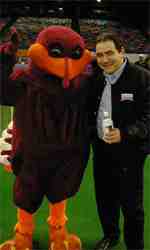
Surely, the last person the Hokie bird wants to be with this week is the guy who deep fries turkeys on TV.

On Southern manners
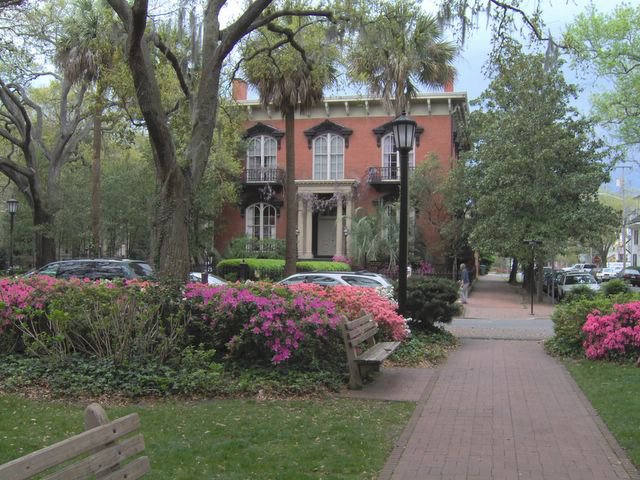
This story on whether Southerners are more polite begins at Mrs. Wilkes in Savannah, where I ate last week.
First step to death penalty moratorium in Virginia?
The Roanoke paper reports here that Governor Warner is talking about allowing Dr. Blake from the O.J. case to retest the DNA from the Roger Keith Coleman case.
I told somebody a couple of days ago that this testing will soon be done, and someone will interpret the results to say that Coleman was innocent, and the Kaine administration will use that interpretation as the basis upon which to declare a moratorium on the death penalty in Virginia until the date when the criminal justice system is fixed to the point where innocent people will never be convicted; i.e., forever.
Here and here and here are my last three posts about Dr. Blake and the Coleman case.
I told somebody a couple of days ago that this testing will soon be done, and someone will interpret the results to say that Coleman was innocent, and the Kaine administration will use that interpretation as the basis upon which to declare a moratorium on the death penalty in Virginia until the date when the criminal justice system is fixed to the point where innocent people will never be convicted; i.e., forever.
Here and here and here are my last three posts about Dr. Blake and the Coleman case.
Tuesday, November 22, 2005
Ask Waldo
Waldo says: "You’ve just got to love a governor who has his inaugural lunch at Pierce’s Pitt Bar-B-Que."
I like to eat the pig at Pierce's, got to give them the nod on that one.
I like to eat the pig at Pierce's, got to give them the nod on that one.
The Big Study on the Election
I read here that this from some people at Virginia Tech is the Big Study on the 2005 Virginia election that everyone is talking about.
It says that SW Virginia is in the "Shenandoah" region, which I guess is a better name than "other" after the other three of four regions (Richmond, NoVa, and Tidewater) were staked out.
It says that SW Virginia is in the "Shenandoah" region, which I guess is a better name than "other" after the other three of four regions (Richmond, NoVa, and Tidewater) were staked out.
Almost bowl eligible
Based on this bit of news, the writing team has now won 5 and one-third of Chad's Caption Contests.
Monday, November 21, 2005
On the increased number of women judges in Virginia
Here the Norfolk paper has a report on increases in the number of Virginia women who are judges, focusing on the Norfolk area judges.
Jerry Falwell hoping for Protestant Knute Rockne
Explaining why he fired the football coach at Liberty University, Jerry Falwell here: "I don't have much time to get the football program in the Top 20."
On the college facebook
The CD has this article on privacy issues related to the University's online facebook.
They had a printed facebook when I was there. One fellow told me that from the picture published therein, it appeared to him that I was Chinese.
They had a printed facebook when I was there. One fellow told me that from the picture published therein, it appeared to him that I was Chinese.
What happened to Ms. Kelo
The NY Times has this article with the latest on Ms. Kelo and New London, which prompted this Althouse post and this Reason post.
The gist being that it is no small irony that the project at issue in the Kelo case is not going forward because it was a bad idea from the start.
The gist being that it is no small irony that the project at issue in the Kelo case is not going forward because it was a bad idea from the start.
Sunday, November 20, 2005
Is Virginia swimming against the tide?
I had to laugh when I read the USATODAY article titled Outlook good for tax cuts by states.
For better and/or worse, the outlook is bad for tax cuts by Virginia.
For better and/or worse, the outlook is bad for tax cuts by Virginia.
On Hitler in Virginia
Via this Tsuzu post, the Nation has this article called Hitler in Virginia on Scott Howell, the man behind the ads for the Kilgore campaign.
Shaula says that Kaine won in spite of his inadequate preparations for the onslaught of Howell advertisements for Kilgore.
Shaula says that Kaine won in spite of his inadequate preparations for the onslaught of Howell advertisements for Kilgore.
Sun who? Steve Emmert goes Chinese
Here Steve Emmert reveals the ancient Chinese secrets to the art of successful appellate advocacy in the Commonwealth and elsewhere.
Savannah
Indeed, we did the tourist scene, eating at SoHo South Cafe, Mrs. Wilkes, Bistro Savannah, Firefly Cafe, Skyler's (voted in here for best crabcakes), Il Pasticcio, and 45 South.
45 South was the best (and most expensive), but Mrs. Wilkes (minus the rice and grits, plus a couple of different colors of Jello salad) was more or less the way we ate every day at Grandma Conrad's house.
45 South was the best (and most expensive), but Mrs. Wilkes (minus the rice and grits, plus a couple of different colors of Jello salad) was more or less the way we ate every day at Grandma Conrad's house.
Virginia land use roundup
The Daily Progress opined here that an amendment to the federal constitution might be in order to limit the Supreme Court's ruling in Kelo.
Tenants in a downtown building in Norfolk protested the leanings of the federal government toward taking their building for the expansion of the federal courthouse, according to this report in the Norfolk paper.
The Richmond paper reported here and the Roanoke paper reported here that the Virginia Housing Commission has endorsed a proposed amendment to Virginia law to limit the authority of government to take private property for purposes of economic development purposes. The same Roanoke article and this article from the Richmond paper discuss the Claytor case, a long-running inverse condemnation claim against housing authority in Roanoke.
One of the Connection papers reported here that local officials told their General Assembly representatives that they do not want any change to Virginia's eminent domain laws, but also said they don't like what Verizon is doing to try to get around the municipal franchise laws.
Tenants in a downtown building in Norfolk protested the leanings of the federal government toward taking their building for the expansion of the federal courthouse, according to this report in the Norfolk paper.
The Richmond paper reported here and the Roanoke paper reported here that the Virginia Housing Commission has endorsed a proposed amendment to Virginia law to limit the authority of government to take private property for purposes of economic development purposes. The same Roanoke article and this article from the Richmond paper discuss the Claytor case, a long-running inverse condemnation claim against housing authority in Roanoke.
One of the Connection papers reported here that local officials told their General Assembly representatives that they do not want any change to Virginia's eminent domain laws, but also said they don't like what Verizon is doing to try to get around the municipal franchise laws.
Two stooges
This Southern Appeal post identifies a couple of U.S. Senators who worked into a conference report on bill they were working on that two buildings would be named after themselves.
On improving the standing of the University of South Carolina law school
Via SC Appellate Blog, I read this interesting commentary by a law professor at South Carolina about how to improve the standing of USC Law.
Unrelated to this, we stopped in Columbia on the way home yesterday and ate the mustard BBQ at Maurice's (the one by their headquarters, I think), just in time to see the first of the many touchdowns scored by the Hokies on Virginia.
Unrelated to this, we stopped in Columbia on the way home yesterday and ate the mustard BBQ at Maurice's (the one by their headquarters, I think), just in time to see the first of the many touchdowns scored by the Hokies on Virginia.
How West Virginia and Kentucky put Virginia to shame
State appeals court briefs are available online in West Virginia and in Kentucky but not in Virginia.
This fact ought to be a source of embarrassment to some people in Richmond and elsewhere in the Commonwealth.
This fact ought to be a source of embarrassment to some people in Richmond and elsewhere in the Commonwealth.
Some things make no sense
Here one of the C and F guys wrote, re: the late federal appeals court judge Richard Arnold:
"I took Judge Richard S. Arnold's death rather badly, even though I never met the man; and indeed, I didn't even know him by proxy. The death of someone like him makes me bitter. With so many scoundrels living, why does someone like him have to die?"
I thought something similar this morning when I got to reading last week's Bristol papers and read (here and here and here) of the death of the young McGlothlin in Iraq.
"I took Judge Richard S. Arnold's death rather badly, even though I never met the man; and indeed, I didn't even know him by proxy. The death of someone like him makes me bitter. With so many scoundrels living, why does someone like him have to die?"
I thought something similar this morning when I got to reading last week's Bristol papers and read (here and here and here) of the death of the young McGlothlin in Iraq.
That frightening Virginia Halloween oral argument
Here is the transcript of the oral argument in the Virginia college bookstore case.
The light bulb blew out on page 37.
The light bulb blew out on page 37.
Fourth Circuit and the ADA
This post and this Brian Peterson post describe the Fourth Circuit's decision in Taylor v. Federal Express Corp., wherein Judge Motz, joined by Judges Traxler and Shedd, affirmed the district court's ruling that the plaintiff was not disabled within the meaning of the Americans with Disabilities Act.
Tuesday, November 15, 2005
The bang that made Homer Hickam famous
AFP reports here that at Virginia Tech, NASA scientist and author Homer Hickam "is not known for his personal and professional exploits as much as he is for his work in the early 1960s on the cannon that has been used in the years since to signal when the home football team puts points on the scoreboard."
Ooh, that '98 game
AFP has this fun article with a few short tales from the radio men for Virginia Tech and Virginia with recollections of Virginia-Virginia Tech football games.
Sunday, November 13, 2005
We're No. 7 in deer-car accidents
According to this article in the Lynchburg paper, Virginia is ranked seventh in the nation by State Farm in the number of auto accidents involving deer.
RLUIPA case in Portsmouth?
The Norfolk paper reports here on a case before Judge Doumar of the E.D. Va. under the Religious Land Use and Institutionalized Person Act, having to do with the city's decision to prevent a 100 year-old church building from reopening as a church.
The article says the judge scoffed at the city's arguments that the case involved purely zoning issues, and suggested that the parties ought to settle. Judges often say the parties should settle, but sometimes what that means is that the judge thinks one side or the other has got nothing.
The article says the judge scoffed at the city's arguments that the case involved purely zoning issues, and suggested that the parties ought to settle. Judges often say the parties should settle, but sometimes what that means is that the judge thinks one side or the other has got nothing.
One judge's views on how to improve the Virginia court system
In this commentary in the Richmond paper, Judge Robert Humphrey of the Virginia Court of Appeals expresses some ideas about how to improve the court system in Virginia.
The only idea in there that I can say I support wholeheartedly is that mediation should be cheaper.
The only idea in there that I can say I support wholeheartedly is that mediation should be cheaper.
Virginia now one of ACC's too many bowl-eligible teams
With the win over Georgia Tech, Virginia joins six other ACC football teams as bowl eligible (Miami, Virginia Tech, Florida State, Boston College, Georgia Tech, Clemson), and Maryland might soon join the list.
The ACC has only six bowl tie-ins this year, as reported here in a Washington Post which says one of the other possible destinations for an ACC team is the Liberty Bowl in Memphis.
The ACC has only six bowl tie-ins this year, as reported here in a Washington Post which says one of the other possible destinations for an ACC team is the Liberty Bowl in Memphis.
American Heritage takes on Nat Turner
This interesting article in American Heritage looks at the confused history of Nat Turner, who led a slave rebellion in Southampton County, Virginia, in 1831.
On MADD's monitoring of drunk driving cases at the Beach
The Norfolk paper has this editorial that says Mothers Against Drunk Driving should cut a Virginia Beach judge some slack, even thought she made some mistakes in the non-public manner in which she handled a particular drunk driving case.
The Millionaire
I love this story of the guy who won a million dollars throwing a football at the Clemson game.
Saturday, November 12, 2005

Virginia farmers get llamas to protect their grazing animals
Here the Roanoke paper explains why some farmers are replacing dogs with llamas to combat coyotes in the pastures of Southwest Virginia.
The Slashdotters take on electronic voting machines and the need for a paper trail
This mess of commentary at Slashdot about how the legislature in Wisconsin has approved some paper trail requirement seems to say, more or less, that a paper trail is no panacea, and mostly worthless if the voter does not get to see the paper generated by his or her vote.
Also, it says that the vote machine companies are going to get rich selling ink for all those printers.
Also, it says that the vote machine companies are going to get rich selling ink for all those printers.
Paper filing of notice of dismissal beats electronically filed answer
In the very interesting case of Powell Construction Company, Inc. v. U.S. Crane and Rigging, Inc., the defendant claimed that the plaintiff's notice of voluntary dismissal under Rule 41, filed on paper, was ineffective, because the W.D. Va. requires electronic filing, and that because the defendant had subsequently e-filed an answer, voluntary dismissal could not be granted without leave of court.
Judge Wilson ruled that because of technical difficulties with the case, which had been transferred from the E.D. Tenn., the paper filing was permitted, and was in substantial compliance with the Federal Rules and the local standing order on electronic filing, and therefore it would be given effect.
Judge Wilson ruled that because of technical difficulties with the case, which had been transferred from the E.D. Tenn., the paper filing was permitted, and was in substantial compliance with the Federal Rules and the local standing order on electronic filing, and therefore it would be given effect.
On ballot fall-off in Virginia statewide office elections
Not everyone who voted on Tuesday cast a vote for every office. This kind of undervoting is described in Professor Sabato's reports on Virginia voting as "ballot fall-off." In his 2001 report (which can be downloaded here from the Center for Politics website), he had this summary of ballot fall-off in Virginia elections, stated as the percentage of all voters who voted in a particular race.
1977 - Governor, 98.5; Lt. Gov., 94.7; AG, 90.8
1981 - Governor, 98.8; Lt. Gov., 94.2; AG, 93.2
1985 - Governor, 97.5; Lt. Gov., 95.9; AG, 96.3
1989 - Governor, 98.2; Lt. Gov., 94.8; AG, 95.2
1993 - Governor, 98.7; Lt. Gov., 95.7; AG, 94.0
1997 - Governor, 98.4; Lt. Gov., 94.9; AG, 94.0
2001 - Governor, 99.0; Lt. Gov., 96.5; AG, 94.7
From this morning's numbers, it appears that in 2005 there were roughly 40,000 more votes cast in the Governor's race than the Attorney General's race, and roughly 4,000 more votes cast in the Attorney General's race than in the Lieutenant Governor's race.
1977 - Governor, 98.5; Lt. Gov., 94.7; AG, 90.8
1981 - Governor, 98.8; Lt. Gov., 94.2; AG, 93.2
1985 - Governor, 97.5; Lt. Gov., 95.9; AG, 96.3
1989 - Governor, 98.2; Lt. Gov., 94.8; AG, 95.2
1993 - Governor, 98.7; Lt. Gov., 95.7; AG, 94.0
1997 - Governor, 98.4; Lt. Gov., 94.9; AG, 94.0
2001 - Governor, 99.0; Lt. Gov., 96.5; AG, 94.7
From this morning's numbers, it appears that in 2005 there were roughly 40,000 more votes cast in the Governor's race than the Attorney General's race, and roughly 4,000 more votes cast in the Attorney General's race than in the Lieutenant Governor's race.
McDonnell over Deeds by 513 as of 9:17 AM Saturday, November 12
The website figures keep changing, with the latest being 970,602 for McDonnell and 970,089 for Deeds.
William and Mary law faculty on the commission studying the future of Virginia courts
This article says Jayne Barnard, John Donaldson, Judge Walter Felton, and Fred Lederer, past and present law professors at William & Mary, are members of the study group assembled by Chief Justice Hassell to ponder the future of Virginia courts over the next 10-15 years.
I'd have to say that these four are among my favorites from my law school days.
Also, with Lederer in the group, there is a chance the Commission will make decent use of technology. In the article, Professor Barnard asks the question, "Will judges need blogs?" The Commission needs a blog, if you ask me. And some good cigars, for Professor Donaldson.
I'd have to say that these four are among my favorites from my law school days.
Also, with Lederer in the group, there is a chance the Commission will make decent use of technology. In the article, Professor Barnard asks the question, "Will judges need blogs?" The Commission needs a blog, if you ask me. And some good cigars, for Professor Donaldson.
Friday, November 11, 2005
McDonnell over Deeds by 620 votes as of 6:02 PM Friday, November 11
On the website, the count at this hour is 970,583-969,963.
Is it normal for this many votes to change just through the corrections by the electoral boards?
I was (I think) the only spectator at the Bristol canvas, where there were no changes on the Attorney General vote count for the four precincts, so far as I could tell.
Is it normal for this many votes to change just through the corrections by the electoral boards?
I was (I think) the only spectator at the Bristol canvas, where there were no changes on the Attorney General vote count for the four precincts, so far as I could tell.
A Tennessee judge cannot run off his opponent
The ABA ejournal reports here that the Tennessee Court of Appeals informed "a state circuit court judge he cannot bar an attorney from practicing in his judicial district just because the attorney announced he is going to run against the judge in the next election."
What happened to the bushes in the end zone at Scott Stadium
It says here in the Charlottesville paper:
"The Department of Athletics already has removed a fence and hedge where students were crushed Oct. 15 during a mass dash to the field following the 26-21 win over Florida State University."
"The Department of Athletics already has removed a fence and hedge where students were crushed Oct. 15 during a mass dash to the field following the 26-21 win over Florida State University."
Don't usually get the Chief Justice
Thursday, November 10, 2005
McDonnell over Deeds by only 947 votes at 7:07 PM November 10
Waldo has this post about the shrinking margin as reported on the State Board of Elections website.
On chads in Virginia
The prospect of a recount in the race between McDonnell and Deeds brings to mind Bush v. Gore.
In connection with Bush v. Gore, the Commonwealth filed an amicus brief, by Attorney General Mark Earley and his Chief Deputy Randolph Beales and Solicitor William Hurd, with this interesting snippet about the 1989 recount in Virginia:
"In 1989, there was a statewide recount in the Virginia gubernatorial race. Based on official returns, the Democrat, L. Douglas Wilder, appeared to defeat the Republican, J. Marshall Coleman, by a margin of 6,854 out of 1,787,424 votes cast, a margin of less than one half of one percent. Coleman then petitioned for a recount, which Virginia law provides must be conducted under the auspices of a special three-judge court. Va. Code § 24.2-801 (formerly § 24.1-249). It is most instructive that, although the recount procedures were vigorously contested, the counting of indented chads was recognized by all sides as being out of bounds. Instead, invoking the bipartisan precedent of the 1985 McCloskey/McIntyre Congressional contest, Coleman sought to count as votes only those punch card ballots where two or more corners had been detached. Coleman v. Wilder, Cir. Ct. City of Richmond (No. N 8541-1) (1989), Petitioner's Memorandum Regarding Recount Procedures, at 25-26. Wilder was unwilling to go even that far, stating:
A physical recount of the punch card ballots used in this election would be fraught with tabulation errors. The ballots are designed with the specific intent to be read and counted by machine tabulators, and, as a consequence, they are not easily read by the human eye . -- [T]he counting of votes by such machines is inherently more reliable than a manual count. Displacing the machine generated results with the results of a hand counting of punch cards would be a giant step away from achieving an accurate vote count.
Id., Respondent's Memorandum Concerning Recount Procedures, at 25. The recount court resolved the issue by denying any manual recount of punch card ballots, but allowing them to be re-read by re-programmed and re-tested computers. Id., Order Fixing Procedures, at 6, 8."
In connection with Bush v. Gore, the Commonwealth filed an amicus brief, by Attorney General Mark Earley and his Chief Deputy Randolph Beales and Solicitor William Hurd, with this interesting snippet about the 1989 recount in Virginia:
"In 1989, there was a statewide recount in the Virginia gubernatorial race. Based on official returns, the Democrat, L. Douglas Wilder, appeared to defeat the Republican, J. Marshall Coleman, by a margin of 6,854 out of 1,787,424 votes cast, a margin of less than one half of one percent. Coleman then petitioned for a recount, which Virginia law provides must be conducted under the auspices of a special three-judge court. Va. Code § 24.2-801 (formerly § 24.1-249). It is most instructive that, although the recount procedures were vigorously contested, the counting of indented chads was recognized by all sides as being out of bounds. Instead, invoking the bipartisan precedent of the 1985 McCloskey/McIntyre Congressional contest, Coleman sought to count as votes only those punch card ballots where two or more corners had been detached. Coleman v. Wilder, Cir. Ct. City of Richmond (No. N 8541-1) (1989), Petitioner's Memorandum Regarding Recount Procedures, at 25-26. Wilder was unwilling to go even that far, stating:
A physical recount of the punch card ballots used in this election would be fraught with tabulation errors. The ballots are designed with the specific intent to be read and counted by machine tabulators, and, as a consequence, they are not easily read by the human eye . -- [T]he counting of votes by such machines is inherently more reliable than a manual count. Displacing the machine generated results with the results of a hand counting of punch cards would be a giant step away from achieving an accurate vote count.
Id., Respondent's Memorandum Concerning Recount Procedures, at 25. The recount court resolved the issue by denying any manual recount of punch card ballots, but allowing them to be re-read by re-programmed and re-tested computers. Id., Order Fixing Procedures, at 6, 8."
Wednesday, November 09, 2005
President Bush goes where the General Assembly feared to tread
This story describes the ceremony at which Muhammad Ali, among others, received the Presidential Medal of Freedom.
In the 2004 session of the Virginia General Assembly, Republican Delegate Mark Cole vetoed a commendation for Ali, which made me irate at the time.
In the 2004 session of the Virginia General Assembly, Republican Delegate Mark Cole vetoed a commendation for Ali, which made me irate at the time.
Went bust like McClellan on the fields of Northern Virginia
This analysis by somebody at Redstate concludes: "had Jerry Kilgore even come close to matching Bush's anemic performance in Northern Virginia last year, he would now be Governor-elect."
Check it out, as there are some fun maps.
Check it out, as there are some fun maps.
More on the ghost precincts
In this article from the Norfolk paper, Bob McDonnell "said three precincts listed as having not reported are 'ghost precincts' that have no voters living in them."
That's a fun concept, ghost precincts.
That's a fun concept, ghost precincts.
What happens when two Charleston WV lawyers get together at the WVU law school before a football game
Here it says: "A Charleston lawyer is accused of throwing a can of beer at another Charleston lawyer on the West Virginia University law school steps just before last Wednesday's football game, according to a criminal complaint in Monongalia Magistrate Court."
No wonder they've not been counted
Waldo says here that the three precincts not showing up with votes for the McDonnell-Deeds Virginia attorney general race do not actually exist.
In retaliation, voters from those three precincts called for a boycott of Waldo's online stuff.
(That was a joke.)
In retaliation, voters from those three precincts called for a boycott of Waldo's online stuff.
(That was a joke.)
Best name on a write-in ballot I've heard today
I watched the City of Bristol electoral board canvas the vote, and the funniest thing I heard was that somebody wrote in "Frank Beamer" for the seat in the House of Delegates held by Joe Johnson.
I wonder if Roy Jessee got any votes this year over in Scott County, or elsewhere.
I wonder if Roy Jessee got any votes this year over in Scott County, or elsewhere.
Tuesday, November 08, 2005
Checking the bellwethers
From Sabato, "2001 Gubernatorial Election in Virginia: The Return of Two-Party Competition," (U.Va. Center for Governmental Studies, 2001), the bellwethers of particular note are the jurisdictions that have picked the winner in the race for governor 9/9 or 8/9 times since 1969: Fairfax City, Fairfax County, City of Galax, Prince Edward County, City of Salem, Montgomery County, City of Newport News, Lunenberg County, Southampton County, City of Franklin, and City of Lexington.
At this hour, the Democrats are winning in Fairfax County and Newport News and City of Franklin and Lexington, swept Prince Edward, and got swept in Salem and Lunenberg, with the others still mostly uncounted, according to the website.
Anyhow, Fox News just said that Kaine is the winner.
At this hour, the Democrats are winning in Fairfax County and Newport News and City of Franklin and Lexington, swept Prince Edward, and got swept in Salem and Lunenberg, with the others still mostly uncounted, according to the website.
Anyhow, Fox News just said that Kaine is the winner.
The Hanover county courthouse and modern federal courthouse design
Via this bespacific post, this interesting article relates the importance of the Hanover County Virginia courthouse, among other things, to the evolving theories about federal courthouse design.
Monday, November 07, 2005
Forget Booker, tell me about something important
In U.S. v. Morris, the Fourth Circuit in an opinion by Judge Shedd concludes that the change in the law wrought by the Supreme Court's decision in Booker was no biggie, and therefore should not be given retroactive effect.
Professor Berman has this post with his initials thoughts about the decision.
Professor Berman has this post with his initials thoughts about the decision.
Why not a free ginzu knife or chia pet to go with that law degree
If I understand this site correctly, the people at this outfit claim to be able to ship you a "verifiable" Juris Doctor or Ph.D. in a few days, for a price, or a college degree overnight.
The Virginia hockey player workers' compensation case
Here is the AP story about the ruling by the Virginia Court of Appeals that a hockey player injured in a fight on the ice was entitled to workers' compensation. Here is the unpublished opinion by Judge Elder in the case of Norfolk Admirals v. Jones. The opinion notes: "The commission found that fighting is an integral part of the game of hockey and that claimant’s job on employer’s hockey team was to be an 'enforcer.'"
I may have to revise some of my earlier remarks about the "arising out of" requirement.
I may have to revise some of my earlier remarks about the "arising out of" requirement.
Sunday, November 06, 2005
On the free speech rights of lawyers regarding pending cases in Virginia
In Anthony v. Virginia State Bar, the Virginia Supreme Court in an opinion by Senior Justice Russell imposed the sanction of a public reprimand imposed by the Bar on Joseph Anthony, the lawyer who filed a federal lawsuit claiming some form of collusion between some Roanoke lawyers and the Virginia Supreme Court. After he was sanctioned by Judge Osteen, sitting by designation in the W.D. Va., he then appealed to the Fourth Circuit with bad things to say about the district court judges, and appealed to the United States Supreme Court with bad things to say about the Fourth Circuit.
The case was heard only by Justices Lacy, Keenan, Koontz, Kinser, and Lemons, in addition to Senior Justice Russell.
I suppose this is the final chapter of the Snyder-Falkinham case, which was ostensibly settled, then the plaintiff got new counsel to try to get out from under the settlement, but the Virginia Supreme Court held that the settlement was binding. Eventually, she hired Mr. Anthony, and his bold claims generated a fair amount of publicity, almost ten years ago.
The case was heard only by Justices Lacy, Keenan, Koontz, Kinser, and Lemons, in addition to Senior Justice Russell.
I suppose this is the final chapter of the Snyder-Falkinham case, which was ostensibly settled, then the plaintiff got new counsel to try to get out from under the settlement, but the Virginia Supreme Court held that the settlement was binding. Eventually, she hired Mr. Anthony, and his bold claims generated a fair amount of publicity, almost ten years ago.
What's wrong with Va. Code § 65.2-301
In Va. Code § 65.2-301, the General Assembly created an exception to the exclusive remedy provisions of the Workers' Compensation Act for employees who are the victims of sexual assault. The intent of the statute, or so I have always thought, was fairly progressive, to give assault victims the choice between either worker's compensation or a civil lawsuit. Instead, the Virginia Supreme Court seems determined that there are no cases to which this statute applies.
In Butler v. Southern States Cooperative, Inc., the Virginia Supreme Court in an opinion by Justice Koontz held on Friday that a woman's injury as the result of an assault by a co-worker did not arise out of her employment, and therefore workers compensation did not apply, and the applicability of section 65.2-301 need not be considered. Notwithstanding the language of the opinion in Butler, that the Court was merely applying long-standing principles, it might be argued that the Supreme Court's jurisprudence in this area has been uneven, at best, since the much-maligned decision in Haddon v. Metropolitan Life Ins. Co., 239 Va. 397, 389 S.E.2d 712 (1990), which was overruled in Lichtman v. Knouf, 248 Va. 138, 445 S.E.2d 114 (1994), on the repetitive-injury is not an accident issue, but not the "arising out of" issue. The Court in Haddon (where defendant convinced the circuit court that the plaintiff's claim involved "an accident arising out of and in the course of her employment"), and the legislature in Va. Code §§ 63.1-23.1 and 65.2-301, apparently recognize the possibility that a co-worker battery can arise out of the injured victim's employment, but the Supreme Court ever since has refused to admit any such possibility, which makes section 65.2-301 a dead letter. Some of the justices claimed that the "arising out of" issue was not before the Court in Haddon, but they were in the minority, at least in 1991. See Kelly v. First Virginia Bank-Southwest, 404 S.E.2d 723 (1991).
The statute applies only "where the nature of such employment substantially increases the risk of such assault," which sounds something like the "arising out of" requirement. Discussing (or refusing to discuss) this element of the statute, however, the Supreme Court once said: "We need not suggest examples of such employment." Reamer v. National Service Industries, 237 Va. 466, 472, 377 S.E.2d 627, 630 (1989). That could be because there aren't any, as the law now stands. The last time (not counting Haddon) an assault victim was limited to her worker's compensation remedy was the newspaper deliverywoman who got shot at 2 a.m. in Plummer v. Landmark Communications, Inc., 235 Va. 78, 366 S.E.2d 73 (1988).
In Butler v. Southern States Cooperative, Inc., the Virginia Supreme Court in an opinion by Justice Koontz held on Friday that a woman's injury as the result of an assault by a co-worker did not arise out of her employment, and therefore workers compensation did not apply, and the applicability of section 65.2-301 need not be considered. Notwithstanding the language of the opinion in Butler, that the Court was merely applying long-standing principles, it might be argued that the Supreme Court's jurisprudence in this area has been uneven, at best, since the much-maligned decision in Haddon v. Metropolitan Life Ins. Co., 239 Va. 397, 389 S.E.2d 712 (1990), which was overruled in Lichtman v. Knouf, 248 Va. 138, 445 S.E.2d 114 (1994), on the repetitive-injury is not an accident issue, but not the "arising out of" issue. The Court in Haddon (where defendant convinced the circuit court that the plaintiff's claim involved "an accident arising out of and in the course of her employment"), and the legislature in Va. Code §§ 63.1-23.1 and 65.2-301, apparently recognize the possibility that a co-worker battery can arise out of the injured victim's employment, but the Supreme Court ever since has refused to admit any such possibility, which makes section 65.2-301 a dead letter. Some of the justices claimed that the "arising out of" issue was not before the Court in Haddon, but they were in the minority, at least in 1991. See Kelly v. First Virginia Bank-Southwest, 404 S.E.2d 723 (1991).
The statute applies only "where the nature of such employment substantially increases the risk of such assault," which sounds something like the "arising out of" requirement. Discussing (or refusing to discuss) this element of the statute, however, the Supreme Court once said: "We need not suggest examples of such employment." Reamer v. National Service Industries, 237 Va. 466, 472, 377 S.E.2d 627, 630 (1989). That could be because there aren't any, as the law now stands. The last time (not counting Haddon) an assault victim was limited to her worker's compensation remedy was the newspaper deliverywoman who got shot at 2 a.m. in Plummer v. Landmark Communications, Inc., 235 Va. 78, 366 S.E.2d 73 (1988).
YMCA can be immune as a charity under Virginia law
In Ola v. YMCA of South Hampton Roads, the Virginia Supreme Court in an opinion by Justice Agee affirmed the Circuit Court's decision that the plaintiff's personal injury claim based on negligence was barred by the doctrine of charitable immunity.
The Norfolk paper has this article on the decision, quoting defense lawyer Tim Richardson. Richardson is one of the few who graduated with me twice, both as a Philosophy Major graduating from the College of Arts and Sciences at U.Va. in 1986 and as a Juris Doctor at William & Mary in 1989.
Also, the Suffolk paper has this report.
The Norfolk paper has this article on the decision, quoting defense lawyer Tim Richardson. Richardson is one of the few who graduated with me twice, both as a Philosophy Major graduating from the College of Arts and Sciences at U.Va. in 1986 and as a Juris Doctor at William & Mary in 1989.
Also, the Suffolk paper has this report.
Virginia Supreme Court reversed trial court ruling on evidence in food poisoning case
In Bussey v. E.S.C. Restaurants, Inc., the Virginia Supreme Court in an opinion by Justice Lemons reversed the orders by the trial court overturning the verdict for the plaintiff in a case where she claimed that she suffered food poisoning on account of bad food at the defendant's restaurant (a Golden Corral).
On the lack of medical testing to prove that the plaintiff suffered a bacterial infection, the Court explained: "We have never required positive proof by scientific testing to establish a factual basis for medical diagnosis and opinion."
The AP had this report about the Court's decision.
On the lack of medical testing to prove that the plaintiff suffered a bacterial infection, the Court explained: "We have never required positive proof by scientific testing to establish a factual basis for medical diagnosis and opinion."
The AP had this report about the Court's decision.
On Shanna the cow
Here the Roanoke paper had an article about a Hokie Holstein who predicts the outcome and score of Virginia Tech's football games.
The secret about next Tuesday
Here someone identified as the Secretary of the Board of Elections says: "Most people don't even realize there's an election."
Why Alito's the Man
A couple of the Powerline guys got this well-written, simply stated article published in the Washington Post, explaining why it is good thing that Harriet Miers is out and Samuel Alito is in. One thing they point out is this: "The Republican talent pool is deep and broad, in a way that it was not when Presidents Richard Nixon and Ronald Reagan were appointing judges." I certainly agree with that.
They claim that the reason why court nominations have become more contentious is that liberals rely on the courts to overcome the unpopularity of liberal ideas: "Liberals increasingly came to view the court as a legislature of last resort, where policies too liberal and too unpopular to be enacted by real legislatures could be mandated by fiat of the court's liberal majority."
They describe what they claim conservatives want in judges: "We want judges who won't make stuff up," to which they add the corollary, that "judges also don't have the discretion to ignore language that is in the Constitution or the laws," including limitations on the powers of Congress.
They conclude: "The Miers-Alito moment shows that conservatives prefer demonstrated excellence to its absence, openness to stealth, and adherence to constitutional text to the promise of any particular result."
I recommend this article, whether you agree with it or not, as it is well-written.
They claim that the reason why court nominations have become more contentious is that liberals rely on the courts to overcome the unpopularity of liberal ideas: "Liberals increasingly came to view the court as a legislature of last resort, where policies too liberal and too unpopular to be enacted by real legislatures could be mandated by fiat of the court's liberal majority."
They describe what they claim conservatives want in judges: "We want judges who won't make stuff up," to which they add the corollary, that "judges also don't have the discretion to ignore language that is in the Constitution or the laws," including limitations on the powers of Congress.
They conclude: "The Miers-Alito moment shows that conservatives prefer demonstrated excellence to its absence, openness to stealth, and adherence to constitutional text to the promise of any particular result."
I recommend this article, whether you agree with it or not, as it is well-written.
Why do most Virginia medical malpractice claimants get nothing
In this Richmond paper article from last week, the authors look to explain why is is that "[t]hree out of four medical malpractice cases in Virginia that ended during the past three years brought patients nothing."
New York Times on what to do with coyotes
This article on the NY Times suggests that what we need to do with coyotes is get them a bus ticket to the big city, or at least to the "goose-plagued subdivisions" of the suburbs, which "could use well-mannered, responsible predators."
More on the state of eminent domain law in the Commonwealth
Greg Edwards of the Richmond paper has this interesting article on the state of the law of eminent domain in Virginia, and proposed changes.
I read somewhere the other day, can't recall the source, a prediction that few states would do much in response to Kelo, notwithstanding the many complaints about it.
I read somewhere the other day, can't recall the source, a prediction that few states would do much in response to Kelo, notwithstanding the many complaints about it.
What happens when Virginia solicitors general argue at the Supreme Court
This law.com story about a light bulb popping during oral argument in the Virginia college bookstore case on Halloween is fun. Once the justices realized what had happened, the chief justice said it was "a trick they play on new chief justices all the time."
Friday, November 04, 2005
Ten non-policy reasons why it is inevitable that I will vote for Jerry Kilgore
There was never any doubt that I will vote for Jerry Kilgore, for reasons like these:
10. When I was a law clerk, Jerry was the resident assistant prosecutor, and he tried the first federal criminal case I ever saw. During that year, the courthouse gang had a birthday party for Jerry, and a dancing gorilla in a bikini was there.
9. Years ago, I had a meeting with Jerry's mom, and she made me laugh. Years later, my wife met Terry Kilgore, and he made her laugh. Virginia, like the Kilgore family, needs a good straight man.
8. Like Jerry, my aunt Lois went to Clinch Valley. So did my friend Will. And my cousin Samatha. My grandma's friend Joe Smiddy was the head man there. I root for all CVC grads.
7. I too was a too-skinny, bookish kid on the high school football team.
6. Some say Jerry never did any work to speak of down on the farm, and neither did I, despite ample opportunities. Even so, I like the look and smell of a Southwest Virginia farm. Virginia needs a governor who knows that fall smells like tobacco hanging in the barn, even if someone else hung it.
5. Jerry was the attorney general. I like to think about attorney general stuff. His office won reversals of fortune (at least in part) against all odds in two famous First Amendment cases before the U.S. Supreme Court, the cross-burning case and the public housing trespass case. Now, those were interesting cases.
4. Jerry gets excited on the Virginia Cavalier post-game show. I'm surprised Waldo never got hold of an audio clip of Jerry talking football with Mac McDonald.
3. I had a Southwest Virginia accent once. I might have one now.
2. We went to the same law school, America's oldest, and a good place. Ask Dawn Figueiras. Or Don McGlothlin. Or Mickey McGlothlin. There ought to be a William & Mary grad sworn in at the inauguration in Williamsburg.
1. My Democrat friends from Scott County always beat me at golf.
10. When I was a law clerk, Jerry was the resident assistant prosecutor, and he tried the first federal criminal case I ever saw. During that year, the courthouse gang had a birthday party for Jerry, and a dancing gorilla in a bikini was there.
9. Years ago, I had a meeting with Jerry's mom, and she made me laugh. Years later, my wife met Terry Kilgore, and he made her laugh. Virginia, like the Kilgore family, needs a good straight man.
8. Like Jerry, my aunt Lois went to Clinch Valley. So did my friend Will. And my cousin Samatha. My grandma's friend Joe Smiddy was the head man there. I root for all CVC grads.
7. I too was a too-skinny, bookish kid on the high school football team.
6. Some say Jerry never did any work to speak of down on the farm, and neither did I, despite ample opportunities. Even so, I like the look and smell of a Southwest Virginia farm. Virginia needs a governor who knows that fall smells like tobacco hanging in the barn, even if someone else hung it.
5. Jerry was the attorney general. I like to think about attorney general stuff. His office won reversals of fortune (at least in part) against all odds in two famous First Amendment cases before the U.S. Supreme Court, the cross-burning case and the public housing trespass case. Now, those were interesting cases.
4. Jerry gets excited on the Virginia Cavalier post-game show. I'm surprised Waldo never got hold of an audio clip of Jerry talking football with Mac McDonald.
3. I had a Southwest Virginia accent once. I might have one now.
2. We went to the same law school, America's oldest, and a good place. Ask Dawn Figueiras. Or Don McGlothlin. Or Mickey McGlothlin. There ought to be a William & Mary grad sworn in at the inauguration in Williamsburg.
1. My Democrat friends from Scott County always beat me at golf.
Progress through technology
My dad the engineer gets a kick out of the safety warning symbols on products. He once told me with a laugh about his granddaughter examining the illustration on a stepladder and asking, "Papaw, why's that man falling down?" Now, BoingBoing reports on the adorable symbol on the glow-in-dark car trunk release tab.
The criminal defense lawyer's perspective from the Ninth Circuit on last year's Supreme Court term
Here is an excellent report on the last U.S. Supreme Court term, prepared by the public defenders in the Ninth Circuit.
The introduction says:
"In going through the opinions to look for hidden gems, three major themes emerge. First, the protection of core constitutional rights has solidified in a surprising number of cases. Second, the Doctrine of Constitutional Avoidance continues to provide a key analytical framework for federal litigation. Lastly, the Court’s devotion of so much time to the rules of statutory construction emphasizes the need for federal defense attorneys to incorporate them into our litigation vocabulary. The overall message is to hit constitutional issues hard, but layer them with statutory arguments that avoid the necessity of resolving the constitutional questions."
The report says this about the latest qualified immunity case:
"Brosseau v. Haugen, 125 S. Ct. 596 (2004): Separate from the constitutionality of an officer’s use of deadly force against an unarmed felony suspect, the courts had not “clearly established” the right in question, in a particularized sense, to the facts presented to foreclose qualified immunity for the officer.
In another reversal of a Ninth Circuit civil rights case, the Court per curiam found an officer to be protected by qualified immunity. Officer Rochelle Brosseau went to the home of Kenneth Haugen, who was suspected of selling drugs and stealing the tools of a co-worker. When Haugen saw Officer Brosseau approach, he jumped in his Jeep, and ignored the officer’s warnings to stop, even when she smashed a hole in the window of his Jeep. Brosseau shot Haugen in the back as he drove away, and Haugen subsequently filed a suit for damages under 42 U.S.C. § 1983. The Court of Appeals held that Brosseau violated Haugen’s Fourth Amendment rights and also that she was not entitled to qualified immunity.
The Supreme Court reversed only on the qualified immunity question because the law of when an officer may shoot a fleeing suspect was not clearly established with the particularization necessary to apply it to this set of facts. The Court’s holding in Brosseau substantially extends qualified immunity by encompassing excessive force cases where the law has not been previously applied to particular facts. Here, even though past cases had clearly established that officers may only shoot a fleeing suspect who presents a risk to others, the Court held that in this case, “Brosseau’s actions fell in the ‘hazy border between excessive and acceptable force.’” (Quoting Saucier v. Katz, 533 U.S. 194, 206 (2001)). This case includes an echo of the Doctrine of Constitutional Avoidance. In footnote 3, the majority finds no reason to reconsider Saucier’s order of proceeding: 1) first decide
the constitutional question; 2) then decide the qualified immunity question. Justice Breyer, joined by Justices Ginsburg and Scalia, concurred to say that Saucier should be reconsidered because, if the question is iffy enough for qualified immunity, why reach the “difficult constitutional questions when there is available an easier basis for the decision”?"
Why indeed? Because if the difficult constitutional questions never get answered, then the defendants will keep winning every case on qualified immunity.
This report is chock full of good stuff and worth reading even if like me, you have nothing to do with federal criminal practice.
The introduction says:
"In going through the opinions to look for hidden gems, three major themes emerge. First, the protection of core constitutional rights has solidified in a surprising number of cases. Second, the Doctrine of Constitutional Avoidance continues to provide a key analytical framework for federal litigation. Lastly, the Court’s devotion of so much time to the rules of statutory construction emphasizes the need for federal defense attorneys to incorporate them into our litigation vocabulary. The overall message is to hit constitutional issues hard, but layer them with statutory arguments that avoid the necessity of resolving the constitutional questions."
The report says this about the latest qualified immunity case:
"Brosseau v. Haugen, 125 S. Ct. 596 (2004): Separate from the constitutionality of an officer’s use of deadly force against an unarmed felony suspect, the courts had not “clearly established” the right in question, in a particularized sense, to the facts presented to foreclose qualified immunity for the officer.
In another reversal of a Ninth Circuit civil rights case, the Court per curiam found an officer to be protected by qualified immunity. Officer Rochelle Brosseau went to the home of Kenneth Haugen, who was suspected of selling drugs and stealing the tools of a co-worker. When Haugen saw Officer Brosseau approach, he jumped in his Jeep, and ignored the officer’s warnings to stop, even when she smashed a hole in the window of his Jeep. Brosseau shot Haugen in the back as he drove away, and Haugen subsequently filed a suit for damages under 42 U.S.C. § 1983. The Court of Appeals held that Brosseau violated Haugen’s Fourth Amendment rights and also that she was not entitled to qualified immunity.
The Supreme Court reversed only on the qualified immunity question because the law of when an officer may shoot a fleeing suspect was not clearly established with the particularization necessary to apply it to this set of facts. The Court’s holding in Brosseau substantially extends qualified immunity by encompassing excessive force cases where the law has not been previously applied to particular facts. Here, even though past cases had clearly established that officers may only shoot a fleeing suspect who presents a risk to others, the Court held that in this case, “Brosseau’s actions fell in the ‘hazy border between excessive and acceptable force.’” (Quoting Saucier v. Katz, 533 U.S. 194, 206 (2001)). This case includes an echo of the Doctrine of Constitutional Avoidance. In footnote 3, the majority finds no reason to reconsider Saucier’s order of proceeding: 1) first decide
the constitutional question; 2) then decide the qualified immunity question. Justice Breyer, joined by Justices Ginsburg and Scalia, concurred to say that Saucier should be reconsidered because, if the question is iffy enough for qualified immunity, why reach the “difficult constitutional questions when there is available an easier basis for the decision”?"
Why indeed? Because if the difficult constitutional questions never get answered, then the defendants will keep winning every case on qualified immunity.
This report is chock full of good stuff and worth reading even if like me, you have nothing to do with federal criminal practice.
On the literacy of literally
Found by way of this Crescat post, in this Slate piece, a dictionary editor actually and really does take on the word we love to hate: "literally."
Wednesday, November 02, 2005
Best of the Web - a little bit right here
Welcome, Taranto readers who came by way of the first blush post.
Tuesday, November 01, 2005
What will be the effect of newspaper endorsements on next Tuesday's Virginia elections?
Back in 1985, I wrote a paper for Larry Sabato's Campaigns and Elections class about the Boucher-Stafford race in 1984, and concluded that the Bristol paper's endorsement of Boucher, seeking re-election for the first time, was a big help to him. Back then, the newspaper was owned by the Worrells, before it was sold to Media General.
Now, the people who write the editorials are not the owners of the newspaper, at least nowhere around here (perhaps they still do it in Winchester), and so in this Washingtonian piece, Larry Sabato is quoted as saying that newspaper endorsements don't carry much clout.
I must confess that I was surprised that the Bristol paper endorsed Kaine instead of Kilgore, the local man, and then endorsed Bolling, noting Bolling's real but more limited SW Virginia roots. Something's wrong with that combination.
Now, the people who write the editorials are not the owners of the newspaper, at least nowhere around here (perhaps they still do it in Winchester), and so in this Washingtonian piece, Larry Sabato is quoted as saying that newspaper endorsements don't carry much clout.
I must confess that I was surprised that the Bristol paper endorsed Kaine instead of Kilgore, the local man, and then endorsed Bolling, noting Bolling's real but more limited SW Virginia roots. Something's wrong with that combination.
Those GI patients are an irate bunch
Here it says of the surprising information presented to a committee studying medical malpractice insurance in the Commonwealth: "Thoracic surgeons, dermatologists and gastroenterologists were the medical specialists who paid the highest average malpractice claims, according to a new state study."
You can't fool Senator Shumer or Colonel Flagg
Sen. Shumer, in today's Wall Street Journal, on Supreme Court nominee Judge Samuel Alito, Jr.: "At first blush, Judge Alito does not appear to be a Sandra Day O'Connor."
Weird spook Colonel Flagg, in a M*A*S*H episode, to Corporal Klinger:
Colonel Flagg: "Hey, up close you are a guy!"
Klinger: "Far away too."
Weird spook Colonel Flagg, in a M*A*S*H episode, to Corporal Klinger:
Colonel Flagg: "Hey, up close you are a guy!"
Klinger: "Far away too."
Mr. Patton goes to Richmond
Here Brian Patton relates that when he and the Virginia Supreme Court met, swearing ensued.
One step closer to the Hall of Fame
Here it says we got Win No. 4.333 in Chad's Caption Contest No. 25.
Subscribe to:
Posts (Atom)