In Virginia and the Uniform Trust Code, the Wills, Trusts & Estates Prof Blog says:
"John E. Donaldson (Ball Professor of Law, Emeritus, College of William and Mary, Marshall-Wythe School of Law) and Robert T. Danforth (Associate Professor of Law and Alumni Faculty Fellow, Washington and Lee University School of Law) have recently published their article entitled The Virginia Uniform Trust Code, 40 U. Rich. L. Rev. 325 (2005)."
Thursday, December 29, 2005


More on the lack of more money for defense of indigent criminal defendants
I agree also with this Roanoke Times editorial that says the Commonwealth should find a way to pay more for lawyers for the poor in criminal cases.
Wednesday, December 28, 2005
No more money for defending the poor
Kudos to the Norfolk paper for this editorial which says that Governor Warner should have proposed more money for lawyers for the poor in criminal cases.
Richmond beaver shot
The Times-Dispatch has this short story with many comments about how authorities at a Richmond-area botanical garden shot and killed a beaver that had been making a nuisance of his (or her) little fuzzy brown self.
From the comments:
"The beaver was a pest? I know some people who are pests, should they also be shot?"
"What happens when a citizen clubs to death an attacking alligator in the James? He gets fined. But an innocent beaver is executed for gnawing shrubs. Where's the justice?"
"It's okay as long as you make a hat from the hide and stew from the meat."
From the comments:
"The beaver was a pest? I know some people who are pests, should they also be shot?"
"What happens when a citizen clubs to death an attacking alligator in the James? He gets fined. But an innocent beaver is executed for gnawing shrubs. Where's the justice?"
"It's okay as long as you make a hat from the hide and stew from the meat."
Tuesday, December 27, 2005
Does the insurer's reservation of rights letter give the insured the right to hire its own counsel at the carrier's expense?
In Twin City Fire Ins. Co. v. Ben-Arnold Sunbelt Beverage Co., the Fourth Circuit in an opinion by District Judge Devers, joined by Judge Luttig and Senior Judge Hamilton, took the interesting question of whether, upon an insurer's issuance of a reservation of rights letter, the counsel retained by the insurer for the insured has a conflict of interest, such that the insured has the right to choose its own counsel and have the insurer pay for it.
The answer, under the facts of the case and South Carolina law, is no.
The answer, under the facts of the case and South Carolina law, is no.
On the poor Kentucky man and the surgeon from the Congo
Here, in a very interesting and provocative article, the Economist compares the lives and fortunes of a fellow on disability in Eastern Kentucky and a physician in Africa.
The man from Hazard gets $521 per month in SSI benefits. The doctor in the Congo gets about $600-700 per month.
The author explains and asks:
"Why juxtapose the lives of a poor man in a rich country and a relatively well-off man in a poor one? The exercise is useful for two reasons. First, it puts the rich world's wealth into context. A Congolese doctor, a man most other Congolese would consider wealthy, is worse off materially than most poor people in America. That, in itself, is striking.
The second purpose of the exercise is to shed light on some ticklish questions. What is the relationship between wealth and happiness? And what is the significance of relative poverty? Mr Banks makes $521 a month in a country where median male earnings are $3,400 a month. Dr Kabamba earns $600 a month in a country where most people grow their own food and hardly ever see a bank note. The two men's experiences could hardly be less similar. But which of the two would one expect to be happier?"
The author concludes:
"The point of this article is neither to mock Mr Banks nor to praise Dr Kabamba. Both have their virtues and flaws, and your correspondent cannot reliably judge which is the happier. But here are two concluding observations. First, if poor Americans were to compare their standard of living with what is normal elsewhere in the world, let alone in Congo, they would see they have little cause for discontent. Then again, were Americans not so incurably discontented with their lot, their great country would not be half as dynamic as it is."
Read the whole thing.
The man from Hazard gets $521 per month in SSI benefits. The doctor in the Congo gets about $600-700 per month.
The author explains and asks:
"Why juxtapose the lives of a poor man in a rich country and a relatively well-off man in a poor one? The exercise is useful for two reasons. First, it puts the rich world's wealth into context. A Congolese doctor, a man most other Congolese would consider wealthy, is worse off materially than most poor people in America. That, in itself, is striking.
The second purpose of the exercise is to shed light on some ticklish questions. What is the relationship between wealth and happiness? And what is the significance of relative poverty? Mr Banks makes $521 a month in a country where median male earnings are $3,400 a month. Dr Kabamba earns $600 a month in a country where most people grow their own food and hardly ever see a bank note. The two men's experiences could hardly be less similar. But which of the two would one expect to be happier?"
The author concludes:
"The point of this article is neither to mock Mr Banks nor to praise Dr Kabamba. Both have their virtues and flaws, and your correspondent cannot reliably judge which is the happier. But here are two concluding observations. First, if poor Americans were to compare their standard of living with what is normal elsewhere in the world, let alone in Congo, they would see they have little cause for discontent. Then again, were Americans not so incurably discontented with their lot, their great country would not be half as dynamic as it is."
Read the whole thing.
Monday, December 26, 2005
Brian Wills has got it wrong
Brian Wills wrote an ignorant column about the '72 Dolphins.
The idea that the old Dolphins gather for champagne has been debunked as a myth, this year if not before.
And, even when I thought it was true, I thought it was great, myself.
The idea that the old Dolphins gather for champagne has been debunked as a myth, this year if not before.
And, even when I thought it was true, I thought it was great, myself.
Thursday, December 22, 2005
On whether federal inmates sued in federal court get guardians ad litem
In Buchanan County v. Blankenship, Chief Judge Jones of the W.D. Va. denied the request of some of the incarcerated defendants for the appointment of guardians ad litem.
Since I'm in the case, I won't say anything about it, except that Judge Jones thought the issue was interesting enough to submit the opinion for publication in the Federal Supplement.
Since I'm in the case, I won't say anything about it, except that Judge Jones thought the issue was interesting enough to submit the opinion for publication in the Federal Supplement.
Wednesday, December 21, 2005
The budget for the court system in Virginia
Bacon's has been blogging the budget, including the judicial system.
It says 3,100 jobs and a budget of $330 million are the current figures.
It says 3,100 jobs and a budget of $330 million are the current figures.
On using the c-word
Via Overlawyered, I read this article about the black defense lawyer who, after a losing a trial, rode the elevator with some of the the jurors from the case and called them "just a bunch of crackers," and it makes me think of that SNL skit with Richard Pryor and Chevy Chase conducting a word association exercise, first broadcast 30 years and eight days ago. (Amazing, that long ago?)
Judge Posner on the economics of capital punishment
In this remarkable post, Judge Posner explains that there is evidence that the death penalty has a deterrent effect, citing one study which shows that "one execution deters 18 murders," and expressing his view that "[t]he number of people who are executed for a murder they did not commit appears to be vanishingly small," while concluding that "even with the existing, excessive, delay, the recent evidence concerning the deterrent effect of capital punishment provides strong support for resisting the abolition movement."
The Padilla case
Steve Emmert at Virginia Appellate News links to today's opinion in the Padilla case, in which Judge Luttig joined Judge Michael refused to accommodate what Judge Luttig suggested appears to be the government's efforts to prevent the Supreme Court from reviewing the earlier panel decision in the case, deciding instead that the Supreme Court ought to have a chance to review the earlier opinion in the case.
Judge Luttig goes on explain his view that the government is making a big mistake by its handling of this case:
"For, as the government surely must understand, although the various facts it has asserted are not necessarily inconsistent or without basis, its actions have left not only the impression that Padilla may have been held for these years, even if justifiably, by mistake –- an impression we would have thought the government could ill afford to leave extant. They have left the impression that the government may even have come to the belief that the principle in reliance upon which it has detained Padilla for this time, that the President possesses the authority to detain enemy combatants who enter into this country for the purpose of attacking America and its citizens from within, can, in the end, yield to expediency with little or no cost to its conduct of the war against terror –- an impression we would have thought the government likewise could ill afford to leave extant. And these impressions have been left, we fear, at what may ultimately prove to be substantial cost to the government’s credibility before the courts, to whom it will one day need to argue again in support of a principle of assertedly like importance and necessity to the one that it seems to abandon today. While there could be an objective that could command such a price as all of this, it is difficult to imagine what that objective would be."
Judge Luttig goes on explain his view that the government is making a big mistake by its handling of this case:
"For, as the government surely must understand, although the various facts it has asserted are not necessarily inconsistent or without basis, its actions have left not only the impression that Padilla may have been held for these years, even if justifiably, by mistake –- an impression we would have thought the government could ill afford to leave extant. They have left the impression that the government may even have come to the belief that the principle in reliance upon which it has detained Padilla for this time, that the President possesses the authority to detain enemy combatants who enter into this country for the purpose of attacking America and its citizens from within, can, in the end, yield to expediency with little or no cost to its conduct of the war against terror –- an impression we would have thought the government likewise could ill afford to leave extant. And these impressions have been left, we fear, at what may ultimately prove to be substantial cost to the government’s credibility before the courts, to whom it will one day need to argue again in support of a principle of assertedly like importance and necessity to the one that it seems to abandon today. While there could be an objective that could command such a price as all of this, it is difficult to imagine what that objective would be."
Tuesday, December 20, 2005
On the passing of a Southwest Virginia blogger
From Smyth County, Julie Whitt wrote Breath of Heaven, and her friends wrote about her here. In her writing, she was full of love and hope, hope for a day when she could be healthy, and be a mom, and grow old with her husband.
On December 12, 2005, a week before she died, she wrote this post, which says in part:
"It’s not easy being stuck in a body that doesn’t work, but at least I have a chance at a way out. There’s a commercial that reminds me of me. A girl is walking down a city street listening to her mp3 player. She passes a building with reflective windows and you see her reflection dancing to the music. In reality she’s just walking, but she’s dancing in her mind. I’ve been dancing in my head for 17 years. I’m very eager to be the girl dancing in the reflection."
On December 12, 2005, a week before she died, she wrote this post, which says in part:
"It’s not easy being stuck in a body that doesn’t work, but at least I have a chance at a way out. There’s a commercial that reminds me of me. A girl is walking down a city street listening to her mp3 player. She passes a building with reflective windows and you see her reflection dancing to the music. In reality she’s just walking, but she’s dancing in her mind. I’ve been dancing in my head for 17 years. I’m very eager to be the girl dancing in the reflection."
Monday, December 19, 2005
Mr. Kilgore's new job
Here, the Williams Mullen firm announced the formation of its "Multistate Corporate Compliance & Public Policy Group" led by Jerry Kilgore.
Newsweek covers the Virginians
In this article, Newsweek profiles Governor Warner and Senator Allen, but without any James Drury (he played The Virginian on TV).
Speaking of the Virginians, today I was in the presence of John Brownlee and Chad Dotson at the same time, in the same room, and without any criminals present.
Speaking of the Virginians, today I was in the presence of John Brownlee and Chad Dotson at the same time, in the same room, and without any criminals present.
Sunday, December 18, 2005
On citation to unpublished opinions
HOWT explains here why citation to unpublished opinions should never be a problem: "If we have done our job properly, there is no need to ever cite an unpublished opinion because, theoretically at least, there should be a published opinion on the same point."
ALso, he notes: "an unpublished opinion is not circulated beyond the members of the panel while a published opinion is circulated to the full court for review and comment (although only the members of the panel have a vote on the outcome)."
These are good reasons why an unpublished opinion is less persuasive, but not good reasons for prohibiting an enterprising lawyer to cite an unpublished opinion, and make of it whatever he can.
ALso, he notes: "an unpublished opinion is not circulated beyond the members of the panel while a published opinion is circulated to the full court for review and comment (although only the members of the panel have a vote on the outcome)."
These are good reasons why an unpublished opinion is less persuasive, but not good reasons for prohibiting an enterprising lawyer to cite an unpublished opinion, and make of it whatever he can.
Interesting profile of Richmond deputy prosecutor soon to leave office
In this article, the Richmond paper chronicles the colorful life and times of Tony Spencer, who is leaving office with his friend and colleague the Commonwealth's attorney in Richmond.
Here's one provocative sentence: "Sandwiched between stints as a practicing attorney, Spencer tended bar, played trumpet in a ska band and taught English in Spain."
Here's one provocative sentence: "Sandwiched between stints as a practicing attorney, Spencer tended bar, played trumpet in a ska band and taught English in Spain."
Saturday, December 17, 2005
What might be next on the lame duck governor's agenda?
This Votelaw post links to this post which calls on Governor Warner to give back the right to vote to 200,000+ convicted felons in the Commonwealth, claiming that "Virginia is one of only four states that disenfranchise all former offenders for life, even after they complete their sentences (the other three are Alabama, Florida, and Kentucky). These four states along with Armenia are the only democracies in the world that disenfranchise all former offenders for life. 80% of Americans believe that those who have served their time should be allowed to vote."
Unlikely new ban on employment discrimination by the Commonwealth
The Washington Post reports here that Virginia Governor Mark Warner has imposed by executive order a prohibition against discrimination in employment by the agencies of the Commonwealth against homosexuals.
I would expect 90% of the General Assembly, including all of the Republicans, all of the rural legislators, and most of the rest, to vote against this, but then again I never thought Kaine would get elected, so what do I know?
I would think that Virginia's idea of an appropriate non-discrimination statute for state employees is Va. Code § 2.2-2902, which says in part: "No employee of or applicant for employment with the Commonwealth shall be required, as a condition of employment, to smoke or use tobacco products on the job, or to abstain from smoking or using tobacco products outside the course of his employment."
I would expect 90% of the General Assembly, including all of the Republicans, all of the rural legislators, and most of the rest, to vote against this, but then again I never thought Kaine would get elected, so what do I know?
I would think that Virginia's idea of an appropriate non-discrimination statute for state employees is Va. Code § 2.2-2902, which says in part: "No employee of or applicant for employment with the Commonwealth shall be required, as a condition of employment, to smoke or use tobacco products on the job, or to abstain from smoking or using tobacco products outside the course of his employment."
On the withholding of taxes from the proceeds of a Title VII settlement
In Rivera v. Baker West, Inc., the Ninth Circuit in an opinion by Judge Bybee considered the plaintiff/appellant's two contentions regarding the District Court's ruling that the employer was correct in paying taxes out of the settlement money for a Title VII claim:
The appellant's position was this: "first, he argues that the settlement proceeds paid by Baker were intended to reimburse Rivera for personal physical injuries and should therefore be excluded from his gross income under 26 U.S.C. § 104(a)(2); second, he argues that, even assuming the settlement proceeds represent lost wages, an award of back pay under Title VII is not subject to income tax withholding."
The Court ruled that "the district court did not clearly err in finding that the settlement proceeds were not intended to compensate for personal physical injuries, but instead represented lost wages," and "[b]ecause the district court reasonably classified the settlement proceeds as back pay, the district court properly held that Rivera’s settlement proceeds were subject to withholding."
The Court noted that the settlement agreement "does not expressly state that the damages paid to Rivera compensate for personal physical injuries or physical illness" and explained that "if there is no express evidence of the parties’ intent in the settlement agreement, we look to the intent of the payor." There was language in the settlement agreement "stating that Baker would pay Rivera $40,000 'less all lawfully required withholdings.'"
In concluding that the wage part of a settlement agreement under Title VII is subject to withholding taxes, the Court cited the Fourth Circuit's opinion in Hemelt v. United States, 122 F.3d 204 (4th Cir. 1997), along with opinions from the Sixth and Eighth circuits.
The appellant's position was this: "first, he argues that the settlement proceeds paid by Baker were intended to reimburse Rivera for personal physical injuries and should therefore be excluded from his gross income under 26 U.S.C. § 104(a)(2); second, he argues that, even assuming the settlement proceeds represent lost wages, an award of back pay under Title VII is not subject to income tax withholding."
The Court ruled that "the district court did not clearly err in finding that the settlement proceeds were not intended to compensate for personal physical injuries, but instead represented lost wages," and "[b]ecause the district court reasonably classified the settlement proceeds as back pay, the district court properly held that Rivera’s settlement proceeds were subject to withholding."
The Court noted that the settlement agreement "does not expressly state that the damages paid to Rivera compensate for personal physical injuries or physical illness" and explained that "if there is no express evidence of the parties’ intent in the settlement agreement, we look to the intent of the payor." There was language in the settlement agreement "stating that Baker would pay Rivera $40,000 'less all lawfully required withholdings.'"
In concluding that the wage part of a settlement agreement under Title VII is subject to withholding taxes, the Court cited the Fourth Circuit's opinion in Hemelt v. United States, 122 F.3d 204 (4th Cir. 1997), along with opinions from the Sixth and Eighth circuits.
That's us, for sure

Dad printed this one out and I liked it so much I posted it on here. It is of Dana and me, having a good day in Savannah.

Friday, December 16, 2005
On Junior Cox and the Feed Room
I hope that fans of the Feed Room downtown in Bristol read this article on Junior Cox and will go by there before the restaurant closes at the end of the month and give him and Mary Ann all the money that's in your pocket and shake hands with Jean - out of admiration for a job well done.
I guess I've eaten there 100 times, and had take-out delivered by Junior another couple dozen times, including three meetings in a row last month. Anybody who had a lunch meeting with me in my office in the past five years (or is it 10?) got chicken salad in a pita, vegetable soup, chips, and sweet tea from the Feed Room. It has been my wife's favorite place to eat lunch in Bristol.
The Feed Room space was a lunch counter back at the time of this postcard of State Street from the 1940s, which shows the H.P. King building on the right.
I guess I've eaten there 100 times, and had take-out delivered by Junior another couple dozen times, including three meetings in a row last month. Anybody who had a lunch meeting with me in my office in the past five years (or is it 10?) got chicken salad in a pita, vegetable soup, chips, and sweet tea from the Feed Room. It has been my wife's favorite place to eat lunch in Bristol.
The Feed Room space was a lunch counter back at the time of this postcard of State Street from the 1940s, which shows the H.P. King building on the right.
Thursday, December 15, 2005
Martinsville prosecutor wins defamation case against news organization for publishing criminal defendant's letter to editor
The Roanoke paper reports here about the plaintiff's verdict in the very interesting case in which the Commonwealth's attorney sued a local tabloid and won a $75,000 verdict for defamation on account of the tabloid's publication of a letter from a criminal defendant in which were made serious allegations against the prosecutor.
The big Illinois tobacco verdict gets reversed
In Price v. Phillip Morris, the Illinois Supreme Court reversed the $10 billion judgment against the tobacco company.
Wednesday, December 14, 2005
Man sues rape victim after DNA clears him despite her identification of him as the criminal
The Daily Progress reports here that a Virginia man against whom a charge of rape was dismissed because of DNA evidence is suing the victim who pointed him out in court as the man who raped her.
Courtroom testimony is generally privileged, I wonder what the victim said before that.
Courtroom testimony is generally privileged, I wonder what the victim said before that.
On software piracy
The Washington Post reports here that the federal court in Alexandria heard the guilty plea of Nathan Peterson, age 26, who pirated $20 million worth of software by illegally selling copies over the Internet, at a profit of $5.4 million to himself.
Supposedly, his website now says: "This site has been permanently shut down by the Federal Bureau of Investigation and the Department of Justice."
Supposedly, his website now says: "This site has been permanently shut down by the Federal Bureau of Investigation and the Department of Justice."
On tort reform in West Virginia
This editorial notes that medical malpractice rates may soon go down in West Virginia.
It did not comment on whether the changes in the law were the cause as opposed to improvements in the stock market.
It did not comment on whether the changes in the law were the cause as opposed to improvements in the stock market.
Both sides trying to oust the lawyers from the criminal case against the former mayor of Lynchburg
According to this AP report, not only is are the prosecutors seeking disqualification of John Fishwick from the defense team in the Carl Hutcherson case, but also the defense team is seeking disqualification of Tom Bondurant and the rest of the W.D. Va. prosecutors because Mr. Bondurant, like Mr. Fishwick, will be a witness on the charge against Mr. Hutcherson for lying to a government official.
Musician-debtors about to lose their instruments in latest chapter of the Audubon Quartet case
For several years, the Roanoke paper has described the dispute among the members of a string quartet, which appears to be reaching its conclusion, as one of them is about to collect on his judgment against two of the others by taking their instruments, as part of their bankruptcy cases. As the Roanoke paper reports here, the "tools of the trade" exemptions to which the debtors are entitled under Virginia law are not nearly enough to cover their valuable instruments. Once their estates are liquidated and the proceeds paid over to the creditors, I suppose the remainder of the debt is discharged, unless I am misreading what the paper has reported.
Regent law grad specializes in ordinances restricting adult businesses
An Arizona paper has this profile of Scott Bergthold, a graduate of the law school at Regent in Virginia Beach and lawyer practicing out of Chattanooga, who specializes in writing "regulations for governments across the country that tighten restrictions on strip clubs and adult bookstores by banning alcohol consumption, nudity and contact between dancers and customers."
Perhaps he will come and share the knowledge some day with the LGA, whose members include the Virginia experts on this topic.
Perhaps he will come and share the knowledge some day with the LGA, whose members include the Virginia experts on this topic.
Why root for No. 35 at the Virginia games
Here is the good story of Drew Shiembob, a freshman walk-on with the University of Virginia basketball team.
The new justice of the Tennessee Supreme Court
This page from the TBA website has a group of pictures from the investiture ceremony for Justice Cornelia Clark of the Tennessee Supreme Court.
Tuesday, December 13, 2005
On the lone juror
I just read an article that says Lone juror caused Merck's Vioxx mistrial.
At lunch today, I told a tale of a civil case I defended in federal court, where one of the jurors called me after the trial, and told me that the initial vote on liability was 6-1 for the defense but the 6 eventually gave in to the one and gave the plaintiff a little bit of money, so little that plaintiff's counsel filed a motion complaining that the amount was lower than the law would allow.
The call set me into a panic for a while as I tried to figure out whether I had done something wrong in listening to a juror talk about a case. Ultimately, I was advised to put whatever he said out of my mind, because there was nothing I could do about it and the jurors are prone to lie - the ones that say they were in there pulling for you are the ones that were most likely blackening your name.
At lunch today, I told a tale of a civil case I defended in federal court, where one of the jurors called me after the trial, and told me that the initial vote on liability was 6-1 for the defense but the 6 eventually gave in to the one and gave the plaintiff a little bit of money, so little that plaintiff's counsel filed a motion complaining that the amount was lower than the law would allow.
The call set me into a panic for a while as I tried to figure out whether I had done something wrong in listening to a juror talk about a case. Ultimately, I was advised to put whatever he said out of my mind, because there was nothing I could do about it and the jurors are prone to lie - the ones that say they were in there pulling for you are the ones that were most likely blackening your name.
Parsing the Roanoke Times editorial on the ruling re: optical scan ballots
They said: "A three-judge panel of the Richmond Circuit Court issued rules last week for a retabulation -- not a recount -- in the razor-thin attorney general's election. Without double-checking ballots, questions will linger over whether more Virginians voted for Robert McDonnell or Creigh Deeds."
I say, what? The vote is being re-counted the same way it was counted the first time, by looking at the printouts from the optical scan machines.
They said: "The Richmond judicial trio received the unenviable task of setting the rules for next week's recount. Though both candidates agreed on most of the rules, the judges undermined the integrity of the process by choosing not to recount about 500,000 ballots cast on optical-scan forms and punch cards."
I say: There was no authority for this request under Virginia law, as the lawyers for Deeds conceded and the panel so held.
They said: "Deeds' attorneys argued election officials should run those ballots through tabulating machines again, separating out undervotes -- ballots on which it appears neither candidate received a vote -- for review. That way if, for example, a machine missed a Roanoke absentee voter's choice because he colored outside the bubble, officials could count the vote."
I say: Undervotes are normal. The existence of an undervote is no evidence that the vote count for the Attorney General's race is wrong.
They said: "McDonnell's attorneys opposed that move, arguing that reprocessing the ballots could introduce new errors."
I say: Why not? Virginia law is on their side.
They said: "The judges sided with McDonnell. Election officials next week will mostly just double-check their math, rerunning ballots only if the court finds something wrong with printouts from the initial tabulation."
I say: The judges applied the law, blame the legislature if you don't like it. See Va. Code § 24.2-802 ("The redetermination of the vote in a recount shall be conducted as follows: . . . 4. For optical scan tabulators, the recount officials shall first examine the printout to redetermine the vote. Only if the printout is not clear, or on the request of the court, the recount officials shall rerun all the ballots through a tabulator programmed to count only the votes for the office or issue in question in the recount and to set aside all ballots containing write-in votes, overvotes, and undervotes. The ballots that are set aside and any ballots not accepted by the tabulator shall be hand counted using the standards promulgated by the State Board pursuant to subsection A.").
They said: "That is not much of a recount. Officials cannot find miscounted votes if they only make sure they carried the seven. No doubt the first tabulation had a minimal margin of error, but its closeness demands extra scrutiny the second time round."
I said: See all of the above.
They said: "The panel left Deeds the option of challenging ballots on a locality-by-locality basis. Things will get ugly if his campaign cherry picks localities with heavy Democratic registration for challenges."
I said: I hadn't heard that one, the undervotes they were complaining about were in Chesterfield and Virginia Beach.
They said: "No one wants this recount to degenerate into Florida's 2000 debacle with officials peering at hanging chads, but next week's recount goes too far in the opposite direction by removing nearly all chance for correcting mistakes."
I said: Watch what happens. Don't blame judges for applying the law. If the law is no good, write a note to the governor.
I say, what? The vote is being re-counted the same way it was counted the first time, by looking at the printouts from the optical scan machines.
They said: "The Richmond judicial trio received the unenviable task of setting the rules for next week's recount. Though both candidates agreed on most of the rules, the judges undermined the integrity of the process by choosing not to recount about 500,000 ballots cast on optical-scan forms and punch cards."
I say: There was no authority for this request under Virginia law, as the lawyers for Deeds conceded and the panel so held.
They said: "Deeds' attorneys argued election officials should run those ballots through tabulating machines again, separating out undervotes -- ballots on which it appears neither candidate received a vote -- for review. That way if, for example, a machine missed a Roanoke absentee voter's choice because he colored outside the bubble, officials could count the vote."
I say: Undervotes are normal. The existence of an undervote is no evidence that the vote count for the Attorney General's race is wrong.
They said: "McDonnell's attorneys opposed that move, arguing that reprocessing the ballots could introduce new errors."
I say: Why not? Virginia law is on their side.
They said: "The judges sided with McDonnell. Election officials next week will mostly just double-check their math, rerunning ballots only if the court finds something wrong with printouts from the initial tabulation."
I say: The judges applied the law, blame the legislature if you don't like it. See Va. Code § 24.2-802 ("The redetermination of the vote in a recount shall be conducted as follows: . . . 4. For optical scan tabulators, the recount officials shall first examine the printout to redetermine the vote. Only if the printout is not clear, or on the request of the court, the recount officials shall rerun all the ballots through a tabulator programmed to count only the votes for the office or issue in question in the recount and to set aside all ballots containing write-in votes, overvotes, and undervotes. The ballots that are set aside and any ballots not accepted by the tabulator shall be hand counted using the standards promulgated by the State Board pursuant to subsection A.").
They said: "That is not much of a recount. Officials cannot find miscounted votes if they only make sure they carried the seven. No doubt the first tabulation had a minimal margin of error, but its closeness demands extra scrutiny the second time round."
I said: See all of the above.
They said: "The panel left Deeds the option of challenging ballots on a locality-by-locality basis. Things will get ugly if his campaign cherry picks localities with heavy Democratic registration for challenges."
I said: I hadn't heard that one, the undervotes they were complaining about were in Chesterfield and Virginia Beach.
They said: "No one wants this recount to degenerate into Florida's 2000 debacle with officials peering at hanging chads, but next week's recount goes too far in the opposite direction by removing nearly all chance for correcting mistakes."
I said: Watch what happens. Don't blame judges for applying the law. If the law is no good, write a note to the governor.
Monday, December 12, 2005
Sheriffs - state or local
CrimLaw asks: Are Sheriffs state or local government officials?
The answer in Virginia, for the most part is: state.
Virginia sheriffs sued in their official capacities are "state" rather than local government offices for purposes of the Eleventh Amendment and are not "persons" for purposes of section 1983. See Blankenship v. Warren County, 918 F. Supp. 970, 974 (W.D.Va. 1996), on reconsideration, 931 F. Supp. 447, 449 (W.D.Va. 1996) ("[T]he court concludes that the Sheriff and the Sheriff’s Department are arms of the Commonwealth of Virginia and that they, therefore, are entitled to invoke the defense of immunity from suit pursuant to the Eleventh Amendment") (Michael, J.); McCoy v. Chesapeake Correctional Center, 788 F. Supp. 890, 893 (E.D.Va. 1992) (Doumar, J.) (holding that city jail and sheriff department employees are state offices and officials for purposes of Will and the Eleventh Amendment; "[i]n Virginia, sheriffs are state officials, VA. CODE ANN. § 15.1-40.1 (1991), whose positions are constitutionally created, VA. CONST. ART. VII, § 7").
In a wide variety of contexts, the courts have held that Virginia sheriffs are state and not local officials. See Strickler v. Waters, 989 F.2d 1375, 1390 (4th Cir.), cert. denied, 510 U.S. 949 (1993) (Portsmouth, Va., sheriff not considered local official); Jenkins v. Weatherholtz, 909 F.2d 105 (4th Cir. 1990) ("In Virginia, a sheriff is an independent constitutional officer whose duties and authority are defined by statute"); Perdue v. Penalosa, 1994 WL 559140 (4th Cir. 1994) (unpublished per curiam) (city jail run by sheriff’s department not a "person" under Will as a state agency); Brickey v. Smyth County, 944 F. Supp. 1310 (W.D.Va. 1996) (Jones, J.) (deputy sheriffs are not county employees for purposes of the FLSA); Keathley v. Vitale, 866 F. Supp. 272, 276 (E.D.Va. 1994) (Clarke, J.) (Virginia Beach sheriff "is a 'constitutional officer' who serves "independent of municipal government"); Olivo v. Mapp, 838 F. Supp. 259, 261 (E.D.Va. 1993) (Virginia sheriff serves independent of state government and his duties prescribed by state statute); Himple v. Moore, 673 F. Supp. 758, 759 (E.D.Va. 1987) ("in Virginia, the sheriff is a constitutional officer who serves independent of county and city governments"); Sherman v. City of Richmond, 543 F. Supp. 447 (E.D.Va. 1982) (same); Hilton v. Amburgey, 198 Va. 727, 96 S.E.2d 151 (1957) (sheriff considered to be state rather than local employee); Board of Supervisors of Rockingham County v. Lucas, 142 Va. 84 (1925) (deputies not local employees); Burch v. Hardwicke, 71 Va. (30 Gratt.) 24, 35-36 (1878) (sheriff characterized as state employee).
The answer in Virginia, for the most part is: state.
Virginia sheriffs sued in their official capacities are "state" rather than local government offices for purposes of the Eleventh Amendment and are not "persons" for purposes of section 1983. See Blankenship v. Warren County, 918 F. Supp. 970, 974 (W.D.Va. 1996), on reconsideration, 931 F. Supp. 447, 449 (W.D.Va. 1996) ("[T]he court concludes that the Sheriff and the Sheriff’s Department are arms of the Commonwealth of Virginia and that they, therefore, are entitled to invoke the defense of immunity from suit pursuant to the Eleventh Amendment") (Michael, J.); McCoy v. Chesapeake Correctional Center, 788 F. Supp. 890, 893 (E.D.Va. 1992) (Doumar, J.) (holding that city jail and sheriff department employees are state offices and officials for purposes of Will and the Eleventh Amendment; "[i]n Virginia, sheriffs are state officials, VA. CODE ANN. § 15.1-40.1 (1991), whose positions are constitutionally created, VA. CONST. ART. VII, § 7").
In a wide variety of contexts, the courts have held that Virginia sheriffs are state and not local officials. See Strickler v. Waters, 989 F.2d 1375, 1390 (4th Cir.), cert. denied, 510 U.S. 949 (1993) (Portsmouth, Va., sheriff not considered local official); Jenkins v. Weatherholtz, 909 F.2d 105 (4th Cir. 1990) ("In Virginia, a sheriff is an independent constitutional officer whose duties and authority are defined by statute"); Perdue v. Penalosa, 1994 WL 559140 (4th Cir. 1994) (unpublished per curiam) (city jail run by sheriff’s department not a "person" under Will as a state agency); Brickey v. Smyth County, 944 F. Supp. 1310 (W.D.Va. 1996) (Jones, J.) (deputy sheriffs are not county employees for purposes of the FLSA); Keathley v. Vitale, 866 F. Supp. 272, 276 (E.D.Va. 1994) (Clarke, J.) (Virginia Beach sheriff "is a 'constitutional officer' who serves "independent of municipal government"); Olivo v. Mapp, 838 F. Supp. 259, 261 (E.D.Va. 1993) (Virginia sheriff serves independent of state government and his duties prescribed by state statute); Himple v. Moore, 673 F. Supp. 758, 759 (E.D.Va. 1987) ("in Virginia, the sheriff is a constitutional officer who serves independent of county and city governments"); Sherman v. City of Richmond, 543 F. Supp. 447 (E.D.Va. 1982) (same); Hilton v. Amburgey, 198 Va. 727, 96 S.E.2d 151 (1957) (sheriff considered to be state rather than local employee); Board of Supervisors of Rockingham County v. Lucas, 142 Va. 84 (1925) (deputies not local employees); Burch v. Hardwicke, 71 Va. (30 Gratt.) 24, 35-36 (1878) (sheriff characterized as state employee).
On the victim's identification of the criminal and qualified immunity
In McKinney v. Richland County Sheriff's Department, the Fourth Circuit in an opinion by Judge Luttig, joined by Judges Williams and Michael, reversed the denial of qualified immunity in a case where a teacher sued the law enforcement officer, who had obtained a warrant against him because the nine year-old crime victim had identified the plaintiff as the criminal. The Court ruled, the crime victim's identification was enough to satisfy the requirement of probable cause.
No sauce for the goose
In Wendt v. Leonard, the District Court found that because of the Anti-Injunction Act which limits the ability of courts to act to prevent state law tax collection efforts, it had no subject matter jurisdiction to enjoin the defendants from seizing the plaintiff's boat for unpaid taxes, and then awarded attorneys' fees against the plaintiff under 42 U.S.C. § 1988.
The plaintiff thought about this for a while and then filed a motion under Rule 60(b)(4) as to the fees, claiming that the fee award must be void, because if the District Court had no subject matter jurisdiction over the merits, then it was similarly powerless as to the attorneys' fees.
The Fourth Circuit, in an opinion by Judge Traxler, joined by Judge Gregory and District Judge Harwell, affirmed the denial of the post-judgment motion, concluding that section 1988 gives the district courts the power to impose attorneys' fees in cases filed under section 1983, even those over which the court lacks subject matter jurisdiction.
The plaintiff thought about this for a while and then filed a motion under Rule 60(b)(4) as to the fees, claiming that the fee award must be void, because if the District Court had no subject matter jurisdiction over the merits, then it was similarly powerless as to the attorneys' fees.
The Fourth Circuit, in an opinion by Judge Traxler, joined by Judge Gregory and District Judge Harwell, affirmed the denial of the post-judgment motion, concluding that section 1988 gives the district courts the power to impose attorneys' fees in cases filed under section 1983, even those over which the court lacks subject matter jurisdiction.
Just in time for Christmas
In Rogers v. United States Postal Service, the plaintiff sued the Postal Service in the amount of $500 seeking indemnification for a piece of insured mail she sent from the Virgin Islands, where the plaintiff's client's agent signed for the package and then the client never got it.
In the opinion, Judge Turk granted summary judgment for the Postal Service.
In the opinion, Judge Turk granted summary judgment for the Postal Service.
Sunday, December 11, 2005
On the late Carl Smith
This article describes Carl Smith from Wise County, who gave millions to the University of Virginia for projects in Charlottesville and in Wise, and who died last week at age 78.
On using less paper
This CSM article begins: "For office innovators, the unrealized dream of the 'paperless' office is a classic example of high-tech hubris. Today's office drone is drowning in more paper than ever before.
But after decades of hype, American offices may finally be losing their paper obsession. The demand for paper used to outstrip the growth of the US economy, but the past two or three years have seen a marked slowdown in sales - despite a healthy economic scene."
But after decades of hype, American offices may finally be losing their paper obsession. The demand for paper used to outstrip the growth of the US economy, but the past two or three years have seen a marked slowdown in sales - despite a healthy economic scene."
The state bar associations of the United States
I wanted a list of the state bar associations and surprisingly didn't find one to my liking, so I made this one:
Alabama State Bar
Alaska Bar Association
Arkansas Bar Association
State Bar of Arizona
State Bar of California
Colorado Bar Association
Connecticut Bar Association
Delaware State Bar Association
The District of Columbia Bar
The Florida Bar
State Bar of Georgia
Hawaii State Bar Association
Idaho State Bar
Idaho State Bar Association
Illinois State Bar Association
Indiana State Bar Association
Iowa State Bar Association
Kansas Bar Association
Kentucky Bar Association
Louisiana State Bar Association
Maine State Bar Association
Maryland State Bar Association
Massachusetts Bar Association
State Bar of Michigan
Minnesota State Bar Association
The Mississippi Bar
The Missouri Bar
State Bar of Montana
Nebraska State Bar Association
State Bar of Nevada
New Hampshire Bar Association
New Jersey State Bar Association
New York State Bar Association
State Bar of New Mexico
The North Carolina State Bar
State Bar Association of North Dakota
Ohio State Bar Association
Oklahoma Bar Association
Oregon State Bar
Pennsylvania Bar Association
Rhode Island Bar Association
South Carolina Bar
State Bar of South Dakota
Tennessee Bar Association
State Bar of Texas
Utah State Bar
Vermont Bar Association
Washington State Bar Association
The West Virginia State Bar
State Bar of Wisconsin
Wyoming State Bar
Alabama State Bar
Alaska Bar Association
Arkansas Bar Association
State Bar of Arizona
State Bar of California
Colorado Bar Association
Connecticut Bar Association
Delaware State Bar Association
The District of Columbia Bar
The Florida Bar
State Bar of Georgia
Hawaii State Bar Association
Idaho State Bar
Idaho State Bar Association
Illinois State Bar Association
Indiana State Bar Association
Iowa State Bar Association
Kansas Bar Association
Kentucky Bar Association
Louisiana State Bar Association
Maine State Bar Association
Maryland State Bar Association
Massachusetts Bar Association
State Bar of Michigan
Minnesota State Bar Association
The Mississippi Bar
The Missouri Bar
State Bar of Montana
Nebraska State Bar Association
State Bar of Nevada
New Hampshire Bar Association
New Jersey State Bar Association
New York State Bar Association
State Bar of New Mexico
The North Carolina State Bar
State Bar Association of North Dakota
Ohio State Bar Association
Oklahoma Bar Association
Oregon State Bar
Pennsylvania Bar Association
Rhode Island Bar Association
South Carolina Bar
State Bar of South Dakota
Tennessee Bar Association
State Bar of Texas
Utah State Bar
Vermont Bar Association
Washington State Bar Association
The West Virginia State Bar
State Bar of Wisconsin
Wyoming State Bar
On Judge Cridlin
I wasn't there, but I read in the Powell Valley News that Judge Joseph N. Cridlin was the grand marshal of the Christmas parade this year in Jonesville.
The newspaper article says in part:
"He graduated from Jonesville High School in 1929 and attended The College of William & Mary in Williamsburg, obtaining his law degree. Cridlin credits his decision to become a lawyer to his father, George P. Cridlin, who began practicing law in Jonesville in 1901. . . . Cridlin began practicing law in 1935 and was appointed Circuit Court Judge in 1960, seving until his retirement in 1974.
. . . Cridlin also commented that he resides on his farm and enjoys 'coming to town' with his daily business duties conducted at Cridlin Law Office."
The newspaper article says in part:
"He graduated from Jonesville High School in 1929 and attended The College of William & Mary in Williamsburg, obtaining his law degree. Cridlin credits his decision to become a lawyer to his father, George P. Cridlin, who began practicing law in Jonesville in 1901. . . . Cridlin began practicing law in 1935 and was appointed Circuit Court Judge in 1960, seving until his retirement in 1974.
. . . Cridlin also commented that he resides on his farm and enjoys 'coming to town' with his daily business duties conducted at Cridlin Law Office."
Saturday, December 10, 2005
On buying local stuff
A new one on me is this site, where you find things to buy that were "Grown, Crafted and Manufactured in Northeast Tennessee & Southwest Virginia."
The Virginia State Board of Election's standards for recounts of Virginia elections
Revised as of November 28, 2005, the State Board of Elections has promulgated these standards for the conduct of election recounts in Virginia, with these ballot examples for manual recounting.
On hourly rates
On law.com, they are reporting that Hourly Billing Rates Continue to Rise, including discussion of one partner at the Venable firm who charges $1,000 per hour for some matters.
I don't know anything about Mr. Civiletti, but the several lawyers I've met from Venable earn their money; they're as stout a bunch as any I've come across.
I don't know anything about Mr. Civiletti, but the several lawyers I've met from Venable earn their money; they're as stout a bunch as any I've come across.
RLUIPA show and tell
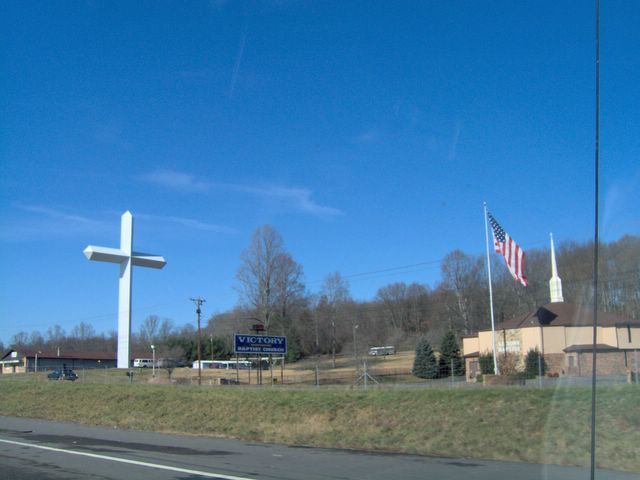
This cross beside the interstate must be 30 feet high.
I always wonder when I drive past it whether they had to apply for some kind of permit under the zoning ordinance, and if it had been denied, whether they would have had a claim under the Religious Land Use and Institutionalized Persons Act.
Watch what you ask for
Here are the press reports on the first big ruling in the Attorney General recount:
The AP - Court rejects Democrat's argument in contested AG's race
The Free Lance-Star - Ballots will not be rescanned
Richmond Times-Dispatch - McDonnell gets preliminary court victory
Roanoke Times - McDonnell wins panel decision on recount
Virginian Pilot - Panel's recount ruling goes McDonnell's way
Washington Post - Judges Exclude 26% of Ballots in Va. Recount
The issue was whether all of the "optical scan ballots" in the state would be rescanned. The panel ruled that only where the computer tapes were illegible or contested would the Court consider recounting of individual ballots in those jurisdictions. Optical scan ballots are but one of the several methods of balloting used in the Commonwealth.
The Court's ruling will have the effect of reducing the number of ballots that will be recounted by hand. The secretary of the State Board of Elections indicated that if the 500,000+ optical scan ballots were to be individually recounted, more than 130,000 of those would have to be recounted by hand, because "machines used in nine jurisdictions -- including Martinsville -- could not be reprogrammed to count only the votes in the attorney general's election." The Roanoke article explained: "If they could be reprogrammed, the machines could set aside for inspection any ballots in which there were write-in votes, no votes or more than one vote in the attorney general's race. Without reprogramming, recount officials would have to count each ballot by hand."
The Deeds campaign cited the undervote in Chesterfield County and Virginia Beach. I would not have thought that new votes found in Chesterfield or the Beach would be likely to decrease the margin favoring McDonnell.
The Deeds campaign based its arguments on the magnitude of the undervote. As described here, there are always fewer votes case for Attorney General than for Governor, and a spread of 5 points between the percentage of ballots recording a vote for governor and the percentage of ballots recording a vote for Attorney General is not uncommon, in the figures shown in Larry Sabato's Virginia Votes 2001, available for download here from the Center for Politics website. In other words, the existence of a 40,000 vote undervote is not surprising - the lack of such an undervote would be more surprising, if not unbelievable.
Also, I can't get out of my mind the conclusions from one commenter to this post on Rick Sincere's blog, where he concludes:
"If you examine the undervote rate -- that is, the number of people who went to the polls but didn't vote in a given race -- for the Lieutenant Governor and Attorney General you see that the average rate for optical scan systems was 2.8% for each race. The undervote rate using DRE machines, though, was 50% higher in each case: around 4.0 - 4.2%. A statistical analysis of varaince [sic] shows that the only significant factor to explain this increase in voter apathy is the technology used, NOT 'voter satisfaction' or even locality size."
The comment links to this site, with analysis of the Virginia vote, which suggests that that 99% of the voters who turned out cast a vote in the Governor's race, 97.16 % cast a vote in the AG's race, 97.01 cast a vote in the LG's race. The site has this summary of the undervote for AG, broken down by type of voting machine.
The AP - Court rejects Democrat's argument in contested AG's race
The Free Lance-Star - Ballots will not be rescanned
Richmond Times-Dispatch - McDonnell gets preliminary court victory
Roanoke Times - McDonnell wins panel decision on recount
Virginian Pilot - Panel's recount ruling goes McDonnell's way
Washington Post - Judges Exclude 26% of Ballots in Va. Recount
The issue was whether all of the "optical scan ballots" in the state would be rescanned. The panel ruled that only where the computer tapes were illegible or contested would the Court consider recounting of individual ballots in those jurisdictions. Optical scan ballots are but one of the several methods of balloting used in the Commonwealth.
The Court's ruling will have the effect of reducing the number of ballots that will be recounted by hand. The secretary of the State Board of Elections indicated that if the 500,000+ optical scan ballots were to be individually recounted, more than 130,000 of those would have to be recounted by hand, because "machines used in nine jurisdictions -- including Martinsville -- could not be reprogrammed to count only the votes in the attorney general's election." The Roanoke article explained: "If they could be reprogrammed, the machines could set aside for inspection any ballots in which there were write-in votes, no votes or more than one vote in the attorney general's race. Without reprogramming, recount officials would have to count each ballot by hand."
The Deeds campaign cited the undervote in Chesterfield County and Virginia Beach. I would not have thought that new votes found in Chesterfield or the Beach would be likely to decrease the margin favoring McDonnell.
The Deeds campaign based its arguments on the magnitude of the undervote. As described here, there are always fewer votes case for Attorney General than for Governor, and a spread of 5 points between the percentage of ballots recording a vote for governor and the percentage of ballots recording a vote for Attorney General is not uncommon, in the figures shown in Larry Sabato's Virginia Votes 2001, available for download here from the Center for Politics website. In other words, the existence of a 40,000 vote undervote is not surprising - the lack of such an undervote would be more surprising, if not unbelievable.
Also, I can't get out of my mind the conclusions from one commenter to this post on Rick Sincere's blog, where he concludes:
"If you examine the undervote rate -- that is, the number of people who went to the polls but didn't vote in a given race -- for the Lieutenant Governor and Attorney General you see that the average rate for optical scan systems was 2.8% for each race. The undervote rate using DRE machines, though, was 50% higher in each case: around 4.0 - 4.2%. A statistical analysis of varaince [sic] shows that the only significant factor to explain this increase in voter apathy is the technology used, NOT 'voter satisfaction' or even locality size."
The comment links to this site, with analysis of the Virginia vote, which suggests that that 99% of the voters who turned out cast a vote in the Governor's race, 97.16 % cast a vote in the AG's race, 97.01 cast a vote in the LG's race. The site has this summary of the undervote for AG, broken down by type of voting machine.
Wednesday, December 07, 2005
Rule 11 sanction for filing meritless recusal motions
In Givens v. O'Quinn, Chief Judge Jones imposed a sanction of $250 and a reprimand against a local lawyer for filing what he determined were meritless recusal motions.
In the opinion, the Court observes, with a degree of understatement, that "it is hard to imagine that any other attorney practicing before this court would believe it appropriate to file the present motions."
In the opinion, the Court observes, with a degree of understatement, that "it is hard to imagine that any other attorney practicing before this court would believe it appropriate to file the present motions."
Tuesday, December 06, 2005
Living the dream in Abingdon
The Bristol paper reported today that the Town of Abingdon has won the 2006 American Dream Town Award.
Judge Kirksey from Bristol is on the McConnell-Deeds recount panel
From this Commonwealth Conservative post, I see this Washington Post article, which says among other things that the Virginia Supreme Court has appointed Judges Wilford Taylor Jr., of Hampton and Larry B. Kirksey of Bristol to join Judge Markow of Richmond on the panel that will decide the recount in the Attorney General's race.
Judge Kirksey's background is discussed here.
Judge Kirksey's background is discussed here.
On more money for representing the poor in criminal cases
This free article from Virginia Lawyers Weekly says: "Statewide bar groups and Chief Justice Leroy Rountree Hassell Sr. are expected to lobby vigorously for more money for the representation of criminal defendants, and commission members see the session as a crucial one to make the system credible. Virginia court-appointed attorneys fees are the lowest in the country, and studies have shown that public defenders are underpaid and overworked as well."
I also read in VLW of 11/21/05 that Chief Justice Hassell will not be acting on the proposed family court system this year. That article noted that "Hassell had said initially that he hoped to have the General Assembly approve the concept of a family court in 2006, with funding and operation to begin in July 2007."
I also read in VLW of 11/21/05 that Chief Justice Hassell will not be acting on the proposed family court system this year. That article noted that "Hassell had said initially that he hoped to have the General Assembly approve the concept of a family court in 2006, with funding and operation to begin in July 2007."
New standing order for assignment of cases in the W.D. Va.
I just noticed this new standing order, dealing with the assignment of cases in the W.D. Va., entered on November 28, 2005.
I think it leaves the mix in Abingdon and Big Stone Gap unchanged.
I think it leaves the mix in Abingdon and Big Stone Gap unchanged.
Sunday, December 04, 2005
Another odd engineer from Virginia Tech
The Roanoke paper reports here that Henry Morris, who was on the engineering faculty at Virginia Tech from 1957 to 1970, published in 1961 a book about creationism that is still influential today.
Mr. Morris told the paper that he enjoyed his time at Tech. The reason why the professors from other departments did not give him much grief was explained this way: "Faculty in biology regarded Morris and his anti-evolutionist views as almost comical, dismissing him as another odd engineer."
Mr. Morris told the paper that he enjoyed his time at Tech. The reason why the professors from other departments did not give him much grief was explained this way: "Faculty in biology regarded Morris and his anti-evolutionist views as almost comical, dismissing him as another odd engineer."
A murder mystery featuring gun rights?
This account describes the efforts of a long-time Culpeper lawyer to write a novel, on themes including the Second Amendment.
Virginia Business Magazine - Legal Elite 2005
The December 2005 issue of Virginia Business has this year's listings of the Legal Elite, and it includes this profile of John H. OBrion Jr., regarding his mediation practice. A while back, I did a little research project, contacting a bunch of people I know and even a few who didn't know me, to get a mediator in Richmond, and OBrion was the consensus choice. We went with him, and he was great.
On the decline of peremptory challenges
Marcia Oddi links here to this AP story which begins: "Judges in Michigan cannot use a person's race, sex, religion or nationality to select jurors under a new rule approved by the Michigan Supreme Court."
Saturday, December 03, 2005
On the timeliness of a federal employment discrimination case
In cases under the federal employment discrimination statutes that require filing with the EEOC (Title VII of the Civil Rights Act, the Age Discrimination in Employment Act, the Americans with Disabilities Act), the claimant will eventually receive from the EEOC a right-to-sue letter, and then the claimant has ninety days after receipt of the right-to-sue letter to file in court. See 29 U.S.C. § 626(e), 42 U.S.C. § 2000e-5(f).
In Miller v. Bristol Compressors, Chief Judge Jones of the W.D. Va. found that the plaintiff filed sued on the 91st day, and granted the defendant's motion to dismiss.
The facts were these: (1) the EEOC mailed the right-to-sue on May 31, (2) the complaint alleged on its face that the right-to-sue was received "on or about June 3," (3) in a late-filed affidavit, the plaintiff said that he was on vacation when the letter arrived in his mailbox and first saw it on June 5 (a Sunday), (4) suit was filed electronically on September 2 and the filing fee was paid on September 6.
Chief Judge Jones ruled as follows: (1) a motion to dismiss may be the proper means of asserting the statute of limitations, where the untimeliness is shown on the face of the complaint (2) in applying the 90-day limitations period, the Fourth Circuit does not follow an "actual receipt" rule, because of the potential for abuse, (3) in determining the date of receipt, the Court can apply the presumption underlying Rule 6(e), that the time from mailing to receipt is three days, (4) the Court did not need to decide whether the filing date was September 6 (the Tuesday after Labor Day, when the filing fee was paid) as opposed to September 2 (the Friday before Labor Day, when the complaint was e-filed), (5) plaintiff's motion for extra time to file his response was denied, because no excusible neglect or no particular reason at all was shown; (6) even with the affidavit, the Court would find that the date of receipt was June 3 and not June 5, applying the three-day rule, and not the date when the plaintiff got back from vacation, (7) September 2, when suit was e-filed, was the 91st day after June 3.
On the application of the three-day presumption, there is some diversity of opinion among the other circuits. See Taylor v. Books A Million, Inc., 296 F.3d 376, 379 (5th Cir. 2002) ("When the date on which a right-to-sue letter was actually received is either unknown or disputed, courts have presumed various receipt dates ranging from three to seven days after the letter was mailed."); Hunter v. Stephenson Roofing, Inc., 790 F.2d 472, 475 (6th Cir. 1986) (deciding on five days, citing 20 CFR § 422.210(c), the five-day presumption for receipt of right-to-sue notices in Social Security cases). See also Rao v. Baker, 898 F.2d 191, 195-96 (D.C. Cir. 1990) (explaining EEOC interprets "receipt ... of final decision" to include "a rebuttable presumption that in all cases in which evidence of the actual date of receipt is lacking, the final agency decision will be deemed to have been received [five] days following the date of decision") (citing 44 Fed. Reg. 34,494 (1979)).
The Fourth Circuit, in unpublished opinions, has recognized the three day presumption. See Nguyen v. Inova Alexandria Hosp., 1999 WL 556446, *3 (4th Cir.) ("If the date is unknown, however, it is presumed that service by regular mail is received within three days pursuant to Rule 6(e) of the Federal Rules."); Dixon v. Digital Equipment Corp., 1992 WL 245867, *1(4th Cir.) ("Rule 6(e) only provides a presumption regarding when notice was received. . . . Title VII claimants may only claim this presumption if the date of receipt of the right to sue letter is disputed."); Ish v. Arlington County, 1990 WL 180127, *1 (4th Cir.) ("We adopt the reconciliation of these positions suggested in Griffin v. Prince William Hosp. Corp., 716 F. Supp. 919, 921 n.7 (E.D. Va. 1989), which held that although Rule 6(e) does not automatically provide a three-day extension to § 2000e-5(f)(1), it does provide a presumption of receipt three days after mailing if the parties dispute the date of receipt.").
In Miller v. Bristol Compressors, Chief Judge Jones of the W.D. Va. found that the plaintiff filed sued on the 91st day, and granted the defendant's motion to dismiss.
The facts were these: (1) the EEOC mailed the right-to-sue on May 31, (2) the complaint alleged on its face that the right-to-sue was received "on or about June 3," (3) in a late-filed affidavit, the plaintiff said that he was on vacation when the letter arrived in his mailbox and first saw it on June 5 (a Sunday), (4) suit was filed electronically on September 2 and the filing fee was paid on September 6.
Chief Judge Jones ruled as follows: (1) a motion to dismiss may be the proper means of asserting the statute of limitations, where the untimeliness is shown on the face of the complaint (2) in applying the 90-day limitations period, the Fourth Circuit does not follow an "actual receipt" rule, because of the potential for abuse, (3) in determining the date of receipt, the Court can apply the presumption underlying Rule 6(e), that the time from mailing to receipt is three days, (4) the Court did not need to decide whether the filing date was September 6 (the Tuesday after Labor Day, when the filing fee was paid) as opposed to September 2 (the Friday before Labor Day, when the complaint was e-filed), (5) plaintiff's motion for extra time to file his response was denied, because no excusible neglect or no particular reason at all was shown; (6) even with the affidavit, the Court would find that the date of receipt was June 3 and not June 5, applying the three-day rule, and not the date when the plaintiff got back from vacation, (7) September 2, when suit was e-filed, was the 91st day after June 3.
On the application of the three-day presumption, there is some diversity of opinion among the other circuits. See Taylor v. Books A Million, Inc., 296 F.3d 376, 379 (5th Cir. 2002) ("When the date on which a right-to-sue letter was actually received is either unknown or disputed, courts have presumed various receipt dates ranging from three to seven days after the letter was mailed."); Hunter v. Stephenson Roofing, Inc., 790 F.2d 472, 475 (6th Cir. 1986) (deciding on five days, citing 20 CFR § 422.210(c), the five-day presumption for receipt of right-to-sue notices in Social Security cases). See also Rao v. Baker, 898 F.2d 191, 195-96 (D.C. Cir. 1990) (explaining EEOC interprets "receipt ... of final decision" to include "a rebuttable presumption that in all cases in which evidence of the actual date of receipt is lacking, the final agency decision will be deemed to have been received [five] days following the date of decision") (citing 44 Fed. Reg. 34,494 (1979)).
The Fourth Circuit, in unpublished opinions, has recognized the three day presumption. See Nguyen v. Inova Alexandria Hosp., 1999 WL 556446, *3 (4th Cir.) ("If the date is unknown, however, it is presumed that service by regular mail is received within three days pursuant to Rule 6(e) of the Federal Rules."); Dixon v. Digital Equipment Corp., 1992 WL 245867, *1(4th Cir.) ("Rule 6(e) only provides a presumption regarding when notice was received. . . . Title VII claimants may only claim this presumption if the date of receipt of the right to sue letter is disputed."); Ish v. Arlington County, 1990 WL 180127, *1 (4th Cir.) ("We adopt the reconciliation of these positions suggested in Griffin v. Prince William Hosp. Corp., 716 F. Supp. 919, 921 n.7 (E.D. Va. 1989), which held that although Rule 6(e) does not automatically provide a three-day extension to § 2000e-5(f)(1), it does provide a presumption of receipt three days after mailing if the parties dispute the date of receipt.").
Next time, call Domino's
In Coffee v. Morris, the facts were these: the plaintiff mom was riding as passenger, her son was driving, she had two pizzas in her lap, the car gets pulled over for speeding as they were almost home, the son stops in front of their house, the officer tells Mom to stay in the car, Mom gets out, the officer grabs her, Mom sues claiming that her constitutional rights were violated.
On summary judgment, Judge Conrad found that the rights of the passenger were not clearly established, and granted the motion for the defendant based on qualified immunity.
On summary judgment, Judge Conrad found that the rights of the passenger were not clearly established, and granted the motion for the defendant based on qualified immunity.
On getting your case transferred from Roanoke to Big Stone Gap
In Simmons v. Johnson, Judge Conrad explained why a claim related to an incident at the Wallens Ridge facility in Wise County should be heard in the Big Stone Gap division rather than the Roanoke division in which it was filed.
West Virginia Supreme Court upholds constitutionality of coal severance tax
In U.S. Steel Mining Company, LLC v. Helton, the West Virginia Supreme Court in a split decision affirmed the constitutionality of West Virginia's coal severance tax. The AP has this article and the Charleston Gazette has this article about the decision.
Here and here are earlier posts on this topic.
Here and here are earlier posts on this topic.
Thursday, December 01, 2005
Another Virginia bigamy case
The Harrisonburg paper has this report on a bigamy prosecution.
The article quotes the Commonwealth's Attorney:
"It’s a big deal when you get married," Mitchell said. "You can’t arbitrarily end that marriage by getting married to someone else."
The article did not say whether the defendant would claim that the bigamy statute was unconstitutional, on the theory that Lawrence v. Texas has declared all laws about sexual morality to be irrational and therefore invalid. I'm sure that every one of the judges up there would be delighted to entertain the issue.
The article quotes the Commonwealth's Attorney:
"It’s a big deal when you get married," Mitchell said. "You can’t arbitrarily end that marriage by getting married to someone else."
The article did not say whether the defendant would claim that the bigamy statute was unconstitutional, on the theory that Lawrence v. Texas has declared all laws about sexual morality to be irrational and therefore invalid. I'm sure that every one of the judges up there would be delighted to entertain the issue.
Local attorney arrested on allegations that he e-mailed his client with instructions to lie in court
Someone sent me this link, which says in part:
"The Tennessee Bureau of Investigation is now investigating a Tri-Cities attorney for perjury, after he is accused of advising one of his clients to lie under oath. . . .
The arrest came after his client, a defendant in a DUI case, provided the judge with two emails from Pratt before her trial started today."
"The Tennessee Bureau of Investigation is now investigating a Tri-Cities attorney for perjury, after he is accused of advising one of his clients to lie under oath. . . .
The arrest came after his client, a defendant in a DUI case, provided the judge with two emails from Pratt before her trial started today."
Is $4,000 too much in fees for a 4-page brief?
In this post, Ernie talks about Judge Posner and his opinion in Budget Rent-a-car System, Inc. v. Consolidated Equity LLC.
Judge Posner wrote:
"We ordered that sanctions be imposed on Consolidated Equity for this frivolous appeal, Fed. R. App. P. 38, and Budget has submitted a statement of its fees and costs. They are exorbitant. Because the appeal was dismissed before briefing, Budget’s only appellate submission was a four-page jurisdictional memo that cites five cases. Budget claims that the memo cost $4,626.50 to produce (3.3 partner hours at $425 per hour and 10.4 associate hours at $310 per hour); for so modest a product, 13.7 hours of high-paid professionals’ time are too many."
More perilous, the lawyers for Budget put in $165 as costs, which was the fee for one of its lawyers to be admitted to the bar of the appeals court, which caused Posner to add, "Budget’s mischaracterization further undermines the credibility of its submissions."
Ernie's post links to discussion among some lawyers that appeals court judges don't have a very good idea about what things cost.
Judge Posner wrote:
"We ordered that sanctions be imposed on Consolidated Equity for this frivolous appeal, Fed. R. App. P. 38, and Budget has submitted a statement of its fees and costs. They are exorbitant. Because the appeal was dismissed before briefing, Budget’s only appellate submission was a four-page jurisdictional memo that cites five cases. Budget claims that the memo cost $4,626.50 to produce (3.3 partner hours at $425 per hour and 10.4 associate hours at $310 per hour); for so modest a product, 13.7 hours of high-paid professionals’ time are too many."
More perilous, the lawyers for Budget put in $165 as costs, which was the fee for one of its lawyers to be admitted to the bar of the appeals court, which caused Posner to add, "Budget’s mischaracterization further undermines the credibility of its submissions."
Ernie's post links to discussion among some lawyers that appeals court judges don't have a very good idea about what things cost.
Subscribe to:
Posts (Atom)