One of my interests of late has been child support enforcement.
Va. Code § 8.01-676.1(D) provides: “The court from which an appeal is sought may refuse to suspend the execution of decrees for support and custody.” By this provision, the General Assembly “specifically has addressed the suspension of a support order pending appeal.” Reid v. Reid, 245 Va. 409, 414, 429 S.E.2d 208, 211 (1993). As then-Judge Koontz wrote in the earlier panel decision of the Court of Appeals in the Reid case, “This statute reflects the legislative recognition that compelling public policy reasons exist to cause the judgment for support to remain in effect and unabated during the pendency of an appeal.” Reid v. Reid, 12 Va. App. 1218, 1232, 409 S.E.2d 155, 163 (1991). Consistent with the language of the statute, and the “compelling public policy” that supports it, the trial court can refuse to stay its orders while the appeal is pending. See Holzberlein v. Holzberlein, Record No. 0089-05-4, 2005 WL 1943240, *2 (Va. App. Aug. 16, 2005) (affirming denial of husband’s supersedeas bond motion). In the absence of a supersedeas bond, while an appeal of a child support order is pending, the lower court may not modify but may enforce the existing order. Howell v. Com. of Virginia, DCSE, ex rel. Fisher, No. 0123-01-2, 2001 WL 1359847, *2 (Va. App. 2001) (citing Decker v. Decker, 17 Va.App. 562, 564, 440 S.E.2d 411, 412 (1994)).
But what is a "decree for support"? Is it the judgment for the arrearage, which seems like a fairly ordinary money judgment, or is the judgment that establishes the ongoing monthly obligation, or both? The Court of Appeals has recognized that there is a difference between the two. At least with regard to spousal support, "the distinction that must be drawn between a spousal support order that establishes an ongoing, unliquidated support obligation and one that establishes a sum certain or liquidated amount due and owing at a particular time for purposes of the proper application of Virginia law to Virginia spousal support orders." Bennett v. Com., Dept. of Social Services, Div. of Child Support Enforcement ex rel. Waters, 15 Va.App. 135, 144, 422 S.E.2d 458, 463 (1992). In Bennett, the Court held that there was no time limit in which to bring an action to obtain an money judgment for an arrearage, but there was a time limit for enforcing the judgment for the arrearage, in the context of a support award from another state.
If the obligation to pay is not suspended, and the appellant tries to pay and proceed with the appeal, there is the risk that the effect of payment will be to render the appeal moot. See Briggman v. Com., Record No. 1911–09–4 (Va. Ct. App. Apr. 10, 2010) (dismissing child support appeal for mootness on account of payment); Walthall v. Com., 3 Va. App. 674, 353 S.E.2d 169 (1987) (dismissing child support appeal for mootness on account of payment). Further, it is likely that if he pays then he has no argument for restitution, even if he wins on appeal. Nordstrom v. Nordstrom, 50 Va. App. 257, 266, 649 S.E.2d 200, 205 (2007) (“a trial court has no statutory or inherent authority to order restitution of child support”); Meyers v. Meyers, No. 1920-03-4, 2003 WL 22887920 (Va. App. Dec. 9, 2003); Summers v. Summers, No. 2759-98-4, 1999 WL 1129977, *3 (Va. App. June 15, 1999); Wilson v. Wilson, 25 Va. App. 752, 760, 492 S.E.2d 495, 499 (1997) (in dicta, rejecting claim for restitution); Beckwitt v. Beckwitt, No. 1523-92-4, 1993 WL 381451, *4 (Va. App. Sept. 28, 1993) (upholding denial of restitution). These cases follow Reid, in which the Supreme Court held that there is no “statutory provision for restitution of support paid pursuant to an order that is later reversed,” and that there is no inherent power to order such restitution. 245 Va. at 415, 429 S.E.2d at 211. In Reid, the issue before the Court was spousal support, but the statute the Court addressed, section 20-112, applies equally to “support for a spouse or for a child.”
Even where the trial court agrees to set the bond, there is some ambiguity as to the proper amount. Section 8.01-676.1(C) provides: “An appellant who wishes execution of the judgment or award from which an appeal is sought to be suspended during the appeal shall . . . file an appeal bond or irrevocable letter of credit conditioned upon the performance or satisfaction of the judgment and payment of all damages incurred in consequence of such suspension.” This language “does not give the trial court
discretion to set an appeal bond in an amount less than the judgment.” Tauber v. Com. ex rel. Kilgore, 263 Va. 520, 545, 562 S.E.2d 118, 132 (2002). The bond should be set high enough to include interest under Va. Code 8.01-682, the $50 fee under Va. Code 17.1-624, and printing costs under Va. Code 17.1-605 and Rule 5A:30(b). See O’Connor v. O’Connor, No. 2299-02-4, 2003 WL 22887978, *5 (Va. App. Dec. 9, 2003) (affirming supersedeas bond of $10,000 on judgment amount of $8,193.54). How is the trial court supposed to figure all that out when the duration of the appeal is unknown? In theory, the appellant can keep on litigating and relitigating the appeal through the Court of Appeals and on to the Virginia Supreme Court for a couple of years. A trial court might act within its discretion to set the bond at the the arrearage plus two years of interest plus the maximum recoverable costs.
Tuesday, July 10, 2012


Which case says that a hand under the shirt is not a gun?
In Mitchell v. Com., the Court of Appeals in an opinion by Judge Alston joined by Judges Petty and Beales denied relief on what sounded like a plausible appellate issue for failure to cite legal authority.
The issue was whether the defendant could be convicted under Va. Code 18.2-53.1 where a substantive element was that the defendant did "use or attempt to use any pistol, shotgun, rifle, or other firearm or display such weapon in a threatening manner" and the victim did not say that he ever saw a firearm. The appellant cited the language of the statute, and argued:
"In the instant case, the only evidence presented to establish the use of a firearm was the testimony of the clerk that the defendant had his hand under his shirt when he told her to give him the money and there was a protrusion in her direction. Immediately afterwards, the defendant leapt onto he [sic] counter, and with the same hand the clerk testified that he had up under his shirt, grabbed money from the drawer. The defendant never stated he had a gun, no gun was ever seen by either clerk, and the evidence in fact proved beyond a reasonable doubt that he did not have a gun in his hand."
The Court cited several cases, suggesting that counsel could or should have used them in support of the argument. One of them says: "Possession of a firearm is an essential element of the statutory offense, and the fact that Konchal merely thought or perceived that Yarborough was armed is insufficient to prove that he actually possessed a firearm." Yarborough v. Com., 247 Va. 215, 219, 441 S.E.2d 342, 344 (1994). The discussion in Yarborough suggests to me that the issue was one of plain meaning, and that this fellow Mitchell was wrongfully convicted.
Moreover, in my view, a citation to the express language of the Code should often satisfy the requirement under the appellate rules for legal authority, when the argument is based on the plain meaning of the statute and identifies the statutory element that was not proven. The need for case law would arise only where the tools of construction must be applied.
As Judge Posner once famously explained, in the context of qualified immunity for public officials under section 1983, where the state of law is an issue: "The easiest cases don't even arise. There has never been a section 1983 case accusing welfare officials of selling foster children into slavery; it does not follow that if such a case arose, the officials would be immune from damages liability because no previous case had found liability in those circumstances." K.H. Through Murphy v. Morgan, 914 F.2d 846, 851 (7th Cir. 1990). You shouldn't need a case to make the point that a hand under a shirt is not a pistol, shotgun, rifle, or other firearm.
Monday, July 09, 2012
ESI opinion from Judge Jones of the W.D. Va.
In Adair v. EQT Production Company, Judge Jones overruled objections to Magistrate Judge Sargent's ruling, but modified it, where the subject matter was EQT's obligation to produce 370 GB of e-mails. Judge Jones agreed that EQT would have to produce certain segments of the e-mails, screened for specified search terms to increase the changes of avoiding privileged documents, but without screening by humans.
The Court explained:
"EQT’s position is that the only reasonable search for privileged and responsive documents is done by human beings on an individual document basis. As the bulk of trending case law and the recent amendments to the rules indicate, this is an untenable position."
Friday, June 29, 2012
Electronic appendices
The Fourth Circuit has given notice that the rules are being changed to require the appendix be filed in electronic form, in its entirety or in the form of an "excerpt" containing specified documents. How long will it be before that Court dispenses with paper filing?
Victory of the blue pencil, and how broccoli trumped wheat
We read in contract law, especially in Virginia, that the parties have freedom of contract and the courts do not get to make new contracts for the parties. In some other states, in some kinds of cases, courts are allow to enforce contracts to the extent that they are reasonable. The figure of speech for this sort of judging is the blue pencil.
Chief Justice Roberts took the blue pencil to the Affordable Care Act this week, in the National Federation of Independent Business v. Sebelius. He whacked out some bits and rewrote others, upholding the "mandate" on what the ABA Journal has noted was the "Solicitor General's third backup argument" that barely made it into the argument or the briefs. The characterization of the mandate as a "tax" was what led the Fourth Circuit to bypass the merits in one of its earlier panel decisions, because of the Anti-Injunction Act, in Liberty University v. Geithner.
It has been reported this week that Chief Justice Roberts fashioned himself after Justice Robert Jackson, who is one of my favorites, too. (My favorite story about Justice Jackson is retold here.) Justice Jackson's most famous opinion, I suspect, was his opinion for the Court in Wickard v. Filburn, upholding the Agricultural Adjustment Act as a valid exercise of Congress's power to regulate interstate commerce. Wickard is referenced at least 25 times in the Affordable Care Act opinions. Wickard was a case about wheat growing. Chief Justice Roberts' opinion imposes a new limit on Wickard where common wisdom supposed there was none.
Chief Justice Roberts rejected the Affordable Care Act as a valid exercise of the Commerce Clause, buying into what Justice Ginsburg called the "broccoli horrible" - and so the broccoli references (I counted 12) are second only to the wheat references (25) in the several opinions. Putting Wickard and Sebelius together, I conclude that the Interstate Commerce Clause allows Congress to prohibit you from growing your own vegetables, but does not allow Congress to pass a law that would punish you for refusing to eat them.
Monday, June 25, 2012
End of term fever
The Supreme Court issued four opinions today, but not the one that everyone was waiting for.
In Arizona v. U.S., the Court held that three provisions but not all of the Arizona statute dealing with illegal immigrants was preempted by federal law. Justices Scalia, Thomas, and Alito concurred in part and dissented in part in separate opinions.
In Miller v. Alabama, the Court by 5-4 vote struck down life sentences without the chance of parole for juvenile offenders. The dissenters pointed out that this is another in an increasing line of Eighth Amendment cases where the Court is just making it up based on its own reckoning of society's standards.
In Southern Union v. U.S., the Court held that the protections of the Sixth Amendment, that require a jury to make findings on elements of a criminal case that enhance sentencing, extend to matters involving criminal fines. In that case, the Defendant was fined $50,000 for 762 days for a continuing environmental law violation. The Defendant argued that the jury verdict had not necessarily determined a violation on more than one day.
Finally, in American Tradition Partnership v. Bullock, the Court summarily overturned a state court decision that corporations have no First Amendment rights in connection with campaign finance, citing Citizens United.
Of these, the one that is the least supportable is the Alabama case. It seems unreasonable to decide what is cruel and unusual based on a head count of what the different states are doing, and even more unreasonable to conclude that what 29 states are doing does not comport with the "evolving standards of decency." Justice Alito pointed out in his dissent, who says we are becoming more decent over time anyway?
Friday, June 22, 2012
On transfer orders
I have been studying venue motions in state court lately.
One question is, what if the transferor court got it wrong, is it possible to file a motion to reconsider?
The answer from most places is yes, the transferor court still has the power to reconsider the transfer order even after it has been entered, at least until the transferee court takes jurisdiction of the case. But when does the transferee court take jurisdiction?
The answer from most places is, when the transferee court gets the file and dockets the case. There do not seem to be any Virginia cases on point.
Can a transfer order be appealed?
The answer to whether the transfer order is appealable is mixed, perhaps because some courts have more liberal rules about the appeal of interlocutory orders than others. Notionally, a transfer order leaves the whole case to be decided, and so it seems unlikely that it would ever be considered a "final" order. See Ferguson v. Carson, 235 S.W.3d 607 (Mo. App. 2007); State ex rel. Lyons v. Zaleski, 75 Ohio St.3d 623, 665 N.E.2d 212 (1996). Even so, in some places it is considered final, in the limited sense that the transferor court is through with the case. See DiNapoli v. Kent Island, LLC, 203 Md.App. 452, 38 A.3d 509 (2012).
The closest Virginia cases deal with transfer of cases from the law side to the equity side, and remarkably there is a case or two that says the transfer from one side of the court to the other is an appealable order, even if it is not final. The continuing validity of these precedents is suspect.
One question is, what if the transferor court got it wrong, is it possible to file a motion to reconsider?
The answer from most places is yes, the transferor court still has the power to reconsider the transfer order even after it has been entered, at least until the transferee court takes jurisdiction of the case. But when does the transferee court take jurisdiction?
The answer from most places is, when the transferee court gets the file and dockets the case. There do not seem to be any Virginia cases on point.
Can a transfer order be appealed?
The answer to whether the transfer order is appealable is mixed, perhaps because some courts have more liberal rules about the appeal of interlocutory orders than others. Notionally, a transfer order leaves the whole case to be decided, and so it seems unlikely that it would ever be considered a "final" order. See Ferguson v. Carson, 235 S.W.3d 607 (Mo. App. 2007); State ex rel. Lyons v. Zaleski, 75 Ohio St.3d 623, 665 N.E.2d 212 (1996). Even so, in some places it is considered final, in the limited sense that the transferor court is through with the case. See DiNapoli v. Kent Island, LLC, 203 Md.App. 452, 38 A.3d 509 (2012).
The closest Virginia cases deal with transfer of cases from the law side to the equity side, and remarkably there is a case or two that says the transfer from one side of the court to the other is an appealable order, even if it is not final. The continuing validity of these precedents is suspect.
More on the new judges
The Bristol paper had this article on the investiture of Judges McKinney and Simmons. Next week is the same again for Judge Johnson in Circuit Court.
Tuesday, May 15, 2012
On the new judges
Last night, the General Assembly selected the following:
to the Court of Appeals -
The Honorable Teresa M. Chafin, of Russell, as a judge of the Court of Appeals of Virginia for a term of eight years commencing June 1, 2012.
to the Circuit Courts -
The Honorable Marcus H. Long, Jr., of Montgomery, as a judge of the Twenty-seventh Judicial Circuit for a term of eight years commencing July 1, 2012.
The Honorable Sage B. Johnson, of Washington, as a judge of the Twenty-eighth Judicial Circuit for a term of eight years commencing July 1, 2012.
to the General District Courts -
V. Blake McKinney, of Washington, as a judge of the Twenty-eighth Judicial District for a term of six years commencing July 1, 2012.
Clarence E. Phillips, of Dickenson, as a judge of the Thirtieth Judicial District for a term of six years commencing July 1, 2012.
to the Juvenile and Domestic Relations District Courts -
Bradley W. Finch, of Montgomery, as a judge of the Twenty-seventh Judicial District for a term of six years commencing July 1, 2012.
Monica Dawn Cox, of Galax, as a judge of the Twenty-seventh Judicial District for a term of six years commencing July 1, 2012.
Deanis L. Simmons, of Bristol, as a judge of the Twenty-eighth Judicial District for a term of six years commencing July 1, 2012.
to the Court of Appeals -
The Honorable Teresa M. Chafin, of Russell, as a judge of the Court of Appeals of Virginia for a term of eight years commencing June 1, 2012.
to the Circuit Courts -
The Honorable Marcus H. Long, Jr., of Montgomery, as a judge of the Twenty-seventh Judicial Circuit for a term of eight years commencing July 1, 2012.
The Honorable Sage B. Johnson, of Washington, as a judge of the Twenty-eighth Judicial Circuit for a term of eight years commencing July 1, 2012.
to the General District Courts -
V. Blake McKinney, of Washington, as a judge of the Twenty-eighth Judicial District for a term of six years commencing July 1, 2012.
Clarence E. Phillips, of Dickenson, as a judge of the Thirtieth Judicial District for a term of six years commencing July 1, 2012.
to the Juvenile and Domestic Relations District Courts -
Bradley W. Finch, of Montgomery, as a judge of the Twenty-seventh Judicial District for a term of six years commencing July 1, 2012.
Monica Dawn Cox, of Galax, as a judge of the Twenty-seventh Judicial District for a term of six years commencing July 1, 2012.
Deanis L. Simmons, of Bristol, as a judge of the Twenty-eighth Judicial District for a term of six years commencing July 1, 2012.
Wednesday, May 09, 2012
That's what the defendant's lawyers are always telling me
A headline from today's VLW daily alert:
"Minor's suit a legal nullity."
"Minor's suit a legal nullity."
Thursday, May 03, 2012
The citizen-lawyer from Roanoke
I was delighted to read this morning that Hampden-Sydney College has selected Mike Pace, a former president of The Virginia Bar Association, to receive the Patrick Henry Award, given by the Wilson Center for Leadership in the Public Interest. Only a handful of other Virginia lawyers have received this award, including William T. Wilson of Covington, Julious Smith of the Williams Mullen firm, Judge Jere M.H. Willis, Jr. of Fredericksburg, Judge Joseph A. Leafe of Norfolk, and former U.S. Senators Spong and Trible.
I am a big fan of Mike Pace.
I am a big fan of Mike Pace.
Monday, April 23, 2012
Making up another cause of action - the self-serving derivative suit
In Virginia, the derivative action for shareholders is a creature of statute. Under the statute, Va. Code 13.1-672.1, a shareholder cannot bring a derivative action on behalf of the corporation unless he or she can show four facts, in addition to fulfilling the procedural prerequisites to such an action:
A shareholder shall not commence or maintain a derivative proceeding unless the shareholder:
1. Was a shareholder of the corporation at the time of the act or omission complained of;
2. Became a shareholder through transfer by operation of law from one who was a shareholder at that time; or
3. Became a shareholder before public disclosure and without knowledge of the act or omission complained of; and
4. Fairly and adequately represents the interests of the corporation in enforcing the right of the corporation.
In Cattano v. Bragg, the Virginia Supreme Court in a 6-1 decision held that in the circumstance of a corporation with two shareholders, a minority shareholder with personal claims as a creditor against the corporation could also have standing under section 13.1-672.1 to bring suit on behalf of the corporation to recover money from the other shareholder, so that there would be more money to satisfy the personal claims.
Justice McClanahan dissented, and I agree with her view, that at least where the corporation was already defunct, the proper remedy was simply judicial dissolution. Unless I am mistaken, fees and costs of about $289,228.71 were charged to the corporation, so that the plaintiff could get 27.35% of $234,412.18 that the defendant was held to have owed the firm. It seems to me that the court-appointed receiver should have been the one to decide what if anything the corporation should have spent to recover the $234,412.18, of which most would evidently go back to the Defendant if the shareholders are going to get a distribution. The opinion notes that the circuit court could have empowered the receiver to garner the assets of the corporation, instead of allowing the derivative claims to proceed.
The majority opinion has a footnote about why this was not done. It concludes: "the amended complaint was a sufficient alternative mechanism to allocate assets without authorizing additional suits by the receiver." On the face of things, the description of the plaintiff's claims as "a sufficient alternative mechanism" suggests that somehow the majority was indifferent to the possibility that the receiver might have been more efficient than the plaintiff.
A shareholder shall not commence or maintain a derivative proceeding unless the shareholder:
1. Was a shareholder of the corporation at the time of the act or omission complained of;
2. Became a shareholder through transfer by operation of law from one who was a shareholder at that time; or
3. Became a shareholder before public disclosure and without knowledge of the act or omission complained of; and
4. Fairly and adequately represents the interests of the corporation in enforcing the right of the corporation.
In Cattano v. Bragg, the Virginia Supreme Court in a 6-1 decision held that in the circumstance of a corporation with two shareholders, a minority shareholder with personal claims as a creditor against the corporation could also have standing under section 13.1-672.1 to bring suit on behalf of the corporation to recover money from the other shareholder, so that there would be more money to satisfy the personal claims.
Justice McClanahan dissented, and I agree with her view, that at least where the corporation was already defunct, the proper remedy was simply judicial dissolution. Unless I am mistaken, fees and costs of about $289,228.71 were charged to the corporation, so that the plaintiff could get 27.35% of $234,412.18 that the defendant was held to have owed the firm. It seems to me that the court-appointed receiver should have been the one to decide what if anything the corporation should have spent to recover the $234,412.18, of which most would evidently go back to the Defendant if the shareholders are going to get a distribution. The opinion notes that the circuit court could have empowered the receiver to garner the assets of the corporation, instead of allowing the derivative claims to proceed.
The majority opinion has a footnote about why this was not done. It concludes: "the amended complaint was a sufficient alternative mechanism to allocate assets without authorizing additional suits by the receiver." On the face of things, the description of the plaintiff's claims as "a sufficient alternative mechanism" suggests that somehow the majority was indifferent to the possibility that the receiver might have been more efficient than the plaintiff.
Friday, April 20, 2012
Making up a new cause of action for the Commonwealth
Today, the Virginia Supreme Court decided in Wyatt v. McDermott to recognize in response to a certified question a claim for "tortious interference with parental rights."
The context was a lawsuit by the father of a child against the lawyers who arranged for the adoption of the child by a couple in Utah, along with the new parents, and the agency that was involved with the adoption - everyone but the mother. The federal court certified to the Virginia Supreme Court two questions:
1. Whether the Commonwealth of Virginia recognizes tortious interference with parental rights as a cause of action?
2. If so, what are the elements of the cause of action, and what is the burden of proof of such a claim?
The Supreme Court answered yes, by a 4-3 vote with Justices Mims, McClanahan, and Goodwyn in dissent. Justice Millette wrote the opinion for the majority. The Court concluded: "although no Virginia court has had occasion to consider the cause of action, the tort in question has indeed existed at common law and continues to exist today." The Court added: "Furthermore, rejecting tortious interference with parental rights as a legitimate cause of action would leave a substantial gap in the legal protection afforded to the parent-child relationship." The authorities cited in the majority and dissenting opinions show that both these propositions are debatable and have been debated.
The best thing that can be said for the opinion is the extent to which it closes the door on the use of this new-to-Virginia tort as a weapon between the parents themselves. "We share these courts' concern for the well-being of children caught in intra-familial disputes, a concern that was not as prominent an issue in 1607, when only a male parent could bring this cause of action. The fear that this cause of action would be used as a means of escalating intra-familial warfare can be largely disposed of by barring the use of this tort between parents, as other state courts have done." Even so, many of the cases cited were inter-familial claims.
The majority's conclusions about the state of the common law before 1607 bring to mind Judge Wilkinson's criticism of various schools of constitutional interpretation summarized in the recent George Will column. Whether the question is a matter of constitutional law or the common law, evidently it is a hard thing for smart justices confronted with injustice to say go across the street to the legislature.
The Court distinguishes the interest with parental rights from alienation of affections, barred by statute under Va. Code 8.01-220, with the idea that interference with parental rights means "that the offending party has removed parental or custodial authority from the complaining parent." The opinion does not cite McDermott v Reynolds, wherein the Court held that the statute barring actions for alienation of affections applied with equal measure to a claim for intentional infliction of emotional distress.
The district court denied the defendants' motions to dismiss based on fraud. Nevertheless, the Court found it necessary to recognize this "new" cause of action, claiming that there would be no fraud remedy in some cases. It is difficult to understand why this should be so, how innocent parents can be swindled out of their parental rights without some actionable misrepresentation or concealment that kept the parent from protesting against the adoption or whatever step was being taken to cause the loss of the parental rights. UPDATE: I didn't notice the first time through that Justice Goodwyn joined with Justice McClanahan in her dissent, which only adds to my view that she got it right in this case.
The context was a lawsuit by the father of a child against the lawyers who arranged for the adoption of the child by a couple in Utah, along with the new parents, and the agency that was involved with the adoption - everyone but the mother. The federal court certified to the Virginia Supreme Court two questions:
1. Whether the Commonwealth of Virginia recognizes tortious interference with parental rights as a cause of action?
2. If so, what are the elements of the cause of action, and what is the burden of proof of such a claim?
The Supreme Court answered yes, by a 4-3 vote with Justices Mims, McClanahan, and Goodwyn in dissent. Justice Millette wrote the opinion for the majority. The Court concluded: "although no Virginia court has had occasion to consider the cause of action, the tort in question has indeed existed at common law and continues to exist today." The Court added: "Furthermore, rejecting tortious interference with parental rights as a legitimate cause of action would leave a substantial gap in the legal protection afforded to the parent-child relationship." The authorities cited in the majority and dissenting opinions show that both these propositions are debatable and have been debated.
The best thing that can be said for the opinion is the extent to which it closes the door on the use of this new-to-Virginia tort as a weapon between the parents themselves. "We share these courts' concern for the well-being of children caught in intra-familial disputes, a concern that was not as prominent an issue in 1607, when only a male parent could bring this cause of action. The fear that this cause of action would be used as a means of escalating intra-familial warfare can be largely disposed of by barring the use of this tort between parents, as other state courts have done." Even so, many of the cases cited were inter-familial claims.
The majority's conclusions about the state of the common law before 1607 bring to mind Judge Wilkinson's criticism of various schools of constitutional interpretation summarized in the recent George Will column. Whether the question is a matter of constitutional law or the common law, evidently it is a hard thing for smart justices confronted with injustice to say go across the street to the legislature.
The Court distinguishes the interest with parental rights from alienation of affections, barred by statute under Va. Code 8.01-220, with the idea that interference with parental rights means "that the offending party has removed parental or custodial authority from the complaining parent." The opinion does not cite McDermott v Reynolds, wherein the Court held that the statute barring actions for alienation of affections applied with equal measure to a claim for intentional infliction of emotional distress.
The district court denied the defendants' motions to dismiss based on fraud. Nevertheless, the Court found it necessary to recognize this "new" cause of action, claiming that there would be no fraud remedy in some cases. It is difficult to understand why this should be so, how innocent parents can be swindled out of their parental rights without some actionable misrepresentation or concealment that kept the parent from protesting against the adoption or whatever step was being taken to cause the loss of the parental rights. UPDATE: I didn't notice the first time through that Justice Goodwyn joined with Justice McClanahan in her dissent, which only adds to my view that she got it right in this case.
Friday, April 13, 2012
In the Chicago style of lawyering
Years ago, I told this story, including a reference to Clarence Darrow. Recently, I read Clarence Darrow: Attorney for the Damned, and it is an outstanding book.
One part of it came to mind recently when I read of the recent statements by President Obama, pressuring the Supreme Court into upholding the Affordable Care Act. In the trial of Leopold and Loeb, Darrow got the two killers to plead guilty without an agreement on sentencing. In the same manner as President Obama, the prosecutor applied extra-legal arguments to shame the judge into giving the killers the death penalty. Darrow knew better than to respond in kind, based on his view that likeability wins cases. The judge's comments suggest that the prosecutor's over-reaching might have been the main reason why he gave the killers life in prison, instead of sentencing them to death.
Perhaps Darrow was a better Chicago lawyer than is the President.
Also, one of the Tennessee lawyers who figured in the Scopes trial, another subject of the book, was a fellow named Sue Hicks, whose name might have been the basis for the Johnny Cash song about a boy named Sue.
One part of it came to mind recently when I read of the recent statements by President Obama, pressuring the Supreme Court into upholding the Affordable Care Act. In the trial of Leopold and Loeb, Darrow got the two killers to plead guilty without an agreement on sentencing. In the same manner as President Obama, the prosecutor applied extra-legal arguments to shame the judge into giving the killers the death penalty. Darrow knew better than to respond in kind, based on his view that likeability wins cases. The judge's comments suggest that the prosecutor's over-reaching might have been the main reason why he gave the killers life in prison, instead of sentencing them to death.
Perhaps Darrow was a better Chicago lawyer than is the President.
Also, one of the Tennessee lawyers who figured in the Scopes trial, another subject of the book, was a fellow named Sue Hicks, whose name might have been the basis for the Johnny Cash song about a boy named Sue.
Monday, April 09, 2012
On traveling to New York City
Our gang took a road trip to New York City, where I had not been since a DRI conference in 2005 and not just for fun since 1995.
In the circumstances, it was a great adventure - the Amtrak to Penn Station, the subway, the Top of the Rock, the ferry to the Statue of Liberty, seeing The Phantom of the Opera again at the Majestic. It was no less of an adventure for having done some of the same things thirty or twenty or seven years ago.
Along the way, the train passed by among other things the Philadelphia Zoo, where I saw their oldest gorilla in the Spring of 1983. The train crossed the Susquehanna, skirted the Chesapeake, and cruised past the D.C. monuments and some of the Johns Hopkins buildings in Baltimore.
And, passing by all these places and thinking of different times I had been there, I thought of another part of the Roger Ebert book, where he described the comfort he derived from familiar places, with the thought that "I have been here, I am here now, I will be here again."
In the circumstances, it was a great adventure - the Amtrak to Penn Station, the subway, the Top of the Rock, the ferry to the Statue of Liberty, seeing The Phantom of the Opera again at the Majestic. It was no less of an adventure for having done some of the same things thirty or twenty or seven years ago.
Along the way, the train passed by among other things the Philadelphia Zoo, where I saw their oldest gorilla in the Spring of 1983. The train crossed the Susquehanna, skirted the Chesapeake, and cruised past the D.C. monuments and some of the Johns Hopkins buildings in Baltimore.
And, passing by all these places and thinking of different times I had been there, I thought of another part of the Roger Ebert book, where he described the comfort he derived from familiar places, with the thought that "I have been here, I am here now, I will be here again."
Wednesday, March 14, 2012
On eating with dogs

"I never met a dog that didn't beg at the table. If there is a dog that doesn't, it has had all the dog scared out of it. But a dog is not a sneak thief like a cat. It doesn't snatch and run, except if presented with an irresistible opportunity. It is a dinner companion. It is delighted that you are eating, thinks it's a jolly good idea, and wants to be sure your food is as delicious as you deserve. You are under a psychological compulsion to give it a taste, particularly when it goes into convulsions of gratitude. Dogs remember every favor you ever do for them and store those events in a memory bank titled Why My Human Is a God."
Roger Ebert, Life Itself.
Monday, March 12, 2012
On a tie vote in the Fourth Circuit
In U.S. v. Foster, the Fourth Circuit denied a petition for rehearing by a 7-7 vote on an issue involving the Armed Career Criminal Act, with Judges Motz, King, Gregory, Davis, Keenan, Wynn, and Floyd in favor of rehearing, and Chief Judge Traxler and Judges Wilkinson, Niemeyer, Shedd, Duncan, Agee, and Diaz, and which is the subject of this Howard Bashman post.
It is interesting that Judge Diaz joined with Judge Wilkinson, et al, but Judge Floyd did not.
It is interesting that Judge Diaz joined with Judge Wilkinson, et al, but Judge Floyd did not.
Wednesday, March 07, 2012
On picking judges for the 27th
The Roanoke Times has this article that says Senators Puckett and Edwards want to be the deciders for one of the judicial vacancies in the 27th District, if Judge Long is elevated to the Circuit Court.
In the 27th District, there has been a vacancy on the juvenile court since Judge Blankenship left the bench. I met him for the first time not too long ago, and shook his hand.
Separately, The Virginia Bar Association released this statement, urging the General Assembly to fill the 48 vacant judgeships plus the 13 additional vacancies expected next year from retirements. Two local judges whom I understand will retire next year are Judge Tate and Judge Freeman.
In the 27th District, there has been a vacancy on the juvenile court since Judge Blankenship left the bench. I met him for the first time not too long ago, and shook his hand.
Separately, The Virginia Bar Association released this statement, urging the General Assembly to fill the 48 vacant judgeships plus the 13 additional vacancies expected next year from retirements. Two local judges whom I understand will retire next year are Judge Tate and Judge Freeman.
Monday, March 05, 2012
Perhaps, the new judges for the 28th District
This schedule of interviews for judicial candidates shows Blake McKinney and Deanis Simmons as the only persons being interviewed for the General District and Juvenile and Domestic Relations District Court positions in the 28th District.
It also shows that a fellow I met on the VBA Board, Glenn Pulley, is a candidate for the 22nd Circuit - a Virginia gentleman if ever there was one and the only practicing lawyer in Danville who is a member of the American College of Trial Lawyers.
It also shows that a fellow I met on the VBA Board, Glenn Pulley, is a candidate for the 22nd Circuit - a Virginia gentleman if ever there was one and the only practicing lawyer in Danville who is a member of the American College of Trial Lawyers.
On the apex deposition rule
Brian Peterson links here to an interesting decision by the West Virginia Supreme Court, applying the apex deposition rule to protect high-ranking corporate officials who know nothing about a particular claim from being subjected to depositions.
Wednesday, February 29, 2012
On prosecutorial misconduct and the prosecutor and other lawyers
In Hash v. Johnson, Judge Turk of the W.D. Va. held that Virginia inmate Michael Hash should be released from prison and that the Virginia Supreme Court erred in its 2009 opinion rejecting his post-conviction claims for relief on account of prosecutorial misconduct - based in part on a stack of letters that a prison snitch had written to another judge of the W.D. Va., hoping to get out of his federal time for testifying against Mr. Hash.
The Commonwealth's Attorney for Culpeper was and is Gary Close, who seems to be an interesting fellow, and who graduated from U.Va.-Wise, the University of Tennessee, and the law school at William & Mary. Mr. Close was re-elected without opposition in 2011.
One of the lawyers for Hash in his original trial was named Michael Hemenway. I don't know whether it is the same guy, but there is a lawyer blogger in Charlottesville named Mike Hemenway, also an interesting fellow who gets to court on his motorcycle.
The lawyer who filed the summary judgment motion for Mr. Hash in the case before Judge Turk was Matthew Bosher of Hunton & Williams (not to be confused with the Matt Bosher who kicked a field goal and seven extra points against Virginia in 2009). The challenge of overturning a murder conviction twice affirmed by the Virginia Supreme Court can only be overcome by outstanding legal work.
The Richmond paper had this article about Judge Turk's decision.
The Commonwealth's Attorney for Culpeper was and is Gary Close, who seems to be an interesting fellow, and who graduated from U.Va.-Wise, the University of Tennessee, and the law school at William & Mary. Mr. Close was re-elected without opposition in 2011.
One of the lawyers for Hash in his original trial was named Michael Hemenway. I don't know whether it is the same guy, but there is a lawyer blogger in Charlottesville named Mike Hemenway, also an interesting fellow who gets to court on his motorcycle.
The lawyer who filed the summary judgment motion for Mr. Hash in the case before Judge Turk was Matthew Bosher of Hunton & Williams (not to be confused with the Matt Bosher who kicked a field goal and seven extra points against Virginia in 2009). The challenge of overturning a murder conviction twice affirmed by the Virginia Supreme Court can only be overcome by outstanding legal work.
The Richmond paper had this article about Judge Turk's decision.
Monday, February 27, 2012
On the Second Amendment rights of persons convicted of domestic violence
In United States v. Chester, the Fourth Circuit in an opinion by Chief Judge Traxler remanded the case of a West Virginia man convicted under the federal statute, 18 U.S.C. 922(g)(9), which makes it a federal crime to possess a firearm after having been convicted of a misdemeanor offense of domestic violence, for consideration under the Supreme Court's Second Amendment decision in D.C. v. Heller.
On remand, Judge Copenhaver of the S.D. W.Va. in an opinion dated February 16 applying the intermediate level of scrutiny required by Heller that the Second Amendment did not prohibit Chester's conviction. The opinion addresses a considerable volume of empirical evidence on the question of whether the gun statute bears a reasonable nexus to the important government interest in reducing the use of firearms as a weapon in domestic violence.
On remand, Judge Copenhaver of the S.D. W.Va. in an opinion dated February 16 applying the intermediate level of scrutiny required by Heller that the Second Amendment did not prohibit Chester's conviction. The opinion addresses a considerable volume of empirical evidence on the question of whether the gun statute bears a reasonable nexus to the important government interest in reducing the use of firearms as a weapon in domestic violence.
Wednesday, February 15, 2012
On whether a motion to remand is dispositive
In Deskins v. Consol Energy, Inc., Judge Jones sustained the Defendant's objections to the recommendations of the Magistrate Judge on whether to grant the Plaintiffs' motion to remand the case to state court. It happens sometimes, but rarely - that the District Judge and the Magistrate Judge disagree on the application of the law.
Interestingly, some district courts (but no appeals courts) have held that a remand motion is not a dispositive motion, in the sense that a Magistrate Judge has the power to decide it directly, instead of merely making a report and recommendations. See Peter J. Gallagher, IN SEARCH OF A DISPOSITIVE ANSWER ON WHETHER REMAND IS DISPOSITIVE, Seton Hall Circuit Review, Volume 5, Number 2, Spring 2009, 303. As Mr. Gallagher wrote, "Nearly every district court has treated remand as nondispositive and thus within the scope of this authority, but all four circuit courts that have confronted the issue have deemed remand dispositive and thus beyond the scope of a magistrate's authority. Although seemingly trivial, the difference is significant because district courts review magistrate judges' findings on dispositive motions under a de novo standard, while nondispositive motions receive the less stringent review only for clear error of law."
Interestingly, some district courts (but no appeals courts) have held that a remand motion is not a dispositive motion, in the sense that a Magistrate Judge has the power to decide it directly, instead of merely making a report and recommendations. See Peter J. Gallagher, IN SEARCH OF A DISPOSITIVE ANSWER ON WHETHER REMAND IS DISPOSITIVE, Seton Hall Circuit Review, Volume 5, Number 2, Spring 2009, 303. As Mr. Gallagher wrote, "Nearly every district court has treated remand as nondispositive and thus within the scope of this authority, but all four circuit courts that have confronted the issue have deemed remand dispositive and thus beyond the scope of a magistrate's authority. Although seemingly trivial, the difference is significant because district courts review magistrate judges' findings on dispositive motions under a de novo standard, while nondispositive motions receive the less stringent review only for clear error of law."
On not getting costs
In perhaps the last opinion from the hard-fought case of Musick v. Dorel Juvenile Group, Judge Jones denied the Defendant's request for costs, citing the plaintiff's family's inability to pay, and relying on its prior decision in Crusenberry v. Boddie-Noell Enterprises, Inc.
In a footnote, the Court considered whether it was improper for defense counsel having won the case in the trial court to propose that the defendant would not seek its costs if the plaintiff agreed not to appeal, and concluded in the circumstances that there was nothing wrong with such an offer, even though the Court declined to award costs. I was glad to read this, having done the same thing myself a time or two.
In a footnote, the Court considered whether it was improper for defense counsel having won the case in the trial court to propose that the defendant would not seek its costs if the plaintiff agreed not to appeal, and concluded in the circumstances that there was nothing wrong with such an offer, even though the Court declined to award costs. I was glad to read this, having done the same thing myself a time or two.
Tuesday, February 14, 2012
Musical chairs in the 28th Circuit
Last night in Marion, almost a dozen lawyers spoke at a meeting of the Smyth County Bar, seeking endorsements for either the Juvenile Court position being vacated by the retirement of Judge Charles Lincoln, or the General District Court position that would become vacant if Judge Sage Johnson, who has just been reappointed, is selected to fill the position of retiring Circuit Court Judge Larry Kirksey. Just over the horizon are the retirements of District Judge Joseph Tate and Circuit Judge Isaac Freeman, in 2013.
The candidates included among others Melissa Carico, Adrian White, David Hutton, Eric Thiessen, Helen Phillips, Larry Harley, Kurt Pomrenke, Mike Bishop, Mark Haugh, and our own Lucas Hobbs. Jeff Campbell is a candidate but not seeking endorsements and Blake McKinney sent in a resume. It was interesting to listen to the philosophical ruminations of many good friends.
The candidates included among others Melissa Carico, Adrian White, David Hutton, Eric Thiessen, Helen Phillips, Larry Harley, Kurt Pomrenke, Mike Bishop, Mark Haugh, and our own Lucas Hobbs. Jeff Campbell is a candidate but not seeking endorsements and Blake McKinney sent in a resume. It was interesting to listen to the philosophical ruminations of many good friends.
Saturday, January 21, 2012
The Winter Meeting
Again this year as in '06, '07, '08, '09, and '11, I am in Williamsburg for the winter meeting of The Virginia Bar Association, and pleased to see many of my favorite people. This morning ends Pia Trigiani's year as president of the Association, and I was amused to meet her law partner David Mercer yesterday at the meeting of this committee, he is a hoot and a half.
The next president Hugh Fain told me he saw where I had blogged about the suit he filed for the Rick Perry campaign.
I saw the Chief Justice at the venue yesterday with her husband, and was reminded that she told me when I first met him years ago he was a much better-known local celebrity as a high school football coach than she was as a federal magistrate judge.
The next president Hugh Fain told me he saw where I had blogged about the suit he filed for the Rick Perry campaign.
I saw the Chief Justice at the venue yesterday with her husband, and was reminded that she told me when I first met him years ago he was a much better-known local celebrity as a high school football coach than she was as a federal magistrate judge.
Friday, January 13, 2012
No brainer
I hope that you will agree that the Stop Online Piracy Act is an abomination, sponsored by Southwest Virginia's own Congressman Goodlatte of all people for no apparent reason.
It seems to me that empowering the courts to close off parts of the Internet through injunctions in the name of copyright protection is anti-business and anti-American - sounds more like China or Iran - and would represent the triumph of a small group of well-connected companies over the public interest. People are choosing to own fewer albums, legally or illegally, and messing with the Internet is not going to do anything to make more money for record companies.
It seems to me that empowering the courts to close off parts of the Internet through injunctions in the name of copyright protection is anti-business and anti-American - sounds more like China or Iran - and would represent the triumph of a small group of well-connected companies over the public interest. People are choosing to own fewer albums, legally or illegally, and messing with the Internet is not going to do anything to make more money for record companies.
Friday, January 06, 2012
The next ASL dean from Louisiana
I read today that the Appalachian School of Law has appointed Lucy S. McGough, a law professor on the faculty of the Louisiana State University, as its next Dean, to replace my good friend Wes Shinn, who himself was a Louisiana lawyer.
The press release is here.
The press release is here.
Thursday, December 29, 2011
Lincoln Memorial sues ABA over denial of law school accreditation
As reported here, the law school of Lincoln Memorial University has filed an antitrust lawsuit in federal court in the Eastern District of Tennessee against the American Bar Association for its denial of provisional accreditation to the new LMU law school in Knoxville.
The judge assigned to the case is Thomas Varlan. In 2003, an ABA committee rated Judge Varlan "qualified" to be a federal judge by a split decision, with a minority of those voting finding him to be "not qualified," as shown here.
The judge assigned to the case is Thomas Varlan. In 2003, an ABA committee rated Judge Varlan "qualified" to be a federal judge by a split decision, with a minority of those voting finding him to be "not qualified," as shown here.
More on the Virginia Republican primary ballot
Here is a link to the memorandum filed on behalf of the Rick Perry campaign in support of its motion for a temporary injunction against the application of the requirements of Va. Code 24.2-545 that would keep Perry off the primary ballot in Virginia.
Rick Hasen had this preliminary take on the litigation, the gist of which is that it was filed too late.
Discussion of the desirability or feasibility of changing the Virginia statutes to let other candidates on the ballot or to be "write-in" candidates through legislation in the upcoming session of the General Assembly can be read here in the Christian Science Monitor, here in the Richmond Times-Dispatch, this commentary from the Richmond paper, this article says both Patrick McSweeney and Paul Goldman are on board to get the laws changed, and this commentary by Goldman (on Fox!) states his views.
On the political ramifications, this article says it will cost Gingrich votes in other states, this opinion says the disorganized do not deserve to win, and this article from Utah has Mitt Romney's take, which is that the disorganization of the Gingrich campaign makes it look like Lucy and Ethel trying to wrap chocolates on an assembly line in this famous episode.
Rick Hasen had this preliminary take on the litigation, the gist of which is that it was filed too late.
Discussion of the desirability or feasibility of changing the Virginia statutes to let other candidates on the ballot or to be "write-in" candidates through legislation in the upcoming session of the General Assembly can be read here in the Christian Science Monitor, here in the Richmond Times-Dispatch, this commentary from the Richmond paper, this article says both Patrick McSweeney and Paul Goldman are on board to get the laws changed, and this commentary by Goldman (on Fox!) states his views.
On the political ramifications, this article says it will cost Gingrich votes in other states, this opinion says the disorganized do not deserve to win, and this article from Utah has Mitt Romney's take, which is that the disorganization of the Gingrich campaign makes it look like Lucy and Ethel trying to wrap chocolates on an assembly line in this famous episode.
Wednesday, December 28, 2011
On the Rick Perry lawsuit
I read with interest the Complaint filed by my friend Hugh Fain on behalf of the Rick Perry campaign, seeking relief from the campaign's failure to meet the statutory requirements contained in Va. Code 24.2-545 to get on the ballot for the Republican Presidential primary in Virginia.
It raises two claims, the first is that the residency requirement for petition "circulators" is unconstitutional as a violation of the First Amendment, based on Buckley v. American Constitional Law Foundation, 525 U.S. 182 (1999). The second is that the requirement of signatures from 10,000 qualified voters with at least 400 qualified voters from each congressional district in the Commonwealth is itself unconstitutional as a violation of the First Amendment. The Complaint seeks injunctive relief against the enforcement of these two requirements.
Interestingly, the lawsuit does not address any issue of "petition verification" by the Republican Party of the sufficiency of the signatures, most likely because the Complaint acknowledges that the Perry campaign presented only 6,000 signatures.
Regarding the alleged residency requirement for petition "circulators," or witnesses, this requirement is not in section 24.2-545, as pointed out here, and the Complaint says only that it appears on the petition form required for use by the State Board of Elections. Section 24.2-521 contains the residency requirement for petition witnesses for some offices, but does not reference presidential campaigns. This ambiguity creates a state law issue that would seem to be preliminary to the constitutional issue - does the residency requirement even apply to candidates seeking to run in a presidential primary?
The residency requirement for petition witnesses contained in section 24.2-506 to get on the ballot for general elections other than as a party nominee has been upheld in a series of lawsuits mostly brought by Libertarian candidates, but its current status is somewhat in doubt following the Fourth Circuit's decision in Lux v. Judd. In Lux, the Court observed that while the residency requirement was upheld by the Court in Libertarian Party of Virginia v. Davis, 766 F.2d 865 (4th Cir. 1985), the holding in Davis may have been overruled by the Supreme Court's subsequent decisions in Buckley and Meyer v. Grant, 486 U.S. 414 (1988). The Lux court remanded the case to Judge Hudson, to determine whether the statutory requirement could be valid under some rationale other than the one briefly stated by the Court in Davis - to ensure that the candidate had a minimum level of local support. Other rationales that would support a residency requirement are expressed in the dicta from the Buckley case, which suggests that a state might require the witnesses to the signing of petitions to be Virginia residents so that they could be subpoenaed if need be, as non-residents could not.
It raises two claims, the first is that the residency requirement for petition "circulators" is unconstitutional as a violation of the First Amendment, based on Buckley v. American Constitional Law Foundation, 525 U.S. 182 (1999). The second is that the requirement of signatures from 10,000 qualified voters with at least 400 qualified voters from each congressional district in the Commonwealth is itself unconstitutional as a violation of the First Amendment. The Complaint seeks injunctive relief against the enforcement of these two requirements.
Interestingly, the lawsuit does not address any issue of "petition verification" by the Republican Party of the sufficiency of the signatures, most likely because the Complaint acknowledges that the Perry campaign presented only 6,000 signatures.
Regarding the alleged residency requirement for petition "circulators," or witnesses, this requirement is not in section 24.2-545, as pointed out here, and the Complaint says only that it appears on the petition form required for use by the State Board of Elections. Section 24.2-521 contains the residency requirement for petition witnesses for some offices, but does not reference presidential campaigns. This ambiguity creates a state law issue that would seem to be preliminary to the constitutional issue - does the residency requirement even apply to candidates seeking to run in a presidential primary?
The residency requirement for petition witnesses contained in section 24.2-506 to get on the ballot for general elections other than as a party nominee has been upheld in a series of lawsuits mostly brought by Libertarian candidates, but its current status is somewhat in doubt following the Fourth Circuit's decision in Lux v. Judd. In Lux, the Court observed that while the residency requirement was upheld by the Court in Libertarian Party of Virginia v. Davis, 766 F.2d 865 (4th Cir. 1985), the holding in Davis may have been overruled by the Supreme Court's subsequent decisions in Buckley and Meyer v. Grant, 486 U.S. 414 (1988). The Lux court remanded the case to Judge Hudson, to determine whether the statutory requirement could be valid under some rationale other than the one briefly stated by the Court in Davis - to ensure that the candidate had a minimum level of local support. Other rationales that would support a residency requirement are expressed in the dicta from the Buckley case, which suggests that a state might require the witnesses to the signing of petitions to be Virginia residents so that they could be subpoenaed if need be, as non-residents could not.
Tuesday, December 13, 2011
The year in review, according to lawyer-bloggers
This password-protected article by Deborah Elkins in VLW includes quotes from me, appellate guru Steve Emmert from Virginia Beach, appellate guru Jay O'Keefe from Gentry Locke in Roanoke, John Tarley in Williamsburg, Jim Kinsel from Northern Virginia, construction lawyer Chris Hill, Richmond litigator Dabney Carr, Crimlaw's Ken Lammers from Wise County, Josh Silverman, Qui Tam blogger Zachary Kitts, and local government law expert Andrew McRoberts.
Friday, December 02, 2011
On the perils of appellate practice

In the past few days, three opinions have cracked down on abusive tactics in appellate litigation:
In Gonzalez-Servin v. Ford Motor Company, Judge Posner compared counsel to an ostrich for failure to address recent precedent - with funny pictures.
In Kim v. Westmoore Partners, a California appeals court fined counsel $10,000, for doing things like asking for more time to write a brief and then cribbing almost entirely from another brief the same lawyer had filed in an earlier case.
Today, the Fourth Circuit in Matter of Liotti gave a public reprimand to a lawyer for inaccuracies in his characterization of the record and the facts.
Wednesday, November 30, 2011
On Crohn's disease and the patent case being heard next week in the Supreme Court
Next week the United States Supreme Court will hear argument in a patent case styled Mayo Collaborative Services v. Prometheus Laboratories, Inc., for which the SCOTUSblog has this link to the many briefs.
The patents at issue involve blood testing after administration of a drug called azathioprine, which I have taken off and on for some years. Azathioprine is an immune suppressant used as an anti-rejection drug for people who receive organ transplants. It is also prescribed for Crohn's disease and ulcerative colitis, which are thought to be disorders of the immune system.
It is an alarming thing to sit and read the label as I used to do sometimes and think about whether you want to take that pill. Some people who take azathioprine for Crohn's disease get one form of cancer or another and die. For some patients, it works no better than placebos on their moderate to severe Crohn's disease. The challenge with this powerful medicine is how to figure out how to give enough without giving too much to achieve the good effects and avoid the bad. Not everyone requires the same dosage to achieve the same level of metabolites in their blood.
A group of researchers "developed a database of pediatric patients with
inflammatory bowel disease who had received thiopurine treatment," applied standard laboratory techniques to measure the thiopurine metabolite levels in their blood, and observed some correlations between particular values and whether the patients did better or worse. The appellee Prometheus learned of this research, licensed it from the inventors and the hospital for whom they worked, filed patent applications, and marketed a blood test product that would measure whether the metabolite levels for GI patients taking azathioprine were within the optimal range of values.
The Mayo Clinic used this product for years, then decided that it could make and sell its own product to do a better job of evaluating thiopurine metabolite levels. Prometheus sued for patent infringement, and the case made its way to the high court.
The question presented, according to the appellant Mayo, is:
"Whether 35 U.S.C. § 101 is satisfied by a patent claim that covers observed correlations between blood test results and patient health, so that the patent effectively preempts use of the naturally occurring correlations, simply because well-known methods used to administer prescription drugs and test blood may involve 'transformations' of body chemistry."
In other words, the Court will decide whether Prometheus can patent what amounts to nothing more than a lab test to see whether the level of thiopurine metabolites is within the range of therapeutic values shown by the research.
On the face of it, the patent seems preposterous. When only ordinary testing techniques are involved, why should any company be able to claim exclusive ownership of the idea of testing for any level of some chemicals in the blood, based on research that shows some particular level is best for patient health? Yet such patents are evidently common, and defended as Prometheus sought to do in its brief, as necessary to fund the type of research that lead to the conclusions about the therapeutic levels of the thiopurine metabolites - even though the specific research in this case was not done for commercial purposes.
The patents at issue involve blood testing after administration of a drug called azathioprine, which I have taken off and on for some years. Azathioprine is an immune suppressant used as an anti-rejection drug for people who receive organ transplants. It is also prescribed for Crohn's disease and ulcerative colitis, which are thought to be disorders of the immune system.
It is an alarming thing to sit and read the label as I used to do sometimes and think about whether you want to take that pill. Some people who take azathioprine for Crohn's disease get one form of cancer or another and die. For some patients, it works no better than placebos on their moderate to severe Crohn's disease. The challenge with this powerful medicine is how to figure out how to give enough without giving too much to achieve the good effects and avoid the bad. Not everyone requires the same dosage to achieve the same level of metabolites in their blood.
A group of researchers "developed a database of pediatric patients with
inflammatory bowel disease who had received thiopurine treatment," applied standard laboratory techniques to measure the thiopurine metabolite levels in their blood, and observed some correlations between particular values and whether the patients did better or worse. The appellee Prometheus learned of this research, licensed it from the inventors and the hospital for whom they worked, filed patent applications, and marketed a blood test product that would measure whether the metabolite levels for GI patients taking azathioprine were within the optimal range of values.
The Mayo Clinic used this product for years, then decided that it could make and sell its own product to do a better job of evaluating thiopurine metabolite levels. Prometheus sued for patent infringement, and the case made its way to the high court.
The question presented, according to the appellant Mayo, is:
"Whether 35 U.S.C. § 101 is satisfied by a patent claim that covers observed correlations between blood test results and patient health, so that the patent effectively preempts use of the naturally occurring correlations, simply because well-known methods used to administer prescription drugs and test blood may involve 'transformations' of body chemistry."
In other words, the Court will decide whether Prometheus can patent what amounts to nothing more than a lab test to see whether the level of thiopurine metabolites is within the range of therapeutic values shown by the research.
On the face of it, the patent seems preposterous. When only ordinary testing techniques are involved, why should any company be able to claim exclusive ownership of the idea of testing for any level of some chemicals in the blood, based on research that shows some particular level is best for patient health? Yet such patents are evidently common, and defended as Prometheus sought to do in its brief, as necessary to fund the type of research that lead to the conclusions about the therapeutic levels of the thiopurine metabolites - even though the specific research in this case was not done for commercial purposes.
Tuesday, November 22, 2011
More on tie-breaking in the Virginia Senate

Monday, November 21, 2011
Worth reading
This piece in the Baltimore Sun asks whether recent criminal cases show that the Fourth Circuit has become more "liberal."
Following the Supreme Court's decision to take up the cases, a series of articles appeared over the weekend denouncing the ethics of Supreme Court justices in anticipation that they will vote to overturn the Affordable Care Act, including here, here, here, and here.
Some U.Va. students are trying to get the University to stop using coal to heat its buildings, according to this story in the Charlottesville paper. The article did not say whether they think the coal money that went into the Carl Smith Center should also be sent back.
The executive director of Lenowisco was quoted in this article suggesting that the Santa Train perpetuates negative stereotypes of Southwest Virginians as people who cannot afford to buy their own candy and gifts.
Following the Supreme Court's decision to take up the cases, a series of articles appeared over the weekend denouncing the ethics of Supreme Court justices in anticipation that they will vote to overturn the Affordable Care Act, including here, here, here, and here.
Some U.Va. students are trying to get the University to stop using coal to heat its buildings, according to this story in the Charlottesville paper. The article did not say whether they think the coal money that went into the Carl Smith Center should also be sent back.
The executive director of Lenowisco was quoted in this article suggesting that the Santa Train perpetuates negative stereotypes of Southwest Virginians as people who cannot afford to buy their own candy and gifts.
Thursday, November 17, 2011
Who can defend Proposition 8?

In Perry v. Brown, the California Supreme Court held today that the proponents of Proposition 8, the referendum that amended the California constitution to prohibit same-sex marriage, have standing to appeal the federal judgment that the state constitutional amendment violated the United States Constitution, where California officials including the new governor have refused to try to defend the amendment. The decision clears the way for the Ninth Circuit to decide the constitutional issue on the merits.
The amendment at issue added section 7.5 to the California constitution, which provides: "Only marriage between a man and a woman is valid or recognized in California."
The California decision is interesting in its contrast with the Fourth Circuit decision in the health care case, where Virginia officials were held to have no standing to challenge the federal law.
In the photograph are Governor Brown and former Mayor Newsom, both opponents of Proposition 8.
Saturday, November 12, 2011
Which ties can the Lieutenant Governor break?
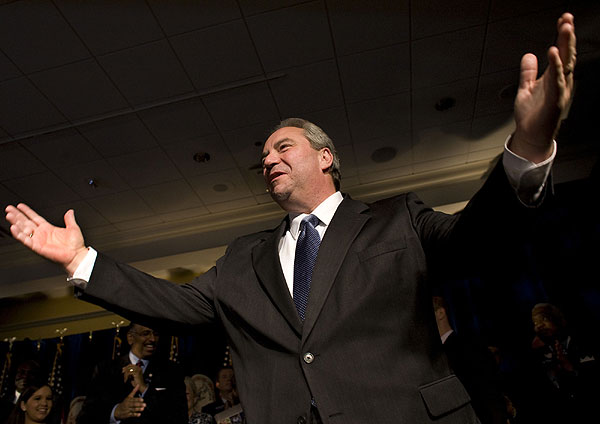
The Virginia Constitution provides that "[t]he Lieutenant Governor shall be President of the Senate but shall have no vote except in case of an equal division." Va. Const. Art. 5, section 14.
Starting next year, the Virginia Senate will be split 20-20, when it votes along party lines. There has been reporting in the blogs and other media that the Republicans are refusing to "share power" in the organization of the Senate, such as the representation on committees.
In 1996 Va. Op. Atty. Gen. 31, 1980-1981 Op. Va. Att'y Gen. 97, and 1979-1980 Op. Va. Att'y Gen. 178, the Attorney General has offered opinions about which ties the Lieutenant Governor can and cannot break.
In the 1996 opinion, the Attorney General concluded that the Lieutenant Governor could not provide the tie-breaking vote on matters subject to the provisions of Article XII, section 1: "Any amendment or amendments to this Constitution may be proposed in the Senate or House of Delegates, and if the same shall be agreed to by a majority of the members elected to each of the two houses, such proposed amendment or amendments shall be entered on their journals, the name of each member and how he voted to be recorded, and referred to the General Assembly at its first regular session held after the next general election of members of the House of Delegates. If at such regular session or any subsequent special session of that General Assembly the proposed amendment or amendments shall be agreed to by a majority of all the members elected to each house, then it shall be the duty of the General Assembly to submit such proposed amendment or amendments to the voters qualified to vote in elections by the people, in such manner as it shall prescribe and not sooner than ninety days after final passage by the General Assembly."
In the later 1980 opinion, the Attorney General concluded that the Lieutenant Governor could not provide the tie-breaking vote on matters subject to this provision of Article IV, section 11: "No bill which creates or establishes a new office, or which creates, continues, or revives a debt or charge, or which makes, continues, or revives any appropriation of public or trust money or property, or which releases, discharges, or commutes any claim or demand of the Commonwealth, or which imposes, continues, or revives a tax, shall be passed except by the affirmative vote of a majority of all the members elected to each house, the name of each member voting and how he voted to be recorded in the journal."
Similar language regarding the votes of the "members elected to each house" appears in Article IV, section 6, pertaining to legislative sessions; Article V, section 6, pertaining to overriding vetoes; Article VI, section 7 pertaining to the selection of judges; Article VII, section 1, pertaining to special acts for localities; Article IX, section 1, pertaining to changing the number of State Corporation Commissioners; Article X, section 9, pertaining to state debt; and Article XII, section 2, pertaining to constitutional conventions.
The earlier 1980 opinion concluded that there was no similar limitation that would prohibit the Lieutenant Governor from voting to break a tie vote on the ratification of an amendment to the United States Constitution, but held that the Rules of the Senate might control whether the Lieutenant Governor got to vote.
The organization of the General Assembly is controlled by Article IV, section 7, which provides: "The House of Delegates shall choose its own Speaker; and, in the absence of the Lieutenant Governor, or when he shall exercise the office of Governor, the Senate shall choose from its own body a president pro tempore. Each house shall select its officers and settle its rules of procedure. The houses may jointly provide for legislative continuity between sessions occurring during the term for which members of the House of Delegates are elected. Each house may direct writs of election for supplying vacancies which may occur during a session of the General Assembly. If vacancies exist while the General Assembly is not in session, such writs may be issued by the Governor under such regulations as may be prescribed by law. Each house shall judge of the election, qualification, and returns of its members, may punish them for disorderly behavior, and, with the concurrence of two-thirds of its elected membership, may expel a member." Nothing in this provision on its face would appear to limit votes to "members elected to each house" in the same way as Article IV, section 11, or Article XII, section 1.
Monday, November 07, 2011
What has changed in pest control since 1989?

The Virginia Supreme Court would seem to have gotten it wrong in one of its two decisions dealing with the non-compete clause used by a pest control company, having reached the opposite conclusion in 2011 from what it held in 1989.
Justice McClanahan, in her dissent, observed that such a fundamental shift in so short a time is an offense against the Rule of Law.
I recall having an oral argument before the late Judge Richard Williams of the Eastern District some years ago, in my only (and somewhat terrifying) appearance before him, and when he asked me about some old precedent that I tried to dismiss as too old, he laughed and said, "so you're saying the Age of Enlightenment set in sometime after that decision, and you know better now than the Supreme Court did back then?"
The Home Paramount firm, the employer in both cases, has branched out beyond termites and will also take care of those stinkbugs, according to their website.
Thursday, November 03, 2011
The online business entity records of all 50 states on one page
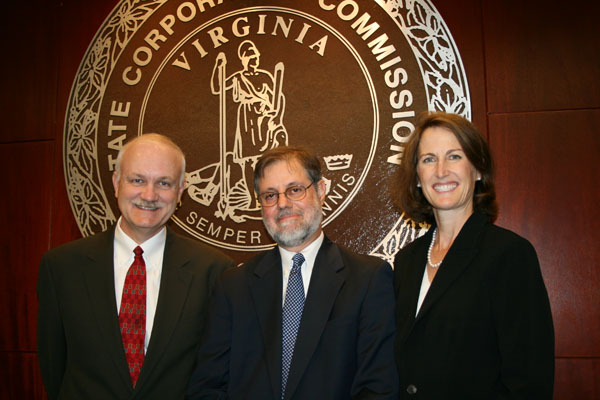
I was working on a project where I wanted to see what a corporation on the other side said in its corporate filings with the various states, and found this page, with links to the equivalent of the Virginia State Corporation Commission for all of the states.
And, it struck me that the SCC's online presence was sort of middle of the road compared to the other states - some of them make you pay to see much of anything, some have more detailed information, Virginia is better than most in that now you can download annual reports in PDF without getting a password or sending in a check.
Some states require the corporation to provide the names and addresses of its officers and directors. This information might be useful as evidence when there is a dispute of fact over a corporation's "principal place of business" for purposes of diversity jurisdiction. Under the Supreme Court's 2010 decision in Hertz Corp. v. King, the issue is reduced to where are the high level officers. Or so I have concluded from such opinions as Central West Virginia Energy Co. v. Mountain State Carbon, LLC, where the Fourth Circuit applying Hertz held that a company that mostly operated in Wheeling, West Virginia, and was even called "Wheeling" nevertheless had its principal place of business not in Wheeling but in another state.
I am a fan of Virginia's current State Corporation Commission, as the current Commissioners include Judy Jagdmann, and also interested by the facts that it was the only progressive product of Virginia's 1901 Constitutional Convention and that one of the early Commissioners was William Rhea, the original judge of the Corporation Court for the City of Bristol.
Sunday, October 30, 2011
Celebrating 100 years in November

Coming up later in November is the event to celebrate the 100 years of the Big Stone Gap federal courthouse, which still looks just about like this, but for the wheelchair ramp on the side and there is no more flagpole on top, that I recall.
Thursday, October 27, 2011
On the Bristol Circuit Court Clerk's race
The Bristol paper reports here on the candidates for Clerk of Court for the Circuit Court of Bristol, Virginia.
Terry Rohr can tell people that I am for her or against her, whichever will get her the most votes. Some state court clerk's offices are better than others - the Bristol office has always been helpful.
Her opponent suggests that Bristol might be better off if the technology in the Clerk's office was more cutting edge. I am not so sure about that. The problems I have had from time to time with the eLegal system they use for electronic filing in civil cases in Wise County make me think that that system is not quite perfected.
Terry Rohr can tell people that I am for her or against her, whichever will get her the most votes. Some state court clerk's offices are better than others - the Bristol office has always been helpful.
Her opponent suggests that Bristol might be better off if the technology in the Clerk's office was more cutting edge. I am not so sure about that. The problems I have had from time to time with the eLegal system they use for electronic filing in civil cases in Wise County make me think that that system is not quite perfected.
Monday, October 24, 2011
On the new Justice Powell from Virginia

Here is a report from the Richmond paper on the swearing in of Justice Cleo Powell, and here is an interesting story about the photography at the event. I don't know which of the photographers took the photograph shown here, from a media website.
Sunday, October 23, 2011
Speculations about Senator Puckett's seat
Both the Bristol and Roanoke papers ran articles suggesting that Senator Puckett is in a competitive race for re-election, where his opponent is Adam Light. The Washington Post reported similarly on statewide Republican donations to Light.
In the pursuit of re-election, Senator Puckett has declared that he will not vote to re-elect President Obama in 2012, as stated here and here and here and here.
In the pursuit of re-election, Senator Puckett has declared that he will not vote to re-elect President Obama in 2012, as stated here and here and here and here.
Tuesday, October 18, 2011
Tuesday, October 04, 2011
On Rules of Evidence for Virginia
Today the VLW Daily Alert reports that the Virginia Supreme Court has adopted Rules of Evidence, and includes an article that suggests that their adoption is a result of Cynthia Kinser becoming the Chief Justice.
It may be evident from some of her opinions (such as the opinion for the Court in Shaheen v. County of Mathews) that Chief Justice Kinser is not as averse to the use of federal precedents as were some of her predecessors on the Court.
Two examples of this former aversion that stick in my head would include Jordan v. Clay's Rest Home, in which the Court by Justice Compton pointedly rejected the federal proof scheme developed over decades for resolving circumstantial cases of employment discrimination, and Doe v. Isaacs, in which the Court again by Justice Compton expressly refused to consider an unpublished Fourth Circuit opinion (by a panel that included Emory Widener).
The only opposition to Rule of Evidence that I ever heard among lawyers was the fear in some circles that it would lead to the adoption of the dreaded Daubert standard for the admissibility of expert testimony, which is viewed as anti-plaintiff. On the difference if any between the Virginia law of evidence and Daubert, I have often recommended this article by Judge Kelsey.
It may be evident from some of her opinions (such as the opinion for the Court in Shaheen v. County of Mathews) that Chief Justice Kinser is not as averse to the use of federal precedents as were some of her predecessors on the Court.
Two examples of this former aversion that stick in my head would include Jordan v. Clay's Rest Home, in which the Court by Justice Compton pointedly rejected the federal proof scheme developed over decades for resolving circumstantial cases of employment discrimination, and Doe v. Isaacs, in which the Court again by Justice Compton expressly refused to consider an unpublished Fourth Circuit opinion (by a panel that included Emory Widener).
The only opposition to Rule of Evidence that I ever heard among lawyers was the fear in some circles that it would lead to the adoption of the dreaded Daubert standard for the admissibility of expert testimony, which is viewed as anti-plaintiff. On the difference if any between the Virginia law of evidence and Daubert, I have often recommended this article by Judge Kelsey.
Friday, September 23, 2011
The new magistrate judge for the W.D. Va.
I saw the articles such as this one indicating that Robert Ballou from Roanoke has been selected as the next Magistrate Judge for the Western District of Virginia. Magistrate Judge Ballou will succeed Judge Urbanski.
The one and only time I was ever called for jury duty was an honor code matter at the University of Virginia, and when I showed up for the trial, the honor committee functionary who told me to go home because the trial was canceled was Rob Ballou. I told him that story when our paths crossed over as lawyers some years later and he remembered the case.
Notwithstanding the complaints from some quarters about the conditions for the members of the federal judiciary, it seems that good candidates appear for every vacancy.
The one and only time I was ever called for jury duty was an honor code matter at the University of Virginia, and when I showed up for the trial, the honor committee functionary who told me to go home because the trial was canceled was Rob Ballou. I told him that story when our paths crossed over as lawyers some years later and he remembered the case.
Notwithstanding the complaints from some quarters about the conditions for the members of the federal judiciary, it seems that good candidates appear for every vacancy.
Friday, September 09, 2011
Obama nominates a WV lawyer to Fourth Circuit
This White House press release announces the nomination of Stephanie Thacker to a seat on the United States Court of Appeals for the Fourth Circuit, left vacant by the passing of Judge Blaine Michael.
If confirmed, she would be the fifth member of the Court nominated by President Obama.
If confirmed, she would be the fifth member of the Court nominated by President Obama.
Thursday, September 08, 2011
On roving constitutional watchdogs
In Commonwealth of Virginia v. Sebelius, the Fourth Circuit in an opinion by Judge Motz, joined by Judges Davis and Wynn, held that Virginia lacks standing to bring a pre-enforcement challenge to a provision of President Obama's health care reform law.
Judge Motz wrote that "if we were to adopt Virginia’s standing theory, each state could become a roving constitutional watchdog of sorts; no issue, no matter how generalized or quintessentially political, would fall beyond a state’s power to litigate in federal court. . . . We cannot accept a theory of standing that so contravenes settled jurisdictional constraints." She concluded: "In sum, the significance of the questions at issue here only heightens the importance of waiting for an appropriate case to reach the merits. This is not such a case."
Somewhat similarly, the panel mostly avoided the merits in Liberty University v. Geithner, finding that the federal courts were barred from acting by the Anti-Injunction Act, notwithstanding the disagreement of both parties over whether the sanction for failure to comply with the individual mandate is properly considered a "tax." Judge Wynn concurred on the jurisdictional issue, and Judge Davis dissented, and both added some individual thoughts on the merits.
Judge Motz wrote that "if we were to adopt Virginia’s standing theory, each state could become a roving constitutional watchdog of sorts; no issue, no matter how generalized or quintessentially political, would fall beyond a state’s power to litigate in federal court. . . . We cannot accept a theory of standing that so contravenes settled jurisdictional constraints." She concluded: "In sum, the significance of the questions at issue here only heightens the importance of waiting for an appropriate case to reach the merits. This is not such a case."
Somewhat similarly, the panel mostly avoided the merits in Liberty University v. Geithner, finding that the federal courts were barred from acting by the Anti-Injunction Act, notwithstanding the disagreement of both parties over whether the sanction for failure to comply with the individual mandate is properly considered a "tax." Judge Wynn concurred on the jurisdictional issue, and Judge Davis dissented, and both added some individual thoughts on the merits.
Monday, August 29, 2011
The incredible shrinking W.D. Va.
Via VLW, the Roanoke Times has this article that says shrinking caseload in the W.D. Va. has led to some diminished funding with the possibility of further cuts in sight.
Consistent with the article, we have been told of the reduced staff in the clerk's offices in Big Stone Gap and Abingdon - including that Libby Sharp is retiring and will not be replaced.
God bless Libby, the great friend of so many former law clerks and others who have passed through the halls of the old building there in Wise County, and also bless the fact that if they again close down that courthouse at BSG, it will not be before she retired.
Consistent with the article, we have been told of the reduced staff in the clerk's offices in Big Stone Gap and Abingdon - including that Libby Sharp is retiring and will not be replaced.
God bless Libby, the great friend of so many former law clerks and others who have passed through the halls of the old building there in Wise County, and also bless the fact that if they again close down that courthouse at BSG, it will not be before she retired.
Tuesday, July 26, 2011
On Magistrate Judge Sargent
Today's Bristol paper has this profile of Magistrate Judge Pamela Meade Sargent.
The article made me think of this opinion she wrote, which began: "To a child of Appalachia, to see the mountains laid waste, whether by clear-cutting or strip mining, is to witness a dagger plunged into the very bosom from which you sprang and which has sustained you."
The article made me think of this opinion she wrote, which began: "To a child of Appalachia, to see the mountains laid waste, whether by clear-cutting or strip mining, is to witness a dagger plunged into the very bosom from which you sprang and which has sustained you."
Friday, June 24, 2011
Scenes from the Greenbrier
It's a great day at the Judicial Conference.

And, I got to meet Howard Bashman, as evidenced by this out-of-focus photo attempt:


And, I got to meet Howard Bashman, as evidenced by this out-of-focus photo attempt:

Thursday, June 23, 2011
On new judges at the 77th Judicial Conference of the Fourth Circuit
The new judges at this year's Judicial Conference include several from Virginia. It will be interesting to hear them all speak. The list includes:
The Honorable Michael F. Urbanski
United States District Judge for the Western District of Virginia
The Honorable Arenda L. Wright Allen
United States District Judge for the Eastern District of Virginia
The Honorable Max O. Cogburn, Jr.
United States District Judge for the Western District of North Carolina
The Honorable Ellen L. Hollander
United States District Judge for the District of Maryland
The Honorable James K. Bredar
United States District Judge for the District of Maryland
The Honorable John A. Gibney, Jr.
United States District Judge for the Eastern District of Virginia
The Honorable Catherine C. Eagles
United States District Judge for the Middle District of North Carolina
The Honorable J. Michelle Childs
United States District Judge for the District of South Carolina
The Honorable Richard M. Gergel
United States District Judge for the District of South Carolina
The Honorable Irene C. Berger
United States District Judge for the Southern District of West Virginia
The Honorable Albert Diaz
United States Circuit Judge for the Fourth Circuit
The Honorable James A. Wynn, Jr.
United States Circuit Judge for the Fourth Circuit
The Honorable Barbara Milano Keenan
United States Circuit Judge for the Fourth Circuit
The Honorable Andre M. Davis
United States Circuit Judge for the Fourth Circuit
The Honorable G. Steven Agee
United States Circuit Judge for the Fourth Circuit.
The Honorable Michael F. Urbanski
United States District Judge for the Western District of Virginia
The Honorable Arenda L. Wright Allen
United States District Judge for the Eastern District of Virginia
The Honorable Max O. Cogburn, Jr.
United States District Judge for the Western District of North Carolina
The Honorable Ellen L. Hollander
United States District Judge for the District of Maryland
The Honorable James K. Bredar
United States District Judge for the District of Maryland
The Honorable John A. Gibney, Jr.
United States District Judge for the Eastern District of Virginia
The Honorable Catherine C. Eagles
United States District Judge for the Middle District of North Carolina
The Honorable J. Michelle Childs
United States District Judge for the District of South Carolina
The Honorable Richard M. Gergel
United States District Judge for the District of South Carolina
The Honorable Irene C. Berger
United States District Judge for the Southern District of West Virginia
The Honorable Albert Diaz
United States Circuit Judge for the Fourth Circuit
The Honorable James A. Wynn, Jr.
United States Circuit Judge for the Fourth Circuit
The Honorable Barbara Milano Keenan
United States Circuit Judge for the Fourth Circuit
The Honorable Andre M. Davis
United States Circuit Judge for the Fourth Circuit
The Honorable G. Steven Agee
United States Circuit Judge for the Fourth Circuit.
On Ann K. Sullivan
Years ago, I went to the winter meeting of The Virginia Bar Association in Williamsburg and randomly sat at a banquet table with Ann Sullivan and her family (or at least one daughter), and ever since then, I've been a big fan and so I am delighted that she is featured on the cover of this year's Virginia Super Lawyers publication.
Other favorites who have been profiled in Super Lawyers include Anne Marie Whittemore and Bruce Cryder.
Other favorites who have been profiled in Super Lawyers include Anne Marie Whittemore and Bruce Cryder.
Tuesday, June 07, 2011
On making threats by way of one's own Myspace profile
Today in Holcomb v. Com., the Court of Appeals in an opinion by Judge Elder, joined by Judges Petty and Alston, affirmed the felony conviction of a Virginia Beach man for posting on his MySpace page items that were construed as knowingly communicating a written threat to his ex-girlfriend.
Notwithstanding the fact that millions are dropping off MySpace, evidently it was enough to support the conviction that the comments were posted where the ex was able to see them.
Notwithstanding the fact that millions are dropping off MySpace, evidently it was enough to support the conviction that the comments were posted where the ex was able to see them.
Friday, May 20, 2011
That old adage
In Horvath v. Bank of New York, N.A., Mr. Horvath claimed that only the original lender could sue on the note secured by the deed of trust on his property. The Fourth Circuit, in an opinion by Judge Wilkinson joined by Judges Keenan and Diaz, was unimpressed:
"Negotiable instruments like mortgage notes that are endorsed in blank may be
freely transferred. And once transferred, the old adage about possession being nine-tenths of the law is, if anything, an understatement. Whoever possesses an instrument endorsed in blank has full power to enforce it."
"Negotiable instruments like mortgage notes that are endorsed in blank may be
freely transferred. And once transferred, the old adage about possession being nine-tenths of the law is, if anything, an understatement. Whoever possesses an instrument endorsed in blank has full power to enforce it."
Wednesday, May 11, 2011
Blame President Bush
There has been much publicity over the fact that the Fourth Circuit panel that will review the challenges to health care reform includes Judges Davis, Wynn, and Motz.
Judge Davis was nominated by President Obama after President Bush failed to fill the vacancy on the Fourth Circuit that resulted from the death of Judge Murnaghan, as reported here:
"Under President Bush, three other nominees were named to fill the vacancy, but each was stalled or rejected — in disputes with Democrats that sometimes involved the Maryland senators."
Judge Wynn was nominated by President Obama after President Bush failed to fill the vacancy on the Fourth Circuit that resulted from Judge Phillips taking senior status in 1994. Three times, President Bush nominated Terrence Boyle, who was never confirmed. In 2007, President Bush nominated Robert Conrad, who also was never confirmed.
Of Judge Motz, I once walked down the stairs with her and her husband the district court judge at my first Fourth Circuit Judicial Conference, and they laughed that I was about to burst out of my skin with nervousness and excitement, and she told me she remembered well her first Judicial Conference - which made me a fan.
Judge Davis was nominated by President Obama after President Bush failed to fill the vacancy on the Fourth Circuit that resulted from the death of Judge Murnaghan, as reported here:
"Under President Bush, three other nominees were named to fill the vacancy, but each was stalled or rejected — in disputes with Democrats that sometimes involved the Maryland senators."
Judge Wynn was nominated by President Obama after President Bush failed to fill the vacancy on the Fourth Circuit that resulted from Judge Phillips taking senior status in 1994. Three times, President Bush nominated Terrence Boyle, who was never confirmed. In 2007, President Bush nominated Robert Conrad, who also was never confirmed.
Of Judge Motz, I once walked down the stairs with her and her husband the district court judge at my first Fourth Circuit Judicial Conference, and they laughed that I was about to burst out of my skin with nervousness and excitement, and she told me she remembered well her first Judicial Conference - which made me a fan.
Tuesday, May 10, 2011
On the Planned Parenthood case in Indiana
Here is the much-publicized complaint filed by Planned Parenthood of Indiana over the new law in Indiana that prohibits the state from making any contracts with or appropriating any money for any entity that performs abortions or operates a facility where abortions are performed.
The claim is be based principally to the provision in the Constitution which bar the states from passing any law that impairs the obligation of contracts, the "Contract Clause" of Article 1, section 10. Planned Parenthood claims that it has existing contracts that would be impaired by the enforcement of the new law.
The claim is be based principally to the provision in the Constitution which bar the states from passing any law that impairs the obligation of contracts, the "Contract Clause" of Article 1, section 10. Planned Parenthood claims that it has existing contracts that would be impaired by the enforcement of the new law.
Monday, May 09, 2011
Virginia v. Virginia
In Virginia Office for Protection and Advocacy v. Stewart, the Supreme Court held that a Virginia state agency could sue Virginia officials in federal court.
Chief Justice Roberts dissented, because he thought there was something wrong with the idea that the Commonwealth can sue itself in federal court, despite the Eleventh Amendment and sovereign immunity. For one thing, the Chief Justice noted:
"Whatever the decision in the litigation, one thing is clear: The Commonwealth will win. And the Commonwealth will lose. Because of today’s holding, a federal judge will resolve which part of the Common-wealth will prevail."
Chief Justice Roberts dissented, because he thought there was something wrong with the idea that the Commonwealth can sue itself in federal court, despite the Eleventh Amendment and sovereign immunity. For one thing, the Chief Justice noted:
"Whatever the decision in the litigation, one thing is clear: The Commonwealth will win. And the Commonwealth will lose. Because of today’s holding, a federal judge will resolve which part of the Common-wealth will prevail."
Friday, May 06, 2011
A common affliction
In Carnell Construction v. Danville RHA, Judge Kiser wrote in a footnote:
"This case has suffered from excessive briefing. The parties’ briefs supporting and opposing pre- and post-trial motions alone total 660 pages, not including attachments. With attachments—which do not include full deposition transcripts—that number increases to 3,179 pages. Many individual briefs exceed 50 pages. The absence of a page limit in the Western District is not intended as an invitation for protracted argument. As the Fourth Circuit recently stated, “wisdom may reside in recognizing that less is sometimes more and that zealous advocacy need not always part company with forbearance and restraint.” Waybright v. Frederick Cnty., 528 F.3d 199, 210 (4th Cir. 2008). Put more succinctly, “brevity is the soul of wit.” SHAKESPEARE, HAMLET, act 2, sc. 2."
"This case has suffered from excessive briefing. The parties’ briefs supporting and opposing pre- and post-trial motions alone total 660 pages, not including attachments. With attachments—which do not include full deposition transcripts—that number increases to 3,179 pages. Many individual briefs exceed 50 pages. The absence of a page limit in the Western District is not intended as an invitation for protracted argument. As the Fourth Circuit recently stated, “wisdom may reside in recognizing that less is sometimes more and that zealous advocacy need not always part company with forbearance and restraint.” Waybright v. Frederick Cnty., 528 F.3d 199, 210 (4th Cir. 2008). Put more succinctly, “brevity is the soul of wit.” SHAKESPEARE, HAMLET, act 2, sc. 2."
Friday, April 29, 2011
On Circuit Court Judge Chad Dotson
I read in the VLWBlog that the General Assembly has approved Chad Dotson for a vacancy on the bench of the Thirtieth Circuit. Well done, Judge Dotson.
When Judge Dotson was selected for the general district court bench, I wrote this. My first Chad Dotson post was this one.
When Judge Dotson was selected for the general district court bench, I wrote this. My first Chad Dotson post was this one.
Wednesday, April 27, 2011
On the evils of scanned as opposed to converted PDF files
The new Administrative Procedures for electronic filing in the W.D. Va. state the following, twice:
"Scanners should only be used to produce PDF files of documents that cannot be produced electronically. Scanned documents lessen the level of service we provide by slowing down the entire system. We have moved away from the utilization of scanned documents inside the Court for the most part and are requesting parties to do the same when possible."
The new book also says this about orders, which is a little bit different than before I think:
"3. Proposed orders must be submitted as outlined below:
a. A moving party shall submit to the judge, after filing a motion for which no supporting brief is required, a proposed order granting the motion and setting forth the requested relief.
b. Proposed orders must be filed in CM/ECF as a pdf attachment to the Motion (not combined with the motion in one document).
c. The proposed order must also be attached to an Internet e-mail sent to the email address of the assigned judge, in a format compatible with Microsoft Word. Judges will not accept the attachment in .pdf format."
I do not recall that the lawyers were previously required to submit and file proposed orders - in my experience proposed orders are rarely filed in this Court, unlike some others. I have more often e-mailed draft orders as word processing documents to the Court and counsel, when the orders were agreed.
"Scanners should only be used to produce PDF files of documents that cannot be produced electronically. Scanned documents lessen the level of service we provide by slowing down the entire system. We have moved away from the utilization of scanned documents inside the Court for the most part and are requesting parties to do the same when possible."
The new book also says this about orders, which is a little bit different than before I think:
"3. Proposed orders must be submitted as outlined below:
a. A moving party shall submit to the judge, after filing a motion for which no supporting brief is required, a proposed order granting the motion and setting forth the requested relief.
b. Proposed orders must be filed in CM/ECF as a pdf attachment to the Motion (not combined with the motion in one document).
c. The proposed order must also be attached to an Internet e-mail sent to the email address of the assigned judge, in a format compatible with Microsoft Word. Judges will not accept the attachment in .pdf format."
I do not recall that the lawyers were previously required to submit and file proposed orders - in my experience proposed orders are rarely filed in this Court, unlike some others. I have more often e-mailed draft orders as word processing documents to the Court and counsel, when the orders were agreed.
Wednesday, March 30, 2011
On comity, abstention, and the Tax Injunction Act
In Buchanan County v. EQT, Judge Jones of the W.D. Va. rejected my arguments for the remand of a tax case. The issues were pretty interesting, if somewhat obscure.
Tuesday, March 01, 2011
On being in jail as a disability
In Lyslord-Duncan v. Bank of America, Judge Wilson of the W.D. Va. dismissed the plaintiff inmate's claim that the bank had violated the Americans with Disabilities Act by refusing to open a bank account because of his incarceration.
Judge Wilson concluded: "Though the court is sure that incarceration is limiting a number of Lyslord-Duncan’s activities, the court is also quite sure that Congress did not have incarceration in mind as a disability when it enacted the ADA."
Perhaps the plaintiff had confused the concept of disabled under the ADA with the notion of a "person under a disability" under the civil procedure title of the Virginia Code, which includes convicted felons during their incarceration, but only in the context of how they can sue and be sued in state court.
Judge Wilson concluded: "Though the court is sure that incarceration is limiting a number of Lyslord-Duncan’s activities, the court is also quite sure that Congress did not have incarceration in mind as a disability when it enacted the ADA."
Perhaps the plaintiff had confused the concept of disabled under the ADA with the notion of a "person under a disability" under the civil procedure title of the Virginia Code, which includes convicted felons during their incarceration, but only in the context of how they can sue and be sued in state court.
Friday, February 25, 2011
On the iPad and the Wise County Commonwealth's Attorney's office
This Findlaw technology blog post highlights the use of the iPad by Ron Elkins and his staff in prosecuting cases in Wise County, described here in a web interview and here in this post from the website for his office. Ron is about the biggest cyberdog around.
Tuesday, February 22, 2011
Dog custody case
In the case of Whitmore v. Whitmore, decided today, a panel of the Court of Appeals including Judges McClanahan and Haley and Senior Judge Willis addressed the thirteen assignments of error raised by the ex-husband protesting the Circuit Court's award of all right and title to the couple's Welsh Corgi to the ex-wife, without even providing for visitation. The appellant claimed among other things that the Circuit Court failed to consider "the best interests of the dog." The appellee didn't want to share the dog because she didn't want to have anything more to do with her ex-husband.
The dog is not named in the opinion.
I can't give advice to Mr. Whitmore, but in my own case I rooted around Petfinder until I found another who looked about like the last two, and she's had a pretty good life these past twelve months.

The dog is not named in the opinion.
I can't give advice to Mr. Whitmore, but in my own case I rooted around Petfinder until I found another who looked about like the last two, and she's had a pretty good life these past twelve months.

Wednesday, February 09, 2011
On Chief Justice Hassell
I learned today of the death of Chief Justice Hassell. There are reports here from the Norfolk paper and the Richmond paper. He was a strong character and an interesting man, a very compelling figure in Virginia's legal history for many reasons.
I met him once and told him of my adventures before the Supreme Court, which he found amusing. Later, on a trip to the law school at Grundy, he told me this story.
Here is his last speech on the state of the judiciary as Chief Justice, in which he relates much of his own history and experience, beginning on page 8.
I met him once and told him of my adventures before the Supreme Court, which he found amusing. Later, on a trip to the law school at Grundy, he told me this story.
Here is his last speech on the state of the judiciary as Chief Justice, in which he relates much of his own history and experience, beginning on page 8.
Tuesday, January 18, 2011
A picture can say a thousand words, and none of them are hearsay
Today in Bynum v. Com., the Court of Appeals in an published opinion by Judge Petty, joined by Judges Elder and Beales, held that the trial court in a case where the defendant was convicted of possessing drugs within 1,000 feet of a school did not err in admitting over the defendant's hearsay objection the aerial photograph used by police to prove the defendant's proximity to the school.
The Court reasoned, in part, that photographs are not hearsay because there is no declarant:
"As with a caller ID and a call trap, there simply is no out-of-court declarant involved in this photograph. Officer Johnson used an aerial photograph of the Brighton Elementary School property and surrounding area to measure the distance between the school property boundary and the location where Bynum was observed with heroin and arrested. An aerial photograph of a geographic area does not contain 'simply the repetition of prior recorded human input or observation.' Tatum, 17 Va. App. at 588, 440 S.E.2d at 135. It is not the recordation or compilation of another human being’s assertions; it is not a communication of input from another person. Rather, it is simply a technological reproduction of an existing reality. Cf. Penny, 6 Va. App. at 498, 370 S.E.2d at 317 ('The scientific advances of modern technology have enabled the call trap device to make and record the occurrence of electronic events.'). As such, its 'reliability does not depend on an out-of-court declarant’s veracity or perceptive abilities.'"
The Court reasoned, in part, that photographs are not hearsay because there is no declarant:
"As with a caller ID and a call trap, there simply is no out-of-court declarant involved in this photograph. Officer Johnson used an aerial photograph of the Brighton Elementary School property and surrounding area to measure the distance between the school property boundary and the location where Bynum was observed with heroin and arrested. An aerial photograph of a geographic area does not contain 'simply the repetition of prior recorded human input or observation.' Tatum, 17 Va. App. at 588, 440 S.E.2d at 135. It is not the recordation or compilation of another human being’s assertions; it is not a communication of input from another person. Rather, it is simply a technological reproduction of an existing reality. Cf. Penny, 6 Va. App. at 498, 370 S.E.2d at 317 ('The scientific advances of modern technology have enabled the call trap device to make and record the occurrence of electronic events.'). As such, its 'reliability does not depend on an out-of-court declarant’s veracity or perceptive abilities.'"
Sunday, January 09, 2011
Why stick the taxpayers with these claims?
Turning a good idea on its head, Delegate Janis has proposed a bill to amend the Virginia Fraud Against Taxpayers Act, Va. Code 8.01-216.1 et seq., to overrule the holding from the Supreme Court's decision in Ligon v. Goochland and waive the sovereign immunity of the Commonwealth and its counties and cities under the Act.
In Ligon, the Supreme Court held that the Act does not waive the immunity of Virginia's counties for wrongful discharge claims based on retaliation against whistleblowers.
In H.B. 1399, Delegate Janis proposes to insert language that would eliminate the sovereign immunity defense. The proposed waiver of sovereign immunity is entirely at odds with the policy of the Act. The taxpayers should be not be victimized a second time, suffering first whatever fraud the whistleblower spotted, and then having to pay in addition for the whistleblower's lawsuit.
Unlike private sector employees, government employees are already protected to some degree by the First Amendment, made applicable to the states by way of the Fourteenth Amendment, which prohibits state actors from retaliating against employees for speech on matters of public concern, which might include the much of the same subject matter as what is addressed by whistleblower protections of the Virginia Fraud Against Taxpayers Act.
In Ligon, the Supreme Court held that the Act does not waive the immunity of Virginia's counties for wrongful discharge claims based on retaliation against whistleblowers.
In H.B. 1399, Delegate Janis proposes to insert language that would eliminate the sovereign immunity defense. The proposed waiver of sovereign immunity is entirely at odds with the policy of the Act. The taxpayers should be not be victimized a second time, suffering first whatever fraud the whistleblower spotted, and then having to pay in addition for the whistleblower's lawsuit.
Unlike private sector employees, government employees are already protected to some degree by the First Amendment, made applicable to the states by way of the Fourteenth Amendment, which prohibits state actors from retaliating against employees for speech on matters of public concern, which might include the much of the same subject matter as what is addressed by whistleblower protections of the Virginia Fraud Against Taxpayers Act.
Friday, January 07, 2011
On Judge Thomas Horne
In this article, a local newspaper for Loudoun County declares Circuit Court Judge Thomas Horne its "citizen of the year," and explains why in extensive detail. Among other things, Justice Mims credits Horne as the primary contributor to the bench book for circuit court judges.
Thursday, January 06, 2011
On the NiSource royalty litigation in the W.D. Va.
In the famous Tawney case from Roane County, West Virginia, a group of royalty owners obtained a $405 million jury verdict against a group of natural gas companies on a variety of theories, including that the gas companies deducted more than they should have done from the sales price of the gas in calculating royalties and that the companies wrongfully included the below-market advance sales of gas in calculating royalties. Last year, in Kentucky, there was a class action settlement of claims related to some of the same transactions, in Thacker v. Chesapeake Appalachia.
The advance sales are an interesting story, that I have read a little bit about in the past. They are interesting because of the tie-in with Enron, the poster child for corporate greed. The record of one series of U.S. Senate hearings into the role of financial institutions in the collapse of Enron, which includes some discussion of the Mahonia transactions that also involved NiSource, can be accessed here. In those hearings, Senator Levin explained in his opening remarks:
"We will show how the banks arranged for Enron to carry out these so-called prepays by using offshore shell companies which the banks controlled, like Mahonia and Delta Energy--companies which have no employees, no offices, and operate in secrecy jurisdictions, that make it tough for law enforcement to uncover or understand their relationships to the banks behind them.
The offshore entities were passthroughs, controlled by banks, and helped disguise the loans so that they wouldn't show as debt on Enron's financial statements. Those offshore entities were not the independent entities which they needed to be in order for the promises of future delivery of commodities to them to be legitimate prepays. We will also hear how the banks acted to limit public disclosure of Enron's prepay obligations."
In other words, the claim is that transactions were set up to look like pre-paid sales of natural gas, when in fact they were loans. NiSource was not connected with Enron, but it allegedly engaged in similar transactions as those described by Senator Levin. The alleged effect on the royalty owners is that these prepays mixed in with real sales had the effect of reducing the average price on which the determination of royalties was based.
Claims of a similar nature as in the West Virginia and Kentucky cases have been raised in the case of Healy v. Chesapeake Appalachia, and in this opinion, Magistrate Judge Sargent dealt with the gas companies' motion to dismiss, which raised among other things the issue of the statute of limitations and whether there could be any tort claims for failure to pay accurate royalties. Judge Sargent recommended that the plaintiff's claims can go forward, for the most part.
One of the issues was the statute of limitations. The Defendants argued that notwithstanding the fact that they were obligated to pay royalties in installments, the breach if any occurred years ago and so the plaintiffs' cause of action accrued all at once. We argued a similar limitations issue years ago in United Mine Workers of America 1974 Pension Trust v. Big Star Coal Co., 1998 U.S. Dist. LEXIS 11530 (D.D.C. 1998), with somewhat better success. In that case, we argued that "[e]ven with respect to contracts requiring installment payments, when there is a repudiation or "total breach" of contract, the plaintiffs must bring suit on their whole claim in a single cause of action, and cited this quote from Corbin:
Suppose next that the contract requires performance in instalments or continuously for some period and that there has been such a partial failure of performance as justified immediate action for a partial breach. If this partial breach is accompanied by repudiation of the contractual obligation such repudiation is anticipatory with respect to the performances that are not yet due. In most cases the repudiator is now regarded as having committed a “total” breach, justifying immediate action for the remedies appropriate thereto. In determining the damages recoverable in such an action, it is necessary for the court to look into the future. In spite of the uncertainty involved in this, the trier of fact is permitted to make an estimate to be added to the damages awarded for the actual non-performance that has already occurred. In most cases this remedy is regarded as adequate and the injured party is allowed only one action for his wrong. The non-performance plus the repudiation constitute one and only one cause of action.
4 CORBIN ON CONTRACTS § 954, pp. 831-32.
Probably the most interesting issue in the opinion from the oil and gas lawyer's perspective is whether the plaintiff can bring claims for breach of implied duties. On the one hand, Virginia is not a big implied duty state - the tendency in Virginia law moreso than in more "liberal" jurisdictions is to enforce contracts as written. On the other hand, there is a wide body of case law in the jurisdictions where oil and gas production has been a way of life for over 100 years dealing with the implied duties of gas producers. Judge Sargent concluded: "I hold that Virginia courts would recognize an implied duty on the part of oil and gas lessees to operate diligently and prudently, including a duty to market the gas produced."
Interesting to me is the discussion of offensive collateral estoppel. In the Buchanan County RICO case, Judge Jones was convinced to apply offensive collateral estoppel in favor of the plaintiff and against the defendants on the issues necessarily determined by their criminal convictions. Judge Sargent concluded that the issue of collateral estoppel against the gas companies based on the outcome of the Tawney case would have to be determined at a later stage of the case.
The advance sales are an interesting story, that I have read a little bit about in the past. They are interesting because of the tie-in with Enron, the poster child for corporate greed. The record of one series of U.S. Senate hearings into the role of financial institutions in the collapse of Enron, which includes some discussion of the Mahonia transactions that also involved NiSource, can be accessed here. In those hearings, Senator Levin explained in his opening remarks:
"We will show how the banks arranged for Enron to carry out these so-called prepays by using offshore shell companies which the banks controlled, like Mahonia and Delta Energy--companies which have no employees, no offices, and operate in secrecy jurisdictions, that make it tough for law enforcement to uncover or understand their relationships to the banks behind them.
The offshore entities were passthroughs, controlled by banks, and helped disguise the loans so that they wouldn't show as debt on Enron's financial statements. Those offshore entities were not the independent entities which they needed to be in order for the promises of future delivery of commodities to them to be legitimate prepays. We will also hear how the banks acted to limit public disclosure of Enron's prepay obligations."
In other words, the claim is that transactions were set up to look like pre-paid sales of natural gas, when in fact they were loans. NiSource was not connected with Enron, but it allegedly engaged in similar transactions as those described by Senator Levin. The alleged effect on the royalty owners is that these prepays mixed in with real sales had the effect of reducing the average price on which the determination of royalties was based.
Claims of a similar nature as in the West Virginia and Kentucky cases have been raised in the case of Healy v. Chesapeake Appalachia, and in this opinion, Magistrate Judge Sargent dealt with the gas companies' motion to dismiss, which raised among other things the issue of the statute of limitations and whether there could be any tort claims for failure to pay accurate royalties. Judge Sargent recommended that the plaintiff's claims can go forward, for the most part.
One of the issues was the statute of limitations. The Defendants argued that notwithstanding the fact that they were obligated to pay royalties in installments, the breach if any occurred years ago and so the plaintiffs' cause of action accrued all at once. We argued a similar limitations issue years ago in United Mine Workers of America 1974 Pension Trust v. Big Star Coal Co., 1998 U.S. Dist. LEXIS 11530 (D.D.C. 1998), with somewhat better success. In that case, we argued that "[e]ven with respect to contracts requiring installment payments, when there is a repudiation or "total breach" of contract, the plaintiffs must bring suit on their whole claim in a single cause of action, and cited this quote from Corbin:
Suppose next that the contract requires performance in instalments or continuously for some period and that there has been such a partial failure of performance as justified immediate action for a partial breach. If this partial breach is accompanied by repudiation of the contractual obligation such repudiation is anticipatory with respect to the performances that are not yet due. In most cases the repudiator is now regarded as having committed a “total” breach, justifying immediate action for the remedies appropriate thereto. In determining the damages recoverable in such an action, it is necessary for the court to look into the future. In spite of the uncertainty involved in this, the trier of fact is permitted to make an estimate to be added to the damages awarded for the actual non-performance that has already occurred. In most cases this remedy is regarded as adequate and the injured party is allowed only one action for his wrong. The non-performance plus the repudiation constitute one and only one cause of action.
4 CORBIN ON CONTRACTS § 954, pp. 831-32.
Probably the most interesting issue in the opinion from the oil and gas lawyer's perspective is whether the plaintiff can bring claims for breach of implied duties. On the one hand, Virginia is not a big implied duty state - the tendency in Virginia law moreso than in more "liberal" jurisdictions is to enforce contracts as written. On the other hand, there is a wide body of case law in the jurisdictions where oil and gas production has been a way of life for over 100 years dealing with the implied duties of gas producers. Judge Sargent concluded: "I hold that Virginia courts would recognize an implied duty on the part of oil and gas lessees to operate diligently and prudently, including a duty to market the gas produced."
Interesting to me is the discussion of offensive collateral estoppel. In the Buchanan County RICO case, Judge Jones was convinced to apply offensive collateral estoppel in favor of the plaintiff and against the defendants on the issues necessarily determined by their criminal convictions. Judge Sargent concluded that the issue of collateral estoppel against the gas companies based on the outcome of the Tawney case would have to be determined at a later stage of the case.
Thursday, December 30, 2010
On snow days
In the winter, I hear talk about schools cancelling classes because of snow.
One part of that discussion is that school officials are afraid of liability. In Virginia, the liability of school employees and school boards for simple negligence is limited by sovereign immunity and the school bus insurance statute, Va. Code 22.1-194, as Judge Wilson held in this opinion granting a motion to dismiss claims against individuals related a school bus accident in Botetourt County.
Another part of the discussion is what is the effect of school days on learning. The answer according to this article is that school days cause lower test scores.
One part of that discussion is that school officials are afraid of liability. In Virginia, the liability of school employees and school boards for simple negligence is limited by sovereign immunity and the school bus insurance statute, Va. Code 22.1-194, as Judge Wilson held in this opinion granting a motion to dismiss claims against individuals related a school bus accident in Botetourt County.
Another part of the discussion is what is the effect of school days on learning. The answer according to this article is that school days cause lower test scores.
Tuesday, December 28, 2010
The Media General article on Justice Kinser
I finally got around to checking out the fine article on Justice Kinser, who is becoming the Chief Justice of the Virginia Supreme Court. It seems like not so long ago that she joined the Supreme Court, yet with the retirement of Justice Koontz, all the other justices have less tenure than she does, but for current Chief Justice Hassell.
One fact in the article that I had never heard was that Judge Samuel G. Wilson of the W.D. Va. was one who urged her to apply for the Supreme Court position in 1997, but then Judge Wilson was U.S. Magistrate at the time when Justice Kinser was clerking for Judge Williams, and so perhaps they have known each other for many years.
One fact in the article that I had never heard was that Judge Samuel G. Wilson of the W.D. Va. was one who urged her to apply for the Supreme Court position in 1997, but then Judge Wilson was U.S. Magistrate at the time when Justice Kinser was clerking for Judge Williams, and so perhaps they have known each other for many years.
Thursday, December 23, 2010
Whatever works
In this VLW post, a Virginia legislator is cited for the proposition that the Governor proposed taking money from the Virginia State Bar to fund judgeships because the Virginia State Bar complained about the lack of funding for judgeships.
There ought to be a constitutional amendment that says the legislators are thrown out and barred from public office if they don't pass a budget and fill all the judgeships, in every session. Having said that, it is hard to imagine that the VSB surplus could be spent on anything more important.
There ought to be a constitutional amendment that says the legislators are thrown out and barred from public office if they don't pass a budget and fill all the judgeships, in every session. Having said that, it is hard to imagine that the VSB surplus could be spent on anything more important.
Subscribe to:
Posts (Atom)