CNET's Anne Broache reports here on recommendations from the report of the task force assembled by Virginia Attorney General Robert McDonnell on online safety for kids. Included is discussion of the recommendations that ISPs keep records longer so that law enforcement can catch online criminals, and the registration of online handles for sex offenders who use the internet.
The full report of the task force is here.
The task force members, by the way, included the following:
Honorable Eileen M. Addison, Comm. Attorney York County and City of Poquoson
Elizabeth Banker, Associate General Counsel, Yahoo!
Dr. Sally K. Boese, Virginia Association of Independent Schools
Kenneth and Mary Alice Booth, Concerned Parents
Elisabeth A. Bresee, Vice President, Capital One
Honorable Mike Brown, Sheriff, Bedford County Sheriff’s Office
John L. Brownlee, United States Attorney, Western District of Virginia
Dr. Billy Cannaday, Jr., Superintendent of Public Instruction, Virginia Department of Education
Michelle Collins, National Center for Missing and Exploited Children
Charles D. Curran, Chief Counsel, Policy & Regulatory, American Online
Liz Eraker, Policy Analyst, Google, Inc.
Colonel W. Steve Flaherty, Superintendent, Department of State Police
Dianne Florence, President, Virginia PTA
David Foster, Arlington School Board
Anne Gavin, State Government Affairs Regional Manager, Microsoft Corporation
Robert E. Gwaltney, Assistant Special Agent in Charge, FBI Richmond
Honorable Michael N. Herring, Commonwealth’s Attorney City of Richmond
James L. Hilton, Chief Information Officer, University of Virginia
Honorable Janet D. Howell, Senate of Virginia
Honorable Robert Hurt, House of Delegates of Virginia
Virginia James, Cox High School
Bobbie Kilberg, President & CEO, Northern Virginia Technology Council
Rick Lally, President, Hampton Roads Technology Council
Ray LaMura, President, Virginia Cable Telecommunication Association
Rick Lane, Vice President, Government Affairs, News Corporation
Honorable Ryan T. McDougle, Senate of Virginia
Col. Rodney D. Monroe, Chief, Richmond Police Department
Officer Stan Moorefield, C.C.P.S., Virginia Association of School Resource Officers
Honorable Mark D. Obenshain, Senate of Virginia
William A. Pusey, Jr., Concerned Home School Parent
Thomas M. (Tommy) Quigley, Jr., Virginia High School Student
Donna Rice Hughes, Enough is Enough
Chuck Rosenberg, United States Attorney, Eastern District of Virginia
John Ryan, Vice President and Chief Counsel, America Online
Dr. Steve Shelby, West End Presbyterian Church
Honorable Kim Slayton-White, Commonwealth’s Attorney Halifax County
Carter Slough, Virginia High School Student
Robert J. Stolle, Executive Director, Greater Richmond Technology Council
Mr. John Titus, Principal, James River High School
Rosemary Trible, Community Leader
Joel Wiginton, Vice President & Senior Counsel, Government Affairs, Sony
Sunday, December 31, 2006


Saturday, December 30, 2006
Fourth Circuit and RLUIPA
Loblaw has this post titled "Fourth Circuit Knocks the Teeth out of RLUIPA."
In Madison v. Virginia, on appeal from the W.D. Va., the Fourth Circuit in an opinion by Judge Wilkinson, joined by Judges Michael and Duncan, held that the Religious Land Use and Institutionalized Persons Act is constitutional as applied to the Commonwealth of Virginia except to the extent that it authorizes awards of money damages.
On the Spending Clause issue, the Court rejected Virginia's arguments, including the claim that the Supreme Court's decision in Rumsfeld v. FAIR somehow restricted the authority of Congress - since after all, that case "rejected a Spending Clause challenge."
On the money damages issue, the Court concluded "that RLUIPA's 'appropriate relief against a government' language falls short of the unequivocal textual expression necessary to waive State immunity from suits for damages." The Court went on to conclude that the Civil Rights Remedies Equalization Act was inapplicable to RLUIPA.
This outcome sounds like one of those Rehnquist-era federalism decisions, but since the panel included Judge Michael it seems unlikely that there would be a different outcome on rehearing by the en banc court.
In Lovelace v. Lee, Judges Michael and Wilkinson disagreed on the claims of a Muslim inmate at Keen Mountain against prison officials under RLUIPA and the First Amendment. Judge Kiser for the W.D. Va. granted summary judgment for all defendants on all claims.
Judge Michael, joined by Judge Motz, vacated summary judgment against a correctional officer in his individual capacity on the plaintiff's Free Exercise and RLUIPA claims, and vacated summary judgment against the warden in his official capacity. Judge Wilkinson agreed the claims against the individual officer should go forward, but dissented as to the official capacity claims against the warden.
In response to Judge Wilkinson's strongly-worded dissent, Judge Michael explained: "Today's remand provides nothing akin to a license for courts to plunge into prison policymaking or prison management. We merely require that the prison itself explain in a responsive fashion why the Ramadan policy's burdens on religious exercise are justified under RLUIPA's standard. It is our dissenting colleague who delves into prison policymaking by coming up with his own reasons as to why the policy's restrictions are necessary to insure safety and security. If a court could, as the dissent would have it, offer explanations on its own, then prisons would be effectively relieved of their responsibilities under RLUIPA. Or what is more fundamental, court-generated explanations would cut severely against Congress's intent to provide inmates with greater protections in the area of religious exercise."
Of the claim against the warden, Judge Wilkinson wrote: "Thus the majority's remand must be seen for precisely what it is: an invitation to finetune prison policy from the judicial perch. While a prison policy may well be called into question where it imposes a substantial burden on religious freedom, this is not such a case. It is plaintiff Lovelace who must prove under the statute that the policy, as opposed to Lester's violation of it, somehow imposed a substantial burden upon his religious exercise, and he has not even begun to do so. To enlarge a case involving an essentially individual act into a wholesale attack upon a sound prison policy, on no fewer than three different grounds, not only makes a mountain out of a molehill but also reinforces the old adage that no good deed goes unpunished. Under the majority's view, the most progressive and enlightened prison policy imaginable, a policy that accomodates every religion in every way, would be called into question by a single policy violation. Forcing prison officials to pay for their own progressive steps to protect religious liberty runs counter to the precise statutory and constitutional provisions that the majority purports to enforce. I therefore concur in the judgment remanding the case for further proceedings against defendant Lester, but I respectfully dissent from the majority's RLUIPA, free exercise, and due process determinations as to the prison policy itself."
Somewhat obscured by these fireworks, the Court's discussion about qualified immunity strikes me as wrong. Judge Kiser held that the individual was entitled to qualified immunity because the constitutionality of RLUIPA was clearly established. Judge Michael rejected this conclusion, because at the time of the events in question, no court had yet ruled one way or the other on the constitutionality of the new statute. RLUIPA was passed by Congress after the Supreme Court held that its predecessor was unconstitutional. To say that its constitutionality was clearly established in 2002, when it was an open and difficult question for the appeals courts when they made their decisions in 2003 and later, seems to turn the qualified immunity analysis upside down. RLUIPA was born of constitutional uncertainty, which is the very stuff of which the qualified immunity defense is made.
In Madison v. Virginia, on appeal from the W.D. Va., the Fourth Circuit in an opinion by Judge Wilkinson, joined by Judges Michael and Duncan, held that the Religious Land Use and Institutionalized Persons Act is constitutional as applied to the Commonwealth of Virginia except to the extent that it authorizes awards of money damages.
On the Spending Clause issue, the Court rejected Virginia's arguments, including the claim that the Supreme Court's decision in Rumsfeld v. FAIR somehow restricted the authority of Congress - since after all, that case "rejected a Spending Clause challenge."
On the money damages issue, the Court concluded "that RLUIPA's 'appropriate relief against a government' language falls short of the unequivocal textual expression necessary to waive State immunity from suits for damages." The Court went on to conclude that the Civil Rights Remedies Equalization Act was inapplicable to RLUIPA.
This outcome sounds like one of those Rehnquist-era federalism decisions, but since the panel included Judge Michael it seems unlikely that there would be a different outcome on rehearing by the en banc court.
In Lovelace v. Lee, Judges Michael and Wilkinson disagreed on the claims of a Muslim inmate at Keen Mountain against prison officials under RLUIPA and the First Amendment. Judge Kiser for the W.D. Va. granted summary judgment for all defendants on all claims.
Judge Michael, joined by Judge Motz, vacated summary judgment against a correctional officer in his individual capacity on the plaintiff's Free Exercise and RLUIPA claims, and vacated summary judgment against the warden in his official capacity. Judge Wilkinson agreed the claims against the individual officer should go forward, but dissented as to the official capacity claims against the warden.
In response to Judge Wilkinson's strongly-worded dissent, Judge Michael explained: "Today's remand provides nothing akin to a license for courts to plunge into prison policymaking or prison management. We merely require that the prison itself explain in a responsive fashion why the Ramadan policy's burdens on religious exercise are justified under RLUIPA's standard. It is our dissenting colleague who delves into prison policymaking by coming up with his own reasons as to why the policy's restrictions are necessary to insure safety and security. If a court could, as the dissent would have it, offer explanations on its own, then prisons would be effectively relieved of their responsibilities under RLUIPA. Or what is more fundamental, court-generated explanations would cut severely against Congress's intent to provide inmates with greater protections in the area of religious exercise."
Of the claim against the warden, Judge Wilkinson wrote: "Thus the majority's remand must be seen for precisely what it is: an invitation to finetune prison policy from the judicial perch. While a prison policy may well be called into question where it imposes a substantial burden on religious freedom, this is not such a case. It is plaintiff Lovelace who must prove under the statute that the policy, as opposed to Lester's violation of it, somehow imposed a substantial burden upon his religious exercise, and he has not even begun to do so. To enlarge a case involving an essentially individual act into a wholesale attack upon a sound prison policy, on no fewer than three different grounds, not only makes a mountain out of a molehill but also reinforces the old adage that no good deed goes unpunished. Under the majority's view, the most progressive and enlightened prison policy imaginable, a policy that accomodates every religion in every way, would be called into question by a single policy violation. Forcing prison officials to pay for their own progressive steps to protect religious liberty runs counter to the precise statutory and constitutional provisions that the majority purports to enforce. I therefore concur in the judgment remanding the case for further proceedings against defendant Lester, but I respectfully dissent from the majority's RLUIPA, free exercise, and due process determinations as to the prison policy itself."
Somewhat obscured by these fireworks, the Court's discussion about qualified immunity strikes me as wrong. Judge Kiser held that the individual was entitled to qualified immunity because the constitutionality of RLUIPA was clearly established. Judge Michael rejected this conclusion, because at the time of the events in question, no court had yet ruled one way or the other on the constitutionality of the new statute. RLUIPA was passed by Congress after the Supreme Court held that its predecessor was unconstitutional. To say that its constitutionality was clearly established in 2002, when it was an open and difficult question for the appeals courts when they made their decisions in 2003 and later, seems to turn the qualified immunity analysis upside down. RLUIPA was born of constitutional uncertainty, which is the very stuff of which the qualified immunity defense is made.
Thursday, December 28, 2006
The public defenders for the W.D. Va.
I finally noticed here the list of attorneys hired to staff the new office of the Public Defender for the W.D. Va. The list includes:
Randy V. Cargill, AFPD (Roanoke)
B.S. 1978 United States Military Academy (2nd in class)
J.D. 1984 University of Virginia
1985-1991 U.S. Army Judge Advocate General’s Corps
1991-2006 Private practice in Roanoke
Nancy Dickenson, AFPD (Abingdon)
B.A. 1982 Randolph-Macon College
J.D. 1987 University of Richmond
1994-1995 Commonwealth’s Attorney for Russell County
1995-2006 Private practice in Lebanon, Virginia
Andrea Lantz Harris, AFPD (Charlottesville)
B.A. 1988 University of Notre Dame
J.D. 1994 University of Louisville
1999-2006 Charlottesville Public Defender’s Office
Frederick T. Heblich, Jr., AFPD (Charlottesville)
B.A. 1971 University of Virginia
J.D. 1982 University of Virginia
1982-2006 Private practice in Charlottesville
Monroe Jamison, Jr., AFPD (Abingdon)
B.A. 1984 University of Kentucky
J.D. 1987 University of Kentucky College
1989-2006 Private practice in Abingdon
Fay Spence, AFPD (Roanoke)
B.A. 1982 St. Leo College
J.D. 1987 William & Mary
M.A. 2005 Old Dominion University
2005-2006 Public Defender, City of Newport News, Virginia
Christine Spurell, Legal Research and Writing Specialist (Abingdon)
B.A. 1988 Oberlin College
J.D. 1991 Harvard University (Editor & member of the Articles Office, Harvard Law
Review)
1991-1993 Prettyman Fellow, Georgetown Law Center
1994-1996 Law Clerk, Chambers of the Honorable Vanessa Ruiz, D.C. Court of
Appeals
1996-2001 Private practice, Washington, D.C.
2001-2003 Associate Chief Counsel, Food & Drug Administration Rockville, MD
2004 Law clerk, chambers of the Honorable Elizabeth McClanahan, Court of
Appeals of Virginia, Abingdon
2005-2006 Private practice in Abingdon, Virginia
Randy V. Cargill, AFPD (Roanoke)
B.S. 1978 United States Military Academy (2nd in class)
J.D. 1984 University of Virginia
1985-1991 U.S. Army Judge Advocate General’s Corps
1991-2006 Private practice in Roanoke
Nancy Dickenson, AFPD (Abingdon)
B.A. 1982 Randolph-Macon College
J.D. 1987 University of Richmond
1994-1995 Commonwealth’s Attorney for Russell County
1995-2006 Private practice in Lebanon, Virginia
Andrea Lantz Harris, AFPD (Charlottesville)
B.A. 1988 University of Notre Dame
J.D. 1994 University of Louisville
1999-2006 Charlottesville Public Defender’s Office
Frederick T. Heblich, Jr., AFPD (Charlottesville)
B.A. 1971 University of Virginia
J.D. 1982 University of Virginia
1982-2006 Private practice in Charlottesville
Monroe Jamison, Jr., AFPD (Abingdon)
B.A. 1984 University of Kentucky
J.D. 1987 University of Kentucky College
1989-2006 Private practice in Abingdon
Fay Spence, AFPD (Roanoke)
B.A. 1982 St. Leo College
J.D. 1987 William & Mary
M.A. 2005 Old Dominion University
2005-2006 Public Defender, City of Newport News, Virginia
Christine Spurell, Legal Research and Writing Specialist (Abingdon)
B.A. 1988 Oberlin College
J.D. 1991 Harvard University (Editor & member of the Articles Office, Harvard Law
Review)
1991-1993 Prettyman Fellow, Georgetown Law Center
1994-1996 Law Clerk, Chambers of the Honorable Vanessa Ruiz, D.C. Court of
Appeals
1996-2001 Private practice, Washington, D.C.
2001-2003 Associate Chief Counsel, Food & Drug Administration Rockville, MD
2004 Law clerk, chambers of the Honorable Elizabeth McClanahan, Court of
Appeals of Virginia, Abingdon
2005-2006 Private practice in Abingdon, Virginia
Statewide or by congressional district
Sometimes you hear the idea that the Electoral College, for the selection of U.S. Presidents under the Constitution, should not be winner-take-all for each state. An alternative proposed by some is that the electoral votes should be awarded based on the vote in each congressional district, with the two leftovers going to the overall winner.
In 2006, it seems to say here that George Allen lost the statewide vote but was the winner in 7 of 11 Congressional districts in Virginia.
In 2006, it seems to say here that George Allen lost the statewide vote but was the winner in 7 of 11 Congressional districts in Virginia.
Wednesday, December 27, 2006
Non-filing of discovery mania
By rule and standing order in our federal court, discovery material is not to be filed.
Rule 5(d) of the Federal Rules of Civil Procedure says:
"All papers after the complaint required to be served upon a party, together with a certificate of service, must be filed with the court within a reasonable time after service, but disclosures under Rule 26 (a)(1) or (2) and the following discovery requests and responses must not be filed until they are used in the proceeding or the court orders filing:
(i) depositions,
(ii) interrogatories,
(iii) requests for documents or to permit entry upon land, and
(iv) requests for admission."
The standing orders include this one for Judge Jones ("That in civil cases, except prisoner actions, assigned to Judge James P. Jones, discovery material will not be accepted for filing by the clerk of court on or after October 1, 1996, unless filing of same is ordered by the court.") Judge Williams is arguably the exception, but I think Rule 5(d) applies to his cases as well.
Nevertheless, we have in our district the practice of filing "discovery letters," which I never do. If the discovery request itself is not to be filed, why would the cover letter be filed? Similarly, I am opposed to the filing of deposition notices and other flotsam and jetsam related to discovery unless and until the Court orders their filing, or their are part of a motion, or they are attached to some subpoena on which a return of service has to be filed. It seems to me that these papers should not be filed because they are no use to the Court and their filing is at odds with possibly the letter and certainly the policy of the rule against filing discovery material.
Am I wrong about this?
Rule 5(d) of the Federal Rules of Civil Procedure says:
"All papers after the complaint required to be served upon a party, together with a certificate of service, must be filed with the court within a reasonable time after service, but disclosures under Rule 26 (a)(1) or (2) and the following discovery requests and responses must not be filed until they are used in the proceeding or the court orders filing:
(i) depositions,
(ii) interrogatories,
(iii) requests for documents or to permit entry upon land, and
(iv) requests for admission."
The standing orders include this one for Judge Jones ("That in civil cases, except prisoner actions, assigned to Judge James P. Jones, discovery material will not be accepted for filing by the clerk of court on or after October 1, 1996, unless filing of same is ordered by the court.") Judge Williams is arguably the exception, but I think Rule 5(d) applies to his cases as well.
Nevertheless, we have in our district the practice of filing "discovery letters," which I never do. If the discovery request itself is not to be filed, why would the cover letter be filed? Similarly, I am opposed to the filing of deposition notices and other flotsam and jetsam related to discovery unless and until the Court orders their filing, or their are part of a motion, or they are attached to some subpoena on which a return of service has to be filed. It seems to me that these papers should not be filed because they are no use to the Court and their filing is at odds with possibly the letter and certainly the policy of the rule against filing discovery material.
Am I wrong about this?
Wallace bows out, will others do likewise?
ACSblog posts that Fifth Circuit nominee Michael Wallace is asking that his nomination be withdrawn, the post notes the usual complaints about Fourth circuit nominees Boyle and Haynes and that the Washington Times has editorialized that President Bush should name other people to try to get some more appeals court judges confirmed while he still has the chance.
There is no shortage of good judges who could do the job.
There is no shortage of good judges who could do the job.
Friday, December 22, 2006
A dog's life
Chrissy was a former Death Row inmate, whose sentence was commuted to house arrest, when we brought her home from the Animal Shelter. Still, she felt the Call of the Wild, and lived in absolute certainty that beyond the friendly confines of the fences of our backyard, there were kitties and squirrels running amok, and other puppies wanting to play. So, Chrissy sought every way she could to see more of the Outside. When a misplaced winter boot knocked off a chunk in the side gate, leaving just enough room for a black nose and two black eyes, ever after the puppy Chrissy used that spy hole to peer out at the Town.
The house where we lived was old and odd. At one time in its history it had been rented out as two apartments, upstairs and down. In the back, there was a rickety wooden staircase leading up to the small deck by the upstairs door. The kitchen and downstairs bathroom were a single story, attached to the back of the house, next to the stairs. From the deck atop the stairs, the puppy learned she could slide through the rails and step on to the shingled roof of the kitchen.
"What's that?" asked my wife, standing at the bathroom sink. She heard a noise on the roof above her, and looked up to see the puppy's tail swishing above her. The dog had walked over the crest of the kitchen roof, so she could peer around the corner to see the World, and now she could also look through the sky-light down into our bathroom. We ran out to the backyard to rescue the puppy. Terry, the next door neighbor, hollered out, "Hey, Steve, you've got a dog on your roof."
From then on, we had to block the stairs, so the puppy could not go all the way to the top. So long as we lived there, the dog lounged on the stairs. When she grew too old and wide to fit through the rails, she liked to sleep under the stairs, on the cool bricks, peering out at trespassers in the alley behind the house -- the kitties and squirrels and sometimes dogs and people. If they trespassed too long, Chrissy would run up the length of the yard to bark at them through the wire fence. As for the squirrels and the kitties who dared to set foot inside the fence, the puppy chased after them, hoping to sink her teeth into their swishy-swishy tails.
As Chrissy became old, we moved from the old house with the rickety stairs to a new place, in a neighborhood with many dogs, and bunnies and squirrels, and little girls who called out, "Hey, can we pet Chrissy?" There was an exciting boy-dog across the street. Chrissy won every staring contest with the curious young cows who caught her eye in the field behind us.
But in the years at the new house, our walks got shorter and shorter. At first, she could walk to the other end of the street, then just to the stop sign, then just two doors down, then one door, then to the mailbox, then not at all. To the end, she took in a breeze like some people take in a concert, with her head back, eyes blinking, enjoying the the full range of the symphony of scents. Her last day was Wednesday, a sunny day, the hardest day.
The house where we lived was old and odd. At one time in its history it had been rented out as two apartments, upstairs and down. In the back, there was a rickety wooden staircase leading up to the small deck by the upstairs door. The kitchen and downstairs bathroom were a single story, attached to the back of the house, next to the stairs. From the deck atop the stairs, the puppy learned she could slide through the rails and step on to the shingled roof of the kitchen.
"What's that?" asked my wife, standing at the bathroom sink. She heard a noise on the roof above her, and looked up to see the puppy's tail swishing above her. The dog had walked over the crest of the kitchen roof, so she could peer around the corner to see the World, and now she could also look through the sky-light down into our bathroom. We ran out to the backyard to rescue the puppy. Terry, the next door neighbor, hollered out, "Hey, Steve, you've got a dog on your roof."
From then on, we had to block the stairs, so the puppy could not go all the way to the top. So long as we lived there, the dog lounged on the stairs. When she grew too old and wide to fit through the rails, she liked to sleep under the stairs, on the cool bricks, peering out at trespassers in the alley behind the house -- the kitties and squirrels and sometimes dogs and people. If they trespassed too long, Chrissy would run up the length of the yard to bark at them through the wire fence. As for the squirrels and the kitties who dared to set foot inside the fence, the puppy chased after them, hoping to sink her teeth into their swishy-swishy tails.
As Chrissy became old, we moved from the old house with the rickety stairs to a new place, in a neighborhood with many dogs, and bunnies and squirrels, and little girls who called out, "Hey, can we pet Chrissy?" There was an exciting boy-dog across the street. Chrissy won every staring contest with the curious young cows who caught her eye in the field behind us.
But in the years at the new house, our walks got shorter and shorter. At first, she could walk to the other end of the street, then just to the stop sign, then just two doors down, then one door, then to the mailbox, then not at all. To the end, she took in a breeze like some people take in a concert, with her head back, eyes blinking, enjoying the the full range of the symphony of scents. Her last day was Wednesday, a sunny day, the hardest day.
Wednesday, December 20, 2006

Tuesday, December 19, 2006

Monday, December 18, 2006
Jimmy Stewart and his old dog
With the end near for our dog, I am reminded of Jimmy Stewart's poem about his dog, which is more compelling when you watch this clip from the Tonight Show.
Waiting for Hillary
The Washington Post has this article about how the so-called balance of power on the Fourth Circuit may change if the Bush administration continues to fiddle with the increasing number of vacancies.
One quote from the article: "Imagine the people Hillary Clinton would appoint to the 4th Circuit."
That's what I did here. I note that Ms. Tate is tight with the Senator Webb camp, that's one way to become a federal judge.
There's a typo in that earlier post, I wrote Nadine "Strosser," when I meant Nadine Strossen. "Strasser" was the name of the evil Nazi major shot by Bogart at the airport in the final scene of Casablanca. I apologize for this error.
One quote from the article: "Imagine the people Hillary Clinton would appoint to the 4th Circuit."
That's what I did here. I note that Ms. Tate is tight with the Senator Webb camp, that's one way to become a federal judge.
There's a typo in that earlier post, I wrote Nadine "Strosser," when I meant Nadine Strossen. "Strasser" was the name of the evil Nazi major shot by Bogart at the airport in the final scene of Casablanca. I apologize for this error.
Sunday, December 17, 2006
New dean at ASL
It says here that the Board of Trustees of the Appalachian School of Law have selected Professor Wes Shinn as the new dean.
Professor Shinn at one time was part of the Stone Pigman firm in New Orleans. (I always look people up on Westlaw.) Stone Pigman is, among other things, the liaison counsel for Merck in Louisiana where the Vioxx MDL proceedings are ongoing.
Professor Shinn at one time was part of the Stone Pigman firm in New Orleans. (I always look people up on Westlaw.) Stone Pigman is, among other things, the liaison counsel for Merck in Louisiana where the Vioxx MDL proceedings are ongoing.
Dairy diet litigation gets booted from E.D. Va.
The Washington Post reported here on the dismissal of litigation against the dairy industry for promotion of the "dairy diet." The article says in part:
"But a federal judge has ruled that under Virginia law, Holmes and other people can't take on the industry in court -- only a government entity such as the Virginia attorney general's office can. The decision last week by U.S. District Judge Leonie M. Brinkema in Alexandria threw out the lawsuit Holmes filed last year.
In her ruling last Thursday, Brinkema said Virginia consumer protection law allows people to seek monetary damages but not a broad injunction regulating an industry. She did not address the science of the debate, writing that such federal agencies as the Food and Drug Administration and the Federal Trade Commission are better equipped to do so.
In the lawsuit, filed in Alexandria Circuit Court and moved to federal court, the physicians committee accused the dairy industry of promoting the weight-loss notion through a "massive, deceptive advertising campaign." The committee says overwhelming scientific evidence shows that dairy products cause weight gain or have no effect. The only studies showing otherwise, the committee contends, are industry-funded.
Holmes is the sole plaintiff in the lawsuit, filed against such companies as General Mills Inc. and the Dannon Co. Inc. and three dairy industry trade groups. In addition to damages for Holmes, the suit seeks an order halting the dairy industry campaign."
"But a federal judge has ruled that under Virginia law, Holmes and other people can't take on the industry in court -- only a government entity such as the Virginia attorney general's office can. The decision last week by U.S. District Judge Leonie M. Brinkema in Alexandria threw out the lawsuit Holmes filed last year.
In her ruling last Thursday, Brinkema said Virginia consumer protection law allows people to seek monetary damages but not a broad injunction regulating an industry. She did not address the science of the debate, writing that such federal agencies as the Food and Drug Administration and the Federal Trade Commission are better equipped to do so.
In the lawsuit, filed in Alexandria Circuit Court and moved to federal court, the physicians committee accused the dairy industry of promoting the weight-loss notion through a "massive, deceptive advertising campaign." The committee says overwhelming scientific evidence shows that dairy products cause weight gain or have no effect. The only studies showing otherwise, the committee contends, are industry-funded.
Holmes is the sole plaintiff in the lawsuit, filed against such companies as General Mills Inc. and the Dannon Co. Inc. and three dairy industry trade groups. In addition to damages for Holmes, the suit seeks an order halting the dairy industry campaign."
Saturday, December 16, 2006
Seven candidates for Albemarle circuit court answer questions
The Daily Progress has this report on a forum for the candidates to succeed Judge Peatross.
Locally, the General Assembly will replace Juvenile and Domestic Relations Judge Gene Lohman. I don't think we will see a similar event for would-be judges looking to replace him.
Locally, the General Assembly will replace Juvenile and Domestic Relations Judge Gene Lohman. I don't think we will see a similar event for would-be judges looking to replace him.
Best reason to boycott Kingsport
They're putting in those red-light cameras, according to this report.
Some guy with the City is quoted as saying: "This has never been about revenue. It was about safety from the beginning. It still is and will continue to be."
I guess he never read the study described here, or the others like it.
Some guy with the City is quoted as saying: "This has never been about revenue. It was about safety from the beginning. It still is and will continue to be."
I guess he never read the study described here, or the others like it.
Tuesday, December 12, 2006
Not a convert
Somewhat in the manner of the Jaded JD, it has been written over at the Booby Hatch that "Mr. Minor" hasn't a clue.
I'm arguing collateral estoppel this afternoon, yet hoping that the adjudication from the Booby Hatch will not be binding.
I'm arguing collateral estoppel this afternoon, yet hoping that the adjudication from the Booby Hatch will not be binding.
Monday, December 11, 2006
Bad news from Roanoke
Sunday, December 10, 2006
Motley crew

I just saw this month-old collage, and decided to pirate it. Here's the place of origin. Well done, Badrose.
An unexpected dividend of blogging is having met all those people, or most of them.
Blog v. dog
As we debate morning, noon, and night how much longer to keep Chrissy, I recollect this Scheherazade post, where she asked the question, which would you give up, the blog or the dog?
My answer in January, 2004:
"My dog is 13, bad legs, bad hearing, bad breath, bad manners. She was once declared 'cute' by a future federal judge as she wagged her tail at him in the middle of our town.
I'd say we'd give up about everything we've got for her, if it comes to that, but I'm afraid it won't."
Almost three years later, that's about the size of it - there's nothing much we can do but try to figure out when enough is enough. In this old photo, the dog looks like she is expressing her view of the situation.

S. also wrote this memorable post about her favorite Google search term, which makes me think that things could be worse.
My answer in January, 2004:
"My dog is 13, bad legs, bad hearing, bad breath, bad manners. She was once declared 'cute' by a future federal judge as she wagged her tail at him in the middle of our town.
I'd say we'd give up about everything we've got for her, if it comes to that, but I'm afraid it won't."
Almost three years later, that's about the size of it - there's nothing much we can do but try to figure out when enough is enough. In this old photo, the dog looks like she is expressing her view of the situation.
S. also wrote this memorable post about her favorite Google search term, which makes me think that things could be worse.
The Christians and pagans in Albemarle County
Reason has this post which begins:
"Albemarle County Virginia public schools allowed pagans to distribute flyers in the backpacks of school children inviting them and their families an event this weekend where they can learn about and participate in pagan yuletide rituals. Some outraged Christian parents objected. But the delicious part of this story is that a threatened lawsuit by Jerry Falwell's Liberty Counsel legal aid group is the reason the pagans can issue such invitations through the public schools."
"Albemarle County Virginia public schools allowed pagans to distribute flyers in the backpacks of school children inviting them and their families an event this weekend where they can learn about and participate in pagan yuletide rituals. Some outraged Christian parents objected. But the delicious part of this story is that a threatened lawsuit by Jerry Falwell's Liberty Counsel legal aid group is the reason the pagans can issue such invitations through the public schools."
On the bright line rule of Jones v. Jones
Back in October, in the case of Jones v. Jones, the Virginia Court of Appeals in an opinion by Judge Humphreys joined by Judge Elder and Senior Judge Annunziata held that the notice of appeal was a nullity because appellant's counsel was suspended from practicing law at the time it was filed.
The ABA Journal eReport published this article about the case, which begins: "If an attorney with a suspended license files a notice of appeal, the client will pay a price, even if neither the lawyer nor the client knew of the suspension, the Virginia Court of Appeals has ruled."
Carolyn Elefant weighs in: "Stupid result, in my view. Where an attorney knowingly files an appeal and isn't licensed to practice, he deserves blame for the result. But where an attorney doesn't know, why should the client be penalized? In this case, the events all took place over a short period, with the former attorney withdrawing at the beginning of July 2005, the new attorney filing notice of appeal August 9, 2005 and the suspension ending on August 25, 2005. Had the client's new attorney realized that he was suspended through the end of August 2005, he could have asked the client's former attorney to lodge the appeal (or the client could have filed pro se) and stepped in to the case when his suspension concluded. The court's approach rejected this sensible outcome and penalizes the client for an easily avoidable situation."
Fair or not, it sounds like a Virginia ruling to me. Appellate practice in Virginia is gotcha-law. The Court of Appeals based its decision on Nerri v. Adu-Gyamfi, 270 Va. 28, 613 S.E.2d 429 (2005), which in turn relies on Wellmore Coal Corp. v. Harman Mining Corp., 264 Va. 279, 568 S.E.2d 671 (2002), the case involving the multi-million dollar judgment from Buchanan County where only the Kentucky lawyer signed the notice of appeal. Similarly, the Washington Post series on the sorry state of funding for indigent defense in Virginia noted the high level of appeals in criminal cases that are dismissed on procedural grounds. It's pass/fail, the Rules are not intuitive, counsel has relearn them for every appeal. Somehow, the federal appeals court manages to get by without the same harshness, in fact, the clerk's office pretty much spoon-feeds the lawyers from start to finish. I've never heard any of the judges or justices state why they believe the state court rules are just. Steve Emmert in his commentary on the case charitably attributes to Virginia's appellate benches the view that they "genuinely dislike procedural dismissals, and try to avoid them where they can."
Also, I don't know whether the outcome in Jones would be different in a federal case As Marcia Oddi explains here, linking to this article by Howard Bashman, lawyers get fried in federal appeals, too (particularly by two famous Seventh Circuit judges).
I also wonder whether Jones would have been different if the client had also signed the notice of appeal - unlike the parties in the Wellmore case, an individual could represent himself or herself.
The ABA Journal eReport published this article about the case, which begins: "If an attorney with a suspended license files a notice of appeal, the client will pay a price, even if neither the lawyer nor the client knew of the suspension, the Virginia Court of Appeals has ruled."
Carolyn Elefant weighs in: "Stupid result, in my view. Where an attorney knowingly files an appeal and isn't licensed to practice, he deserves blame for the result. But where an attorney doesn't know, why should the client be penalized? In this case, the events all took place over a short period, with the former attorney withdrawing at the beginning of July 2005, the new attorney filing notice of appeal August 9, 2005 and the suspension ending on August 25, 2005. Had the client's new attorney realized that he was suspended through the end of August 2005, he could have asked the client's former attorney to lodge the appeal (or the client could have filed pro se) and stepped in to the case when his suspension concluded. The court's approach rejected this sensible outcome and penalizes the client for an easily avoidable situation."
Fair or not, it sounds like a Virginia ruling to me. Appellate practice in Virginia is gotcha-law. The Court of Appeals based its decision on Nerri v. Adu-Gyamfi, 270 Va. 28, 613 S.E.2d 429 (2005), which in turn relies on Wellmore Coal Corp. v. Harman Mining Corp., 264 Va. 279, 568 S.E.2d 671 (2002), the case involving the multi-million dollar judgment from Buchanan County where only the Kentucky lawyer signed the notice of appeal. Similarly, the Washington Post series on the sorry state of funding for indigent defense in Virginia noted the high level of appeals in criminal cases that are dismissed on procedural grounds. It's pass/fail, the Rules are not intuitive, counsel has relearn them for every appeal. Somehow, the federal appeals court manages to get by without the same harshness, in fact, the clerk's office pretty much spoon-feeds the lawyers from start to finish. I've never heard any of the judges or justices state why they believe the state court rules are just. Steve Emmert in his commentary on the case charitably attributes to Virginia's appellate benches the view that they "genuinely dislike procedural dismissals, and try to avoid them where they can."
Also, I don't know whether the outcome in Jones would be different in a federal case As Marcia Oddi explains here, linking to this article by Howard Bashman, lawyers get fried in federal appeals, too (particularly by two famous Seventh Circuit judges).
I also wonder whether Jones would have been different if the client had also signed the notice of appeal - unlike the parties in the Wellmore case, an individual could represent himself or herself.
Get your bargain lawyer
Some excerpts from the ALJ lawyer fee survey, with rates for associates of different degrees of seniority:
Dickinson Wright (226) (Detroit)
1st $160 5th $200
2d $165 6th $220
3d $175 7th $230
4th $185 8th $240
Dinsmore & Shohl (306) (Cincinnati)
1st $160 5th $200
2d $170 6th $210
3d $180 7th $215
4th $190 8th $225
Hiscock & Barclay (160) (Syracuse, N.Y.)
1st $160 5th $170
2d $160 6th $180
3d $170 7th $180
4th $170 8th $195
Morris, Manning & Martin (174) (Atlanta)
1st $170 5th $305
2d $225 6th $315
3d $270 7th $340
4th $285 8th $350
Phillips Lytle (173) (Buffalo, N.Y.)
1st $130 5th $175
2d $145 6th $185
3d $150 7th $195
4th $165 8th $210
Shumaker, Loop & Kendrick (162) (Toledo, Ohio)
1st $165 5th $195
2d $170 6th $200
3d $180 7th $215
4th $190 8th $220
Those were the lowest figures on the list.
Carolyn Elefant at My Shingle says small firm lawyers ought to use this list to show what bargains they are.
Dickinson Wright (226) (Detroit)
1st $160 5th $200
2d $165 6th $220
3d $175 7th $230
4th $185 8th $240
Dinsmore & Shohl (306) (Cincinnati)
1st $160 5th $200
2d $170 6th $210
3d $180 7th $215
4th $190 8th $225
Hiscock & Barclay (160) (Syracuse, N.Y.)
1st $160 5th $170
2d $160 6th $180
3d $170 7th $180
4th $170 8th $195
Morris, Manning & Martin (174) (Atlanta)
1st $170 5th $305
2d $225 6th $315
3d $270 7th $340
4th $285 8th $350
Phillips Lytle (173) (Buffalo, N.Y.)
1st $130 5th $175
2d $145 6th $185
3d $150 7th $195
4th $165 8th $210
Shumaker, Loop & Kendrick (162) (Toledo, Ohio)
1st $165 5th $195
2d $170 6th $200
3d $180 7th $215
4th $190 8th $220
Those were the lowest figures on the list.
Carolyn Elefant at My Shingle says small firm lawyers ought to use this list to show what bargains they are.
Saturday, December 09, 2006
Still more on one space v. two spaces
Via this week's Blawg Review, I learned of AdamsDrafting, which has this post siding with the one space camp, of which I am a member.
It says in part:
"The Chicago Manual of Style 2.12 (15th ed. 2003) says 'A single character space, not two spaces, should be left after periods at the ends of sentences (both in manuscript and in final, published form) and after colons.' To my mind, that settles it, but I’ll note that The Associated Press Stylebook (2004) also calls for one space. So does Bill Walsh’s Lapsing into a Comma (2000). . . .
Of course, law firms and most lawyers are wedded to two spaces. It would be a mistake to assume that this is the result of a reasoned decision. Instead, you can attribute it to the same oblivious conservatism that has caused them to perpetuate any number of other deficient usages.
As the online Chicago Style Q&A states, there's no evidence that using two spaces makes text easier to read. Consequently, the only conceivable defense of the practice is that it's harmless. But as also noted in the Chicago Style Q&A, using two spaces is inefficient, requiring an extra keystroke for every sentence, and is harder to control, in that any document created using the two-space rule is likely to contain a 'a smattering of instances of both three spaces and one space after a period, and two spaces in the middle of sentences.'
So if you're still using two spaces, stop it - your credibility is at stake!"
It says in part:
"The Chicago Manual of Style 2.12 (15th ed. 2003) says 'A single character space, not two spaces, should be left after periods at the ends of sentences (both in manuscript and in final, published form) and after colons.' To my mind, that settles it, but I’ll note that The Associated Press Stylebook (2004) also calls for one space. So does Bill Walsh’s Lapsing into a Comma (2000). . . .
Of course, law firms and most lawyers are wedded to two spaces. It would be a mistake to assume that this is the result of a reasoned decision. Instead, you can attribute it to the same oblivious conservatism that has caused them to perpetuate any number of other deficient usages.
As the online Chicago Style Q&A states, there's no evidence that using two spaces makes text easier to read. Consequently, the only conceivable defense of the practice is that it's harmless. But as also noted in the Chicago Style Q&A, using two spaces is inefficient, requiring an extra keystroke for every sentence, and is harder to control, in that any document created using the two-space rule is likely to contain a 'a smattering of instances of both three spaces and one space after a period, and two spaces in the middle of sentences.'
So if you're still using two spaces, stop it - your credibility is at stake!"
Friday, December 08, 2006
Plaintiff/counter-defendant cannot remove case based on federal question in counterclaim
In Great Eastern Resort Association v. Bluegreen Corporation, Judge Wilson ordered the remand of a case where the original plaintiff sued some former employees in state court, the employees counterclaimed under the Fair Labor Standards Act, and the original plaintiff filed a notice of removal based on the counterclaim.
Can you even bring a counterclaim under the FLSA in state court? Maybe so.
Can you even bring a counterclaim under the FLSA in state court? Maybe so.
Maybe he needed a referral from my wife's uncle
In Underwood v. U.S., on the petitioner's claim for post-judgment relief from his conviction, Judge Wilson concludes his opinion with these words:
"Underwood, who is not an uneducated man stubbornly states, apparently for effect: 'my lawyer done me wrong.' Yet, here the facts are equally as stubborn, and his lawyer is simply that, a lawyer. He is not a magician. He cannot make the stubborn facts disappear."
The uncle, by the way, is the author of Inclined Toward Magic: Encounters With Books, Collectors, and Conjurors, which I think is his mostly first-person account of a lifetime of collecting books about magic. He also put together a book called Wizard Exposed: Magic Tricks by and Interviews With Harry Houdini Howard Thurston and Other Past Masters of Magic. Many years ago, we had dinner at the in-laws with David and one of his old magician buddies, who then performed a few magic tricks, successfully and without damage to persons or property.
"Underwood, who is not an uneducated man stubbornly states, apparently for effect: 'my lawyer done me wrong.' Yet, here the facts are equally as stubborn, and his lawyer is simply that, a lawyer. He is not a magician. He cannot make the stubborn facts disappear."
The uncle, by the way, is the author of Inclined Toward Magic: Encounters With Books, Collectors, and Conjurors, which I think is his mostly first-person account of a lifetime of collecting books about magic. He also put together a book called Wizard Exposed: Magic Tricks by and Interviews With Harry Houdini Howard Thurston and Other Past Masters of Magic. Many years ago, we had dinner at the in-laws with David and one of his old magician buddies, who then performed a few magic tricks, successfully and without damage to persons or property.
Tuesday, December 05, 2006
Pain doctor's conviction affirmed
In U.S. v. McIver, the Fourth Circuit in an opinion by Judge Duncan affirmed the conviction of a physician for over-prescribing pain medication.
The facts of the case prompted this insightful Loblaw post, which says in part:
"A doctor getting prosecuted for overprescribing narcotics? That’s pretty common. But what’s uncommon – I hope – in this Fourth Circuit appeal is how the defendant got caught. A patient’s insurance company contacted the DEA because the patient was filling so many prescriptions for oxycodone. I suppose that is one way to keep insurance costs down."
The facts of the case prompted this insightful Loblaw post, which says in part:
"A doctor getting prosecuted for overprescribing narcotics? That’s pretty common. But what’s uncommon – I hope – in this Fourth Circuit appeal is how the defendant got caught. A patient’s insurance company contacted the DEA because the patient was filling so many prescriptions for oxycodone. I suppose that is one way to keep insurance costs down."
Bear Bryant and civil rights
Today's Bristol paper had an article on the local author of Career in Crisis: Paul "Bear" Bryant And the 1971 Season of Change, David Briley, a professor at ETSU. The article is here, and it is far better than average for the otherwise incompetent Bristol paper.
It notes: "The scholarly accent to Career In Crisis is based around a lawsuit that was filed by the Afro-American Student Association. The association filed a lawsuit against Bryant, the University of Alabama, its board of trustees, chairman of the executive committee, university president and secretary of the U.S. Department of Health, Education and Welfare on July 2, 1969."
As I've written elsewhere, the first bowl game I recall was the 1973 Sugar Bowl.
It notes: "The scholarly accent to Career In Crisis is based around a lawsuit that was filed by the Afro-American Student Association. The association filed a lawsuit against Bryant, the University of Alabama, its board of trustees, chairman of the executive committee, university president and secretary of the U.S. Department of Health, Education and Welfare on July 2, 1969."
As I've written elsewhere, the first bowl game I recall was the 1973 Sugar Bowl.
Friday, December 01, 2006
Last look back at Commonwealth Conservative caption contests - my personal favorites
With both thumbs still upright, the finale of celebrity thumbwrestlemania was declared a draw.

When neither would agree to be the tail end, they both showed up only half-assed.

Overestimating the comic book literacy of the Blacksburg co-eds, he never understood the failure of what he thought was his best line: “If you like my Hulk, wait ’til I show you my Thing.”

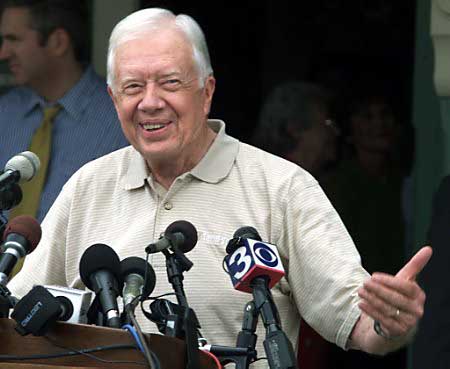
Deciding what face to wear for rural voters, she chose the mule chewing briars.

After the Communists invaded Afghanistan, my original thought was to boycott the World Series, but then Mondale suggested the Olympics.

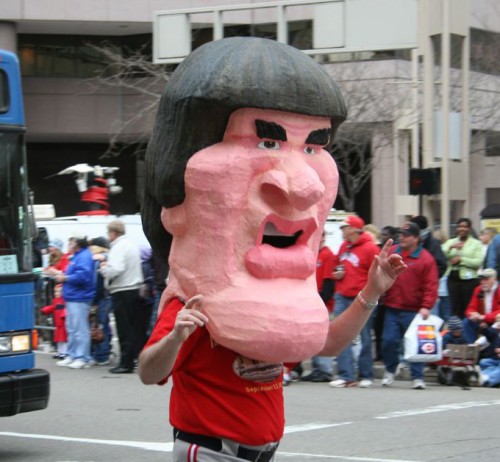
The whole gang on Easter Island loves the Reds.

In subsequent litigation, the manufacturer came to regret its advertising claim that the new model was great for cooking brats.

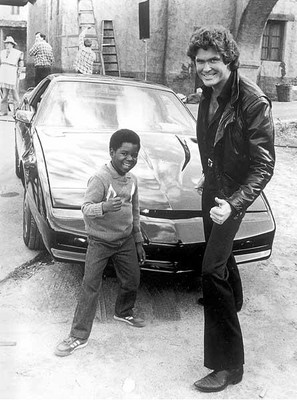
When neither would agree to be the tail end, they both showed up only half-assed.

Overestimating the comic book literacy of the Blacksburg co-eds, he never understood the failure of what he thought was his best line: “If you like my Hulk, wait ’til I show you my Thing.”

Deciding what face to wear for rural voters, she chose the mule chewing briars.

After the Communists invaded Afghanistan, my original thought was to boycott the World Series, but then Mondale suggested the Olympics.
The whole gang on Easter Island loves the Reds.
In subsequent litigation, the manufacturer came to regret its advertising claim that the new model was great for cooking brats.

More on Chief Judge Wilkins taking senior status
Here are more articles on the "retirement" of Chief Judge William Wilkins of the Fourth Circuit:
From The State in South Carolina: Judge Wilkins stepping down
From the AP: Chief judge of 4th Circuit to step down
From the Richmond paper: Appeals court's chief judge to retire
The gossip at Southern Appeal is that Judge Wilkins plans to run for Governor of South Carolina, which sounds absurd to some of the commenters.
From The State in South Carolina: Judge Wilkins stepping down
From the AP: Chief judge of 4th Circuit to step down
From the Richmond paper: Appeals court's chief judge to retire
The gossip at Southern Appeal is that Judge Wilkins plans to run for Governor of South Carolina, which sounds absurd to some of the commenters.
Time Magazine takes on the Derek Tice case
The Time article begins:
"Eight years ago, Derek Tice walked out onto his porch and found an entire swat team with all their guns pointed at him. He was convicted of murder, twice, in two separate trials, and sentenced to life in prison. To many observers in Norfolk, Virginia at the time, it had seemed like an open and shut case — a tape of Tice's own confession to the 1997 rape and murder of Navy newlywed Michelle Moore Bosko, 18, was played for the juries. But Tice and two other former Navy sailors convicted in the murder later insisted that they had fabricated the confessions after detectives had subjected them to harsh and manipulative questioning. The one other man convicted for the murder — and the only one whose DNA was linked to the crime — has since recanted his claim that the other men were involved and now insists that he acted alone. The whole argument may seem like a stretch — it certainly did and does to the victim's family — but on Wednesday a Virginia judge accepted enough of it to rule that detectives had not honored Tice's right to remain silent and overturned his sentence after almost a decade in custody."
UPDATE: The Washington Post has this editorial on the case.
"Eight years ago, Derek Tice walked out onto his porch and found an entire swat team with all their guns pointed at him. He was convicted of murder, twice, in two separate trials, and sentenced to life in prison. To many observers in Norfolk, Virginia at the time, it had seemed like an open and shut case — a tape of Tice's own confession to the 1997 rape and murder of Navy newlywed Michelle Moore Bosko, 18, was played for the juries. But Tice and two other former Navy sailors convicted in the murder later insisted that they had fabricated the confessions after detectives had subjected them to harsh and manipulative questioning. The one other man convicted for the murder — and the only one whose DNA was linked to the crime — has since recanted his claim that the other men were involved and now insists that he acted alone. The whole argument may seem like a stretch — it certainly did and does to the victim's family — but on Wednesday a Virginia judge accepted enough of it to rule that detectives had not honored Tice's right to remain silent and overturned his sentence after almost a decade in custody."
UPDATE: The Washington Post has this editorial on the case.
Volokh on Miller-Jenkins
This Volokh post takes on the Virginia Court of Appeals' decision in the Miller-Jenkins case.
One of the commenters gets to the nub of the matter, as I see it:
"I am curious as well whether under Vermont law the child custody determination is considered an intrinsic claim/remedy in the dissolution of the civil union as it is in divorce actions. This would create the Catch 22 where a parent wishing to dissolve a civil union (so as to sever the property/inheritance/etc. rights created thereby)might have to submit to Vermont's jurisdiction over custody issues because their new home state doesn't recognize civil unions or a cause of action to dissolve them."
The related discussion poses the question, could a Virginia court dissolve a Vermont "civil union"?
One of the commenters gets to the nub of the matter, as I see it:
"I am curious as well whether under Vermont law the child custody determination is considered an intrinsic claim/remedy in the dissolution of the civil union as it is in divorce actions. This would create the Catch 22 where a parent wishing to dissolve a civil union (so as to sever the property/inheritance/etc. rights created thereby)might have to submit to Vermont's jurisdiction over custody issues because their new home state doesn't recognize civil unions or a cause of action to dissolve them."
The related discussion poses the question, could a Virginia court dissolve a Vermont "civil union"?
Another hearsay gem from Buchmeyer
This one made me laugh out loud:
Prosecutor: On the photograph, what are on the brown, blood-like smudge?
Mr. Heu: From my zoological background, I keyed in on it because it had ants on it. [This was significant because it] indicated to me that it was fresh material rather than something that was days or weeks old.
Prosecutor: First of all, is there a difference between worker ants and soldier ants?
Mr. Heu: Yes. The soldier ants have large heads and the worker ants have small heads. The worker ants go out to forage - to find something. If it's a large find, the word will go back to the ant nest. The ants will send out more workers and if it's a big find, they'll send soldiers along.
Defense Attorney: I object to the materiality of the witness' statement.
The Court: Your objection is on the grounds of relevance?
Defense Attorney: Yes, sir. It's also hearsay as to what the ants tell each other.
The Court (wisely): Objection overruled.
Prosecutor: On the photograph, what are on the brown, blood-like smudge?
Mr. Heu: From my zoological background, I keyed in on it because it had ants on it. [This was significant because it] indicated to me that it was fresh material rather than something that was days or weeks old.
Prosecutor: First of all, is there a difference between worker ants and soldier ants?
Mr. Heu: Yes. The soldier ants have large heads and the worker ants have small heads. The worker ants go out to forage - to find something. If it's a large find, the word will go back to the ant nest. The ants will send out more workers and if it's a big find, they'll send soldiers along.
Defense Attorney: I object to the materiality of the witness' statement.
The Court: Your objection is on the grounds of relevance?
Defense Attorney: Yes, sir. It's also hearsay as to what the ants tell each other.
The Court (wisely): Objection overruled.
On being oppressed by paper money
Subscribe to:
Posts (Atom)