Via Ohio Law, here is the official guide to oral argument before the Ohio Supreme Court.
The Virginia Supreme Court (and the Virginia Court of Appeals) should have such a guide.
Monday, October 17, 2005


Kilgore ahead on Tradesports
TradeSports is selling contracts on the Virginia governor's race - the Kilgore price is 60-something, the Kaine price is 30-something.
Money tight again for federal courts
This article from Law.com about the federal court money shortage includes a quote from a deputy clerk on electronic filing: "We can't trust the lawyers to do it right."
His cornerman should have thrown in the towel
Appellate Law & Practice links here to the tale of a lawyer in California who collapsed while being nailed by barrage of unfriendly questions from a panel of appeals court judges.
Sunday, October 16, 2005
One lame idea after another
Jaded JD links (with some glee) to this Newsweek story that says the Bush administration is strong-arming Senator Allen and other presidential aspirants in their latest act of flailing about to secure the consent of the U.S. Senate to the nomination of Harriet Miers to the U.S. Supreme Court.
As I've been thinking football and baseball lately, I'm wondering how the Miers' nomination compares with the Red Sox trading Babe Ruth or the Steelers cutting Johnny Unitas - will history record this nomination as a blunder that starts a funk that lasts for decades? There might not be another Republican nominee to the Supreme Court for 20 years, just as the Democrats had none during the 1970s and 1980s.
As I've been thinking football and baseball lately, I'm wondering how the Miers' nomination compares with the Red Sox trading Babe Ruth or the Steelers cutting Johnny Unitas - will history record this nomination as a blunder that starts a funk that lasts for decades? There might not be another Republican nominee to the Supreme Court for 20 years, just as the Democrats had none during the 1970s and 1980s.
Great night of football
Unlike Chad, 63,000 of my closest friends and I went to the big game in Charlottesville last night, and saw Virginia beat Florida State 26-21. They got the big touchdown right before the half to build a 23-10 lead and held on in the second half, with the aid and comfort of many costly Seminole penalties and giveaways. The much-maligned Marques Hagans out-dueled Drew Weatherford, as both threw more than 35 times and for over 300 yards, but Weatherford gave up three interceptions, including the clincher in the final minute to end Florida State's last possession. As Virginia ran out the clock, a mob swarmed over and through the shrubbery behind the North end zone onto the field, past the out-numbered security forces. As I left, they were climbing the goalposts. The gang in section 127 were almost beyond speech, in part because you can't say much when your grin is too wide to move your lips and your throat too hoarse to be heard anyhow.
Why not more excitement about the governor's race
Rick Sincere links here to this article in the style section of the Washington Post, which quotes Rick and others, on the proposition that there is not much public interest in this year's governor's race.
Saturday, October 15, 2005
Who says no practicing, private sector lawyers blogging against Miers
Southern Appeal suggests that Hugh Hewitt is blind if he thinks there are no private, practicing lawyers blogging against Supreme Court nominee Harriet Miers.
Here you can see the Bainbridge online poll regarding the Miers nomination. The last I checked, 69% of his respondents were opposed.
Here you can see the Bainbridge online poll regarding the Miers nomination. The last I checked, 69% of his respondents were opposed.
On the proliferation of new law schools
This article from law.com mentions the Appalachian School of Law and new law schools in North Carolina, South Carolina, and Virginia, in its discussion of the wave of new law schools in the U.S.
Little things mean a lot
I just read The Tipping Point: How Little Things Can Make a Big Difference by Malcolm Gladwell, a book my sister gave me for my birthday. I had never heard of this book.
Reading it makes me wonder about the political and legal/law business applications of the knowledge in that book. It is very provocative, I recommend it.
Reading it makes me wonder about the political and legal/law business applications of the knowledge in that book. It is very provocative, I recommend it.
Friday, October 14, 2005
Some environmentalists opposing wind power
Wired News has this account of environmentalist opposition to some wind-power projects.
Thursday, October 13, 2005
The man in Clintwood
Brian Patton has passed the Virginia bar - way to go, yeah.
Besides reading his blog, I met him at the conference in Charlottesville.
Besides reading his blog, I met him at the conference in Charlottesville.
Northern Virginia judge still ruling that presumption in DUI law is unconstitutional
The AP reports here that a Northern Virginia general district court judge is still dismissing drunk driving cases on the grounds that the Virginia statute under which intoxication is presumed from a prescribed blood alcohol content is unconstitutional.
Why not a truth-detecting light
It says here that the general district court judge from the Tidewater now facing a complaint before the Judicial Inquiry and Review Commission is "also accused of misleading defendants by telling them his courtroom was equipped with a drug-detecting light."
Wednesday, October 12, 2005
Those crazy West Coast types and their contracts
ContractsProf Blog says here that the Ninth Circuit has ruled that complex and sophisticated loan documents "that provide they cannot be amended except in writing can nevertheless be modified by by oral agreement."
Supreme Court denies cert in Chesterfield Wiccan case
What are the legal credentials of the Senators on the Judiciary Committee?
As the Senate prepares to pass judgment on the nomination of Harriet Miers, it was interesting to read this summary of the legal credentials of the members of the Senate Judiciary Committee, which says in part:
"Senator Hatch: A lawyer who received his degree from the Pittsburgh Law School. He then practiced law for 14 years . . .
-Senator Chuck Grassley: Not a lawyer. A farmer and Senator
-Senator Lindsay Graham: Law degree from University of South Carolina. Served a few years as a lawyer in the Air Force. . .
-Senator Kyl: A lawyer who graduated from the University of Arizona (he did serve on Law Review and was one of the names touted for SCOTUS)
-Senator DeWine: A lawyer who graduated from Ohio Northern University Law School
-Senator Sessions: A lawyer who graduated from the University of Alabama. Had a career as small-town lawyer before becoming US Assistant US Attorney for the Southern District of Alabama; then US Attorney for the district and Alabama’s Attorney General for two years.
-Senator Cornyn: Lawyer, graduated from St. Mary’s School of Law in San Antonio (later earned a masters of Law from University of Virginia Law School). Served as District Court Judge and Texas Supreme Court
-Senator Brownback: Law degree from University of Kansas (the picture on his website shows him riding a bull)
-Senator Tom Coburn: Not a lawyer . . .
-Senator Leahy: JD from Georgetown University . . .
-Senator Kennedy: . . .
-Senator Biden: Graduated from Syracuse University College of Law. . . .
-Senator Kohl: Not a lawyer . . .
-Senator Feingold: Lawyer who graduated from Harvard Law School. Practiced law for a few years. . .
-Senator Schumer: Graduated from Harvard Law School. Practiced for only a few years.
-Senator Durbin: Lawyer who graduated from Georgetown; he did practice for a number of years."
Regarding Senator DeWine, he went to the same law school as Clintwood's own Brian Patton.
"Senator Hatch: A lawyer who received his degree from the Pittsburgh Law School. He then practiced law for 14 years . . .
-Senator Chuck Grassley: Not a lawyer. A farmer and Senator
-Senator Lindsay Graham: Law degree from University of South Carolina. Served a few years as a lawyer in the Air Force. . .
-Senator Kyl: A lawyer who graduated from the University of Arizona (he did serve on Law Review and was one of the names touted for SCOTUS)
-Senator DeWine: A lawyer who graduated from Ohio Northern University Law School
-Senator Sessions: A lawyer who graduated from the University of Alabama. Had a career as small-town lawyer before becoming US Assistant US Attorney for the Southern District of Alabama; then US Attorney for the district and Alabama’s Attorney General for two years.
-Senator Cornyn: Lawyer, graduated from St. Mary’s School of Law in San Antonio (later earned a masters of Law from University of Virginia Law School). Served as District Court Judge and Texas Supreme Court
-Senator Brownback: Law degree from University of Kansas (the picture on his website shows him riding a bull)
-Senator Tom Coburn: Not a lawyer . . .
-Senator Leahy: JD from Georgetown University . . .
-Senator Kennedy: . . .
-Senator Biden: Graduated from Syracuse University College of Law. . . .
-Senator Kohl: Not a lawyer . . .
-Senator Feingold: Lawyer who graduated from Harvard Law School. Practiced law for a few years. . .
-Senator Schumer: Graduated from Harvard Law School. Practiced for only a few years.
-Senator Durbin: Lawyer who graduated from Georgetown; he did practice for a number of years."
Regarding Senator DeWine, he went to the same law school as Clintwood's own Brian Patton.
Where does Pete Curcio keep his tickets?
This story from West Virginia is titled "Notre Dame tickets stolen from law office."
More suicides than homicides in Virginia in 2003
The Richmond paper reports here: "More people killed themselves than were killed by others in 2003, according to a new state report that examines details of more than 1,300 suicides, homicides and other violent deaths in Virginia that year."
Tuesday, October 11, 2005
On Bill Hobbs
It says here that Tennessee blogging guru Bill Hobbs is cutting back.
Bill Hobbs has been one of my favorites for years.
One thing in particular I appreciate was that he guaranteed by way of a link back that hundreds of people (the most ever, at the time) read this 2003 post, which says:
---
Bill Hobbs of HobbsOnline says here that he gets a check from his mother in the amount of his age times $1 each year for his birthday. He figures he's losing the battle with time but beating inflation.
That story reminds that my grandmother, who died on August 12, 2002, at the age of 86, would send me each year for my birthday, even after I was a practicing lawyer, a birthday card (sometimes a few days late) with a handwritten note saying how well she remembered getting the long-distance call from Kentucky when I was born and how proud she was that I was her grandson, and inside the card was a one dollar bill. (Unlike Bill Hobbs, I got no cost-of-living adjustment from her, but her list of people to whom she sent cards grew larger as I grew older.)
--
Thanks, Bill.
Bill Hobbs has been one of my favorites for years.
One thing in particular I appreciate was that he guaranteed by way of a link back that hundreds of people (the most ever, at the time) read this 2003 post, which says:
---
Bill Hobbs of HobbsOnline says here that he gets a check from his mother in the amount of his age times $1 each year for his birthday. He figures he's losing the battle with time but beating inflation.
That story reminds that my grandmother, who died on August 12, 2002, at the age of 86, would send me each year for my birthday, even after I was a practicing lawyer, a birthday card (sometimes a few days late) with a handwritten note saying how well she remembered getting the long-distance call from Kentucky when I was born and how proud she was that I was her grandson, and inside the card was a one dollar bill. (Unlike Bill Hobbs, I got no cost-of-living adjustment from her, but her list of people to whom she sent cards grew larger as I grew older.)
--
Thanks, Bill.
Why the judiciary aren't mediocre
A while back, I wrote this post with some of my thoughts about how judges in spite of the system are mostly excellent, citing among other things Judge Posner who wrote in this book: "I may be living in the golden age of the federal appellate judiciary. There may never have been a time when so large a fraction of federal judges were outstanding."
I also told the following tale, heard in the church in D.C. where I was married:
The homilist was some fellow from the Church of England, with a syrupy British accent and bone-dry sense of humor.... He related the story of a young priest assigned to a class of teenagers, who made the mistake one day of opening the floor for questions, and the first question was this: "why are the clergy so mediocre?" He thought a moment, and answered, "because we have only the laity to pick from."
The post also notes this discussion about whether it is good for federal judges to be "mediocre."
As to the U.S. Supreme Court, the question may be, why aren't the Supreme Court justices more mediocre? The answer may be, they've got the federal judiciary (and many other sources of excellence) to pick from. All of which makes me feel short-changed by the nomination of Harriet Miers. From my desk, the appearance is that the president didn't even try to make a great pick. The stated rationale that Bush knows Miers personally and therefore he feels confident how she will vote doesn't cut it with me. The idea doesn't even make sense, judging on the basis of "what would Bush want me to do?"
If the President was going to pick an unknown, and why not, he should have found a well-qualified one, and laughed like Nixon did over Rehnquist, or like Bush himself could have done after the vote was in on Roberts.
I also told the following tale, heard in the church in D.C. where I was married:
The homilist was some fellow from the Church of England, with a syrupy British accent and bone-dry sense of humor.... He related the story of a young priest assigned to a class of teenagers, who made the mistake one day of opening the floor for questions, and the first question was this: "why are the clergy so mediocre?" He thought a moment, and answered, "because we have only the laity to pick from."
The post also notes this discussion about whether it is good for federal judges to be "mediocre."
As to the U.S. Supreme Court, the question may be, why aren't the Supreme Court justices more mediocre? The answer may be, they've got the federal judiciary (and many other sources of excellence) to pick from. All of which makes me feel short-changed by the nomination of Harriet Miers. From my desk, the appearance is that the president didn't even try to make a great pick. The stated rationale that Bush knows Miers personally and therefore he feels confident how she will vote doesn't cut it with me. The idea doesn't even make sense, judging on the basis of "what would Bush want me to do?"
If the President was going to pick an unknown, and why not, he should have found a well-qualified one, and laughed like Nixon did over Rehnquist, or like Bush himself could have done after the vote was in on Roberts.
Did I mention I got the new Edith Maxwell book for my birthday?
It's true, I got the book Never Seen The Moon: The Trials Of Edith Maxwell, about a sensational murder case in Wise County from the 1930s, about which I last wrote this post.
The re-reassignment of the circuits
I am delighted to see here that the new Chief Justice has been assigned as circuit justice for the Fourth Circuit, based on the suspicion that sooner or later I will get to see him at the judicial conference, the Article III groupie that I am.
Interesting First Amendment case being argued this week before U.S. Supreme Court
Here, Nat Garrett of SCOTUSBlog previews the upcoming argument before the Supreme Court in the case of Garcetti v. Ceballos, where an L.A. prosecutor under the notorious Gil Garcetti was retaliated against for telling defense counsel that there was a problem with a warrant obtained by the sheriff's department.
The District Court entered summary judgment for the defendants, because the alleged speech was part of the plaintiff's job duties. The Ninth Circuit panel in an opinion by Judge Reinhardt reversed, concluding that it was a matter of public concern, even if it was job-required speech.
The District Court entered summary judgment for the defendants, because the alleged speech was part of the plaintiff's job duties. The Ninth Circuit panel in an opinion by Judge Reinhardt reversed, concluding that it was a matter of public concern, even if it was job-required speech.
Monday, October 10, 2005
Alternative dispute resolution
From Say What, said to be an actual lease provision (among some Texans):
"13. DISPUTES. If unanimously hereafter agreed by the parties, any disputes regarding this lease shall be settled by an old-fashioned fistfight or best single draw five-card poker hand."
"13. DISPUTES. If unanimously hereafter agreed by the parties, any disputes regarding this lease shall be settled by an old-fashioned fistfight or best single draw five-card poker hand."
Judge Fulton resigns to take Richmond job
Here the Coalfield Progress reports that General District Court Judge Suzanne Fulton has resigned to take a job as "the first director of the Virginia Supreme Court's new Judicial Evaluation Program."
On Miers - the Westlaw headcount theory
Is that Legal posts here (Fifth Circuit) and here (Texas appeals courts) about the number and outcome of published cases in which Supreme Court nominee Harriet Miers appeared as counsel, and there are not too many.
I must confess, I looked up her name myself. I think her name is on about 20 opinions, great and small. By contrast, "Lucas Hobbs" (a/k/a the new guy in our firm) is on 39 opinions, and "John G. Roberts, Jr." is on 85 opinions.
I must confess, I looked up her name myself. I think her name is on about 20 opinions, great and small. By contrast, "Lucas Hobbs" (a/k/a the new guy in our firm) is on 39 opinions, and "John G. Roberts, Jr." is on 85 opinions.
Sunday, October 09, 2005
On lawyers who blog
The NY Times has this article which begins: "Inside every lawyer, it is said, there is a brilliant writer, held back by professional ambition or by fear of failure. Nowhere is that truism more evident than in the explosion of online blogs by, for and about lawyers."
Reading and writing, it's what we do.
Reading and writing, it's what we do.
Friday, October 07, 2005
Monkey no. 997,043 liked this one
Here's a quote:
"We've heard that a million monkeys at a million keyboards could produce the complete works of Shakespeare; now, thanks to the Internet, we know that is not true."
"We've heard that a million monkeys at a million keyboards could produce the complete works of Shakespeare; now, thanks to the Internet, we know that is not true."
Hey, I got one of these, too
Norman reacts here to an invitation to include his blog in the archives of the Library of Virginia.
I got the same invitation, thinking at first that it was spam.
So, the two things blogging has got me this week: (1) an invitation to the archives, and (2) I recognized Mark Rubin on the street in Richmond on Thursday.
I got the same invitation, thinking at first that it was spam.
So, the two things blogging has got me this week: (1) an invitation to the archives, and (2) I recognized Mark Rubin on the street in Richmond on Thursday.
No right to get footloose on town property in the Fourth Circuit
In Willis v. Town of Marshall, the Fourth Circuit in an opinion by Judge Traxler, joined by Chief Judge Wilkins, affirmed in part and vacated in part the District Court's disposition of a section 1983 brought against a North Carolina town which had barred the plaintiff from unruly dancing at concerts at the town community center. Judge Williams wrote a separate opinion concurring in part.
The District Court denied the plaintiff's motion for preliminary injunction and granted summary judgment in favor of the town, concluding that the dirty dancing was not constitutionally protected. The majority agreed with the District Court that the plaintiff's style of dancing at the community center was not protected by the First Amendment, but she might have an equal protection claim for being singled out by the Town.
The District Court denied the plaintiff's motion for preliminary injunction and granted summary judgment in favor of the town, concluding that the dirty dancing was not constitutionally protected. The majority agreed with the District Court that the plaintiff's style of dancing at the community center was not protected by the First Amendment, but she might have an equal protection claim for being singled out by the Town.
Your tuition dollars at work
Here it says a gang of Virginia Tech students are trying for a good cause to make the Guinness Book of World Records for biggest pillow fight.
The latest Certworthy
Here Ray Ward has linked to the latest Certworthy, the publication of the DRI Appellate Practice session.
The shame of it all is that I argued an appeal yesterday, and although it may have gone well enough, I was thinking after reading this latest Certworthy that I wish I had read it before we wrote the briefs - I could see how to make them better. And, perhaps the argument went better, although it was not a complicated case.
Read it, write better, argue better.
One of my pet peeves in briefwriting lately has been all sentences starting with the indefinite "it", as in "It is fundamentally unfair." What's the case cite for that fundamental unfairness doctrine, anyway?
P.S. Dad, check out the bit at pp. 26-27 with my name on it, as the reporter for the Fourth Circuit.
The shame of it all is that I argued an appeal yesterday, and although it may have gone well enough, I was thinking after reading this latest Certworthy that I wish I had read it before we wrote the briefs - I could see how to make them better. And, perhaps the argument went better, although it was not a complicated case.
Read it, write better, argue better.
One of my pet peeves in briefwriting lately has been all sentences starting with the indefinite "it", as in "It is fundamentally unfair." What's the case cite for that fundamental unfairness doctrine, anyway?
P.S. Dad, check out the bit at pp. 26-27 with my name on it, as the reporter for the Fourth Circuit.
Thursday, October 06, 2005
Did the local government really have authority for this?
Here is a picture of a monument to Judge Dillon, originator of the Dillon Rule.
The dim bulb test
Ross MacKenzie says here:
"Harriet Miers lacks the heft of many in the judicial monastery - e.g., J. Harvie Wilkinson, Karen Williams and Michael Luttig of the Virginia-based Fourth Circuit Court of Appeals, or Chief Justice Leroy Hassell of the Virginia Supreme Court."
He concludes, however:
"And if Bush is not the dim bulb those who detest him insist he is, then the rest of us might be well advised, through faith and intellect, to believe in his nominee."
"Harriet Miers lacks the heft of many in the judicial monastery - e.g., J. Harvie Wilkinson, Karen Williams and Michael Luttig of the Virginia-based Fourth Circuit Court of Appeals, or Chief Justice Leroy Hassell of the Virginia Supreme Court."
He concludes, however:
"And if Bush is not the dim bulb those who detest him insist he is, then the rest of us might be well advised, through faith and intellect, to believe in his nominee."
Those incredibly generic Marching Cavaliers
This article says do the right thing and bring back the Pep Band.
At least, they should ban all future performances of "Jungle Boogie."
I've paid money to see marching bands, but the Marching Cavaliers can't hold my interest.
At least, they should ban all future performances of "Jungle Boogie."
I've paid money to see marching bands, but the Marching Cavaliers can't hold my interest.
The Royal family
I read this story about Virginia Tech's WR Eddie Royal and his sister, the cadet commander at Tech, and his brother, who plays in the secondary for Marshall (Tech's upcoming football opponent) this morning and thought it was great.
(I only read USA Today, it seems, at hotels like this morning at the Omni in Richmond.)
(I only read USA Today, it seems, at hotels like this morning at the Omni in Richmond.)
Metadata opinion from U.S. District Court in Kansas
Here, via Steve Emmert and others, is a must-read opinion in a federal court case from Kansas, where the defendant tried to get away with scrubbing the metadata from Excel files it was ordered to produce, related to a reduction in force.
Wednesday, October 05, 2005
Sandra Day O'Connor follows Burger et al. to become Chancellor of William & Mary
The Washington Post reports here that retiring Supreme Court Justice O'Connor will become chancellor of the College of William & Mary.
A lawyer I know, who served on the board of the College, told me once that he had heard somehow or another that retired Chief Justice Warren Burger was bummed when he learned that he was term-limited out of the job of chancellor, that he had enjoyed the idea and wanted to keep the "job" longer.
A lawyer I know, who served on the board of the College, told me once that he had heard somehow or another that retired Chief Justice Warren Burger was bummed when he learned that he was term-limited out of the job of chancellor, that he had enjoyed the idea and wanted to keep the "job" longer.
Dillard on Harriet Miers
Feddie says here that Ms. Miers may have run out to buy a Con Law study aid.
Bainbridge on Harriet Miers
Professor Bainbridge says here that if President Bush is not going to come across on Supreme Court nominations, then what's the point?
Tuesday, October 04, 2005
Sixth Circuit judge throws down on the death penalty
In Moore v. Parker, Judge Martin in dissent unloaded his accumulated views against the death penalty.
More fun than the Harriet Miers nomination
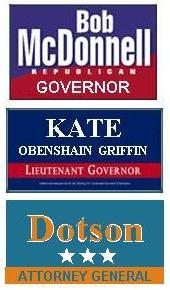
I liked this image so much I stole it.

The original of this fantasy slate for 2009 with commentary can be found here.
Monday, October 03, 2005
Nobody from the Fourth Circuit gets nominated to the Supreme Court
Instead, the nomination went to a graduate of Southern Methodist University, previously known for its football players, up until the NCAA shut down the program.
My old friend Jim Green went to SMU Law. I'm sure he would view this development as further evidence of the destiny of SMU alumni to rule the world.
My old friend Jim Green went to SMU Law. I'm sure he would view this development as further evidence of the destiny of SMU alumni to rule the world.
Sunday, October 02, 2005
Judge Luttig pulls ahead on Tradesports line
Dethroning Judge Williams from her top rank as yesterday's betting favorite, as of this hour on Sunday night, Judge Luttig of the Fourth Circuit has zoomed to the top of the Tradesports bidding at 18.7, with Judge Williams down to 10.0.
What these numbers mean I can't say for sure, as I am not planning to place any wagers.
What these numbers mean I can't say for sure, as I am not planning to place any wagers.
On watching college football thirty-some years ago
Watching Saturday's Alabama win over Florida, I noticed that the home team had a running back wearing No. 10, which caused me to recollect that as a child, not knowing any better, I used to root for Bear Bryant and Alabama football - because they were on television all the time. The first bowl game I can remember was the Sugar Bowl on New Year's Eve, 1973, when they lost to Notre Dame, 24-23.
They had a good running back named Wilbur Jackson, who went on to play a few years in the NFL. In college he wore No. 80, as shown in the picture on this page, with an article in which a former assistant SID discusses the fact that in 1970 Jackson was the first black football player signed to a scholarship at Alabama.
The local team I pulled for was Virginia Tech. When I saw them play sometime around 1974 or 1975, they were running Alabama's wishbone offense with three black running backs, including Phil Rogers from Gate City and Paul Adams from Castlewood. (It says here that in the fall of 1970 a fellow from Radford named John Dobbins became the first black football player for Tech.)
In the world as I knew it in the early 1970s, I had no idea that anyone had ever objected to black men playing college football, but I knew for sure that it was weird for a running back to wear No. 80.
They had a good running back named Wilbur Jackson, who went on to play a few years in the NFL. In college he wore No. 80, as shown in the picture on this page, with an article in which a former assistant SID discusses the fact that in 1970 Jackson was the first black football player signed to a scholarship at Alabama.
The local team I pulled for was Virginia Tech. When I saw them play sometime around 1974 or 1975, they were running Alabama's wishbone offense with three black running backs, including Phil Rogers from Gate City and Paul Adams from Castlewood. (It says here that in the fall of 1970 a fellow from Radford named John Dobbins became the first black football player for Tech.)
In the world as I knew it in the early 1970s, I had no idea that anyone had ever objected to black men playing college football, but I knew for sure that it was weird for a running back to wear No. 80.
Details of JIRC complaint against general district court judge in the Tidewater
The Norfolk paper reports here on the Judicial Inquiry and Review Commission's complaint against General District Court Judge Archie Elliott.
On the October Sky festival
The Bluefield paper reports here on rocket boy Homer Hickam's return to Coalwood for the 7th Annual October Sky festival.
On Goose Pimple Junction
Rex Bowman writes for the Richmond paper about How Goose Pimple got its name.
Goose Pimple Junction is conveniently situated at the bend in the road between the Bristol Country Club and The Virginian.
Goose Pimple Junction is conveniently situated at the bend in the road between the Bristol Country Club and The Virginian.
More on Judge Karen Williams
Via How Appealing, The State in South Carolina has this article with different points of view on whether President Bush should nominate Judge Karen Williams to the U.S. Supreme Court.
On that Ninth Circuit judicial misconduct opinion
References to this opinion from the Ninth Circuit have been booted about the law blogs, most particularly because of this quote from Judge Kozinski's dissent, which will live forever: "Throughout these lengthy proceedings, the judge has offered nothing at all to justify his actions - not a case, not a statute, not a bankruptcy treatise, not a law review article, not a student note, not even a blawg." (Emphasis added.)
I never heard much about the facts, however, until I read this creepy Beldar post. Read it, for the complainant's point of view. What the district court judge did in the case doesn't make any sense.
As an aside, Beldar does jump on the bandwagon having fun with the "blawg" reference, as he says: "oh, how I aspire to someday approach the credibility, or even the popularlity, of a bankruptcy treatise!" Apropos of this topic, beSpacific links here to this Findlaw article by John Dean, of all people, on the use of blogs for legal research.
I never heard much about the facts, however, until I read this creepy Beldar post. Read it, for the complainant's point of view. What the district court judge did in the case doesn't make any sense.
As an aside, Beldar does jump on the bandwagon having fun with the "blawg" reference, as he says: "oh, how I aspire to someday approach the credibility, or even the popularlity, of a bankruptcy treatise!" Apropos of this topic, beSpacific links here to this Findlaw article by John Dean, of all people, on the use of blogs for legal research.
132,000 people in prison for life in the U.S.
Professor Berman links here to this NY Times article about the population of persons sentenced to life in U.S. prisons.
The article says there are 132,000 lifers in the U.S., and explains:
"But now, driven by tougher laws and political pressure on governors and parole boards, thousands of lifers are going into prisons each year, and in many states only a few are ever coming out, even in cases where judges and prosecutors did not intend to put them away forever.
Indeed, in just the last 30 years, the United States has created something never before seen in its history and unheard of around the globe: a booming population of prisoners whose only way out of prison is likely to be inside a coffin."
The article says there are 132,000 lifers in the U.S., and explains:
"But now, driven by tougher laws and political pressure on governors and parole boards, thousands of lifers are going into prisons each year, and in many states only a few are ever coming out, even in cases where judges and prosecutors did not intend to put them away forever.
Indeed, in just the last 30 years, the United States has created something never before seen in its history and unheard of around the globe: a booming population of prisoners whose only way out of prison is likely to be inside a coffin."
What can you say as a judge candidate in Kentucky
Via this Marcia Oddi post, the Louisville paper has this article on the new rule allowing free speech for candidates for judgeships in the Commonwealth of Kentucky.
The article says:
"The new rule says judicial candidates must not 'intentionally or recklessly' make a statement that could be perceived 'by a reasonable person' as committing them to rule a certain way on an issue they could hear."
The article suggests that Kentucky conservatives are seeking to challenge even this limit on judges, to make it easier for them to ferret out the liberals.
The article says:
"The new rule says judicial candidates must not 'intentionally or recklessly' make a statement that could be perceived 'by a reasonable person' as committing them to rule a certain way on an issue they could hear."
The article suggests that Kentucky conservatives are seeking to challenge even this limit on judges, to make it easier for them to ferret out the liberals.
Your top 100 intellectuals
I was amused to read, via this ACS post, a list of top 100 intellectuals, of whom I could place perhaps 20.
ACS notes the controversy that so few were women were included. Others might question why so many NY Times columnists were included, particularly Krugman, of whom Gail Collins wrote in yesterday's Times:
"A classic case of correction run amok involved a column that Paul Krugman wrote on Aug. 19 about the Florida recount in 2000 in which he said that two different news media groups reviewed the ballots and found that 'a full manual recount would have given the election to Mr. Gore.' That was incorrect. Paul tried to clarify things in his next column, but the public editor, Byron Calame, objected that since nothing in the second column was labeled a correction, the original error would survive in the permanent record.
Paul published a correction in his next column. Unfortunately, the correction was based on information published in The Miami Herald that was wrong and had never been formally fixed. Paul appended another correction to the Web version of his column, but asked if he could refrain from revisiting the subject yet again in print.
I agreed, feeling we had reached the point of cruelty to readers. But I was wrong. The correction should have run in the same newspaper where the original error and all its little offspring had appeared. Here it is:
CORRECTION
In describing the results of the ballot study by the group led by The Miami Herald in his column of Aug. 26, Paul Krugman relied on the Herald report, which listed only three hypothetical statewide recounts, two of which went to Al Gore. There was, however, a fourth recount, which would have gone to George W. Bush. In this case, the two stricter-standard recounts went to Mr. Bush. A later study, by a group that included The New York Times, used two methods to count ballots: relying on the judgment of a majority of those examining each ballot, or requiring unanimity. Mr. Gore lost one hypothetical recount on the unanimity basis."
So, your top 100 intellectuals include one fellow who can't quite come out and say that 2 + 2 = 4, or something like that.
ACS notes the controversy that so few were women were included. Others might question why so many NY Times columnists were included, particularly Krugman, of whom Gail Collins wrote in yesterday's Times:
"A classic case of correction run amok involved a column that Paul Krugman wrote on Aug. 19 about the Florida recount in 2000 in which he said that two different news media groups reviewed the ballots and found that 'a full manual recount would have given the election to Mr. Gore.' That was incorrect. Paul tried to clarify things in his next column, but the public editor, Byron Calame, objected that since nothing in the second column was labeled a correction, the original error would survive in the permanent record.
Paul published a correction in his next column. Unfortunately, the correction was based on information published in The Miami Herald that was wrong and had never been formally fixed. Paul appended another correction to the Web version of his column, but asked if he could refrain from revisiting the subject yet again in print.
I agreed, feeling we had reached the point of cruelty to readers. But I was wrong. The correction should have run in the same newspaper where the original error and all its little offspring had appeared. Here it is:
CORRECTION
In describing the results of the ballot study by the group led by The Miami Herald in his column of Aug. 26, Paul Krugman relied on the Herald report, which listed only three hypothetical statewide recounts, two of which went to Al Gore. There was, however, a fourth recount, which would have gone to George W. Bush. In this case, the two stricter-standard recounts went to Mr. Bush. A later study, by a group that included The New York Times, used two methods to count ballots: relying on the judgment of a majority of those examining each ballot, or requiring unanimity. Mr. Gore lost one hypothetical recount on the unanimity basis."
So, your top 100 intellectuals include one fellow who can't quite come out and say that 2 + 2 = 4, or something like that.
Saturday, October 01, 2005
Federal prosecution becomes too much work
Here Professor Berman ruminates on the thesis that the Supreme Court's sentencing decisions in Blakely and Booker have chilled the number of federal prosecutions.
What to bring to my next oral argument
Here Ray expands on the "pitcher and pie" theory of clarity of expression.
The odds on Judge Karen Williams as the second nominee
Ex parte reports here that Judge Karen Williams of the Fourth Circuit is at the moment the betting favorite on Tradesports to be picked by President Bush as his next nominee to the U.S. Supreme Court.
Right now the top prices there are these: Fourth Circuit Judge Williams, 13.0; Third Circuit Judge Alito, 9.0; AG Gonzalez, 8.0; Michigan Supreme Court's Corrigan, 6.3; Larry Thompson, 6.0; Ninth Circuit Judge Callahan, 5.4; Fifth Circuit Judge Clement, 5.0; D.C. Circuit Judge Janice Rogers Brown, 5.0.
Right now the top prices there are these: Fourth Circuit Judge Williams, 13.0; Third Circuit Judge Alito, 9.0; AG Gonzalez, 8.0; Michigan Supreme Court's Corrigan, 6.3; Larry Thompson, 6.0; Ninth Circuit Judge Callahan, 5.4; Fifth Circuit Judge Clement, 5.0; D.C. Circuit Judge Janice Rogers Brown, 5.0.
But could there be a Chav Dotson?
Here Mike at C&F and here PG at Crescat elaborate on their discovery of the word "chav," citing this NYT article, which says in part:
"Chavs, whether rich or poor, tend to favor gaudy jewelry and expensive-but-tacky clothes with big logos and to behave in a way that others find coarse or obnoxious.
Male chavs wear tracksuits and baseball caps; female chavs pull their hair tightly back in buns or ponytails, a style known as a 'council house facelift,' from the term for public housing."
"Chavs, whether rich or poor, tend to favor gaudy jewelry and expensive-but-tacky clothes with big logos and to behave in a way that others find coarse or obnoxious.
Male chavs wear tracksuits and baseball caps; female chavs pull their hair tightly back in buns or ponytails, a style known as a 'council house facelift,' from the term for public housing."
Friday, September 30, 2005
New judge nominated for Southern District of West Virginia
The Gazette reports here that President Bush earlier this week nominated Thomas E. Johnston, age 38, the U.S. attorney for the Northern District of West Virginia, to succeed the late Judge Haden on the bench in the Southern District.
The article notes that among those who were said to be candidates for the job were two lawyers within the sphere of my acquaintance, broadly construed, and they are Mark Sadd from Charleston who was at U.Va. (and an editor of the University Journal) in my day and John Shott, a good man from Bluefield.
The article notes that among those who were said to be candidates for the job were two lawyers within the sphere of my acquaintance, broadly construed, and they are Mark Sadd from Charleston who was at U.Va. (and an editor of the University Journal) in my day and John Shott, a good man from Bluefield.
Tuesday, September 27, 2005
The view from the Great Lakes state
Someone writing in The Michigan Review says: "In the Old Dominion state, it looks that Democrat Lt. Governor Tim Kaine will be denied his bid for a promotion. Republican State Attorney General Jerry Kilgore has been running ahead of Kaine in nearly every poll since the primaries last spring. While it is true that the most recent Rasmussen Reports poll shows him in a statistical tie of 43% versus 40%, this is more likely to be statistical noise than a swell in support for Kaine. Virginia has been drifting steadily from the leaning- to safe-Republican column in recent years, and unless Gov. Warner provides Kaine with a crucial boost, the Governor's mansion will return to Republican hands on November 8th."
Best sports stories of the week
The President's Cup was exciting, and so was last night's UT comeback, but I like this one as the weekend's best sports story, about the Notre Dame coach and a kid named Montana.
While we're at it, here is another example of why I've linked to every Rayna DuBose story I've seen in these past three years.
While we're at it, here is another example of why I've linked to every Rayna DuBose story I've seen in these past three years.
Three and one-third Caption Contest wins
Chad gives us one-third of this week's trophy, to go along with the others.
Ben Affleck as rumored opponent for Sen. Allen
Here in the WP's Style section (so you know it's a joke) it is said that some Virginia Democrats are talking up Ben Affleck as a Senate candidate.
Sunday, September 25, 2005
One great footnote
In Kondaurov v. Kerdasha, the Virginia Supreme Court in an opinion by Senior Justice Russell reversed the $300,000 verdict for the plaintiff, where it appeared the verdict may have been based in part on her emotional distress caused by the brief disappearance of her dog, Sushi.
In footnote 2, the Court noted:
"Sushi attended the trial. Plaintiff’s counsel represented that she was a 'service dog' as defined in Code § 51.5-44(E), and that the plaintiff relied on her for assistance. The court entered an order, to which the defense agreed, permitting her to accompany the plaintiff on condition that there would be 'no growling or hostility toward the defense counsel.'"
In footnote 2, the Court noted:
"Sushi attended the trial. Plaintiff’s counsel represented that she was a 'service dog' as defined in Code § 51.5-44(E), and that the plaintiff relied on her for assistance. The court entered an order, to which the defense agreed, permitting her to accompany the plaintiff on condition that there would be 'no growling or hostility toward the defense counsel.'"
Use that fiber
Figuring out how to avoid using the roads, it says here: "Since 2001, the Virginia Department of Transportation has saved nearly $11.3 million in avoided travel and time costs for meetings by conducting them via videoconference instead of in person."
On race unity days
Here I read this:
"It was in a small town in Appalachia, Jonesville in Lee County, Va., where I first saw such an event: people of different races and cultures coming together in an organized manner.
'We bring people together of diverse cultures and just fellowship together,'' I remember Jill Carson of Pennington Gap, Va., telling me that particular Sunday afternoon in 1999. 'We hold it every year in Jonesville, and we have approximately 400-500 people attend this.
'It's a day of fellowship ? we share stories, we share music, we share love, we share friendship and it's very successful. Every year, we do it on the second Sunday in June, and this is the seventh consecutive year that we've had it.'
They called it Race Unity Day in that small mountain town located about two hours northeast of Knoxville, and it was a way to improve race relations in the area."
"It was in a small town in Appalachia, Jonesville in Lee County, Va., where I first saw such an event: people of different races and cultures coming together in an organized manner.
'We bring people together of diverse cultures and just fellowship together,'' I remember Jill Carson of Pennington Gap, Va., telling me that particular Sunday afternoon in 1999. 'We hold it every year in Jonesville, and we have approximately 400-500 people attend this.
'It's a day of fellowship ? we share stories, we share music, we share love, we share friendship and it's very successful. Every year, we do it on the second Sunday in June, and this is the seventh consecutive year that we've had it.'
They called it Race Unity Day in that small mountain town located about two hours northeast of Knoxville, and it was a way to improve race relations in the area."
Judge McElyea appoints Tim McAfee to the Appalachia voting case
Laurence Hammack of the Roanoke paper reports here on the appointment of the special prosecutor in the vote-buying case from the Town of Appalachia.
On Katrina and poverty awareness
This AP story says in part:
"In Appalachia, a region where poverty is so entrenched, so intractable and so pervasive it is almost a cliche, many residents still live in century-old coal camp box houses, built to be temporary out of flimsy boards and battens.
The poverty in this region has been 'discovered' again and again, and promises to pull residents out of poverty have been made for more than a century. During the Civil War, when thousands of Appalachians were driven from their homes in the mountains, President Lincoln promised he would come to their aid.
'The folks we work with don't really see they have a future, and as a consequence they live day by day,' said John David, who directs the Southern Appalachia Labor School in Kincaid, W.Va.
Some Appalachian residents have continuous yard sales, their only hope of making money lies in selling one of their possessions. Many more spend the entire year paying off their winter heating bills, which top $500 a month because their homes lack insulation."
I never heard of the Southern Appalachian Labor School.
"In Appalachia, a region where poverty is so entrenched, so intractable and so pervasive it is almost a cliche, many residents still live in century-old coal camp box houses, built to be temporary out of flimsy boards and battens.
The poverty in this region has been 'discovered' again and again, and promises to pull residents out of poverty have been made for more than a century. During the Civil War, when thousands of Appalachians were driven from their homes in the mountains, President Lincoln promised he would come to their aid.
'The folks we work with don't really see they have a future, and as a consequence they live day by day,' said John David, who directs the Southern Appalachia Labor School in Kincaid, W.Va.
Some Appalachian residents have continuous yard sales, their only hope of making money lies in selling one of their possessions. Many more spend the entire year paying off their winter heating bills, which top $500 a month because their homes lack insulation."
I never heard of the Southern Appalachian Labor School.
Circuit court judge marries well
Here the Washington Post describes in the Style section how billionaire Sheila Johnson came to marry the Virginia judge who presided over her divorce case.
The wedding couple looked great.
The wedding couple looked great.
Richmond lawyer makes the cable channels wearing flip-flops
Mark Holmgren has this column on Chris Collins, the Richmond lawyer, who has been on cable TV lately because he represents a "person of interest" in relation to the case of the missing VCU student.
The missing student, by the way, was a blogger, according to this Washington Times report.
The missing student, by the way, was a blogger, according to this Washington Times report.
Community internet map
Via this Slashdot post, here is a map of the existing and pending community internet systems across the U.S., including Bristol Virginia and Bristol Tennessee.
Still fighting the elections of 2000 and 2004
In this editorial, the Roanoke Times says that (even though he won the election) President Bush should (act like he didn't and) not appoint a conservative to the U.S. Supreme Court, because doing so would not be fair to the people who didn't vote for him.
Saturday, September 24, 2005
Friday night fight
I have been watching the replay of the moot court argument of Rumsfeld v. Fair on C-SPAN, recorded earlier tonight in the moot court room at my alma mater, with Rodney Smolla arguing for the government and Beth Brinkman and Walter Dellinger arguing for the law schools and a group of professors. As I listened to the arguments, the thought struck me that the respondent's position is unspeakably lame, then the panel of six Supreme Court correspondents (David Savage, Joan Biskupic, Linda Greenhouse, Stuart Taylor, Dahlia Lithwick, Charles Lane) and two professors (Gerhardt and Van Alstyne) came out and voted 8-0 to reverse.
Also, I was entertained by the setting, since I've been in that room and I recognized a few people in the audience, including William Hurd and Judge Felton, with President Nichol there, big as a moose.
It was almost as much fun as a replay of Ali-Frazier.
Also, I was entertained by the setting, since I've been in that room and I recognized a few people in the audience, including William Hurd and Judge Felton, with President Nichol there, big as a moose.
It was almost as much fun as a replay of Ali-Frazier.
Friday, September 23, 2005
Looking for a few good waters
Employees of attorney general's office and comp commission to make presentations to Court of Appeals meeting
The Richmond paper reports here that the members of the Virginia Court of Appeals will hear presentations from officials from the Office of the Attorney General and the Virginia Workers Compensation Commission on the topic of "the state's troubled birth-injury program" at their annual retreat.
The article quotes a lawyer who bucks head with the AG's office in these neurological birth-related injury cases as saying that she is "flabbergasted" and this news "raises more questions than answers in my mind." The article goes on to say, however, that "in almost every case reaching the appeals court, the infant has prevailed." Maybe the judges will tell the presenters to straighten up their acts.
The article quotes a lawyer who bucks head with the AG's office in these neurological birth-related injury cases as saying that she is "flabbergasted" and this news "raises more questions than answers in my mind." The article goes on to say, however, that "in almost every case reaching the appeals court, the infant has prevailed." Maybe the judges will tell the presenters to straighten up their acts.
Now it can be told
It says here that the way the law school people got the late Chief Justice Rehnquist to come to William & Mary from time to time was to promise that he would get to see the Tribe play football.
Dirtier day's work
In this MSNBC column, the author points out that Roe is not threatened while Justice Stevens is on the bench, and goes on to describe some of the bad endings for Supreme Court associate justices in the past.
Thursday, September 22, 2005
Getting ready for Charlie Brown's Halloween?
CNN reports here that two freight trains collided in Southeastern Virginia this morning, and that "[t]he trains were believed to be carrying rocks."
There is no humor in the fact of an accident, but the bit about the rocks caught my eye.
There is no humor in the fact of an accident, but the bit about the rocks caught my eye.
From the archives - the swearing-in of Judge Kirksey
Looking for something else on the server this afternoon, I came across the speech that was given on the occasion of the investiture of Judge Larry Kirksey, which reminded me that just last week I went to sort of a cocktail party and someone there told me that he liked that speech, so here is the brunt of it:
"It was Judge Kirksey’s decision that this event would be held here in Bristol, and in this courtroom, and he made the right choice. In this room, you can see the portraits of some of the men who have served as judges of first the corporation court and now the circuit court of the City of Bristol. In 114 years, nine men have served as the Bristol judge, the six you see hanging on the wall, two more for whom we have no portraits, and the last one – Judge Flannagan - who says if anyone wants to know what he looked like, you can come and see him directly. Judge Flannagan he would tell you that the history of Bristol can be told in the history of its judges. Earlier this week I talked about this history with Judge Kirksey, and about the length of these earlier judgeships. Averaging out the job tenure of his predecessors, it appears to me the General Assembly has sentenced him to at least 12 years of hard labor.
Judge Kirksey has lived in Bristol all his life; he was born in Bristol, went to school in Bristol, Tennessee, and worked in his Bristol throughout his career. In 25 years of private law practice, he worked for 20 of those years with the firm of Woodward Miles & Flannagan, then with the Penn Stuart firm, and then in his own firm. He did mostly insurance defense work, and he also did court-appointed criminal defense work. Let me stop here and recollect that when Jim Jones was sworn in as federal court judge Abingdon, Judge Williams pointed out that now Judge Jones would get an introduction to “the dark side” of the docket. Well, Judge Kirksey in his private practice did some work on both kinds of cases, the paying kind and the non-paying kind.
Back when he was a young man, Judge Kirksey was named the Outstanding Young Man of Bristol and made a list of the Ten Outstanding Young Virginians. When he became older and wiser, he was invited to join the mostly old and wise men who are mediators with the McGammon Group, the statewide dispute-resolution firm. He also served on the Disciplinary Board of the Virginia State Bar. The lawyers in the room know that there is no more important and more thankless work than dealing with the discipline of other lawyers.
Judge Kirksey also served a memorable term as president of the Bristol Bar. That year we had a quite well-attended lawyer golf tournament and a bench-bar dinner at the Bristol Country Club, and at the dinner, Judge Kirksey gave an interesting if somewhat rambling speech, which he concluded by saying, “Can’t we all just get along?” I never knew any lawyer who couldn’t get along with Larry Kirksey.
Beyond his life as a lawyer, Judge Kirksey has made a second career of working to make Bristol a better place. Over the years, he has taken on a succession of the kind of public service positions that are really at odds with making a living, the kind of public service work that eats up all your time working to help solve other people’s problems. Judge Kirksey told me that he most enjoyed his time boards of the Bristol Department of Social Services, and the Board of the Children’s Advocacy Center, and the Advisory Board of the Bristol Office on Youth. In 1990, he took the bold step running for City Council, got elected and served 4 years on the council. In 2001, he took the bolder step of running for Commonwealth’s attorney, the position he held until the end of March. I know that his only regret about being Commonwealth’s attorney was that he didn’t get to stay there longer.
On March 10, the General Assembly voted to appoint Larry Kirksey to an eight-year term as judge of the 28th Circuit, beginning April 1, to succeed Judge Flannagan. When I asked Judge Flannagan to comment on his successor, he said: “this is the second time in 22 years that I’ve been able to turn over every one of my files to him.” The lawyers in Bristol are also glad that the files of this Court are being turned over to Larry Kirksey. Thank you all again for coming, and congratulations Judge Kirksey."
"It was Judge Kirksey’s decision that this event would be held here in Bristol, and in this courtroom, and he made the right choice. In this room, you can see the portraits of some of the men who have served as judges of first the corporation court and now the circuit court of the City of Bristol. In 114 years, nine men have served as the Bristol judge, the six you see hanging on the wall, two more for whom we have no portraits, and the last one – Judge Flannagan - who says if anyone wants to know what he looked like, you can come and see him directly. Judge Flannagan he would tell you that the history of Bristol can be told in the history of its judges. Earlier this week I talked about this history with Judge Kirksey, and about the length of these earlier judgeships. Averaging out the job tenure of his predecessors, it appears to me the General Assembly has sentenced him to at least 12 years of hard labor.
Judge Kirksey has lived in Bristol all his life; he was born in Bristol, went to school in Bristol, Tennessee, and worked in his Bristol throughout his career. In 25 years of private law practice, he worked for 20 of those years with the firm of Woodward Miles & Flannagan, then with the Penn Stuart firm, and then in his own firm. He did mostly insurance defense work, and he also did court-appointed criminal defense work. Let me stop here and recollect that when Jim Jones was sworn in as federal court judge Abingdon, Judge Williams pointed out that now Judge Jones would get an introduction to “the dark side” of the docket. Well, Judge Kirksey in his private practice did some work on both kinds of cases, the paying kind and the non-paying kind.
Back when he was a young man, Judge Kirksey was named the Outstanding Young Man of Bristol and made a list of the Ten Outstanding Young Virginians. When he became older and wiser, he was invited to join the mostly old and wise men who are mediators with the McGammon Group, the statewide dispute-resolution firm. He also served on the Disciplinary Board of the Virginia State Bar. The lawyers in the room know that there is no more important and more thankless work than dealing with the discipline of other lawyers.
Judge Kirksey also served a memorable term as president of the Bristol Bar. That year we had a quite well-attended lawyer golf tournament and a bench-bar dinner at the Bristol Country Club, and at the dinner, Judge Kirksey gave an interesting if somewhat rambling speech, which he concluded by saying, “Can’t we all just get along?” I never knew any lawyer who couldn’t get along with Larry Kirksey.
Beyond his life as a lawyer, Judge Kirksey has made a second career of working to make Bristol a better place. Over the years, he has taken on a succession of the kind of public service positions that are really at odds with making a living, the kind of public service work that eats up all your time working to help solve other people’s problems. Judge Kirksey told me that he most enjoyed his time boards of the Bristol Department of Social Services, and the Board of the Children’s Advocacy Center, and the Advisory Board of the Bristol Office on Youth. In 1990, he took the bold step running for City Council, got elected and served 4 years on the council. In 2001, he took the bolder step of running for Commonwealth’s attorney, the position he held until the end of March. I know that his only regret about being Commonwealth’s attorney was that he didn’t get to stay there longer.
On March 10, the General Assembly voted to appoint Larry Kirksey to an eight-year term as judge of the 28th Circuit, beginning April 1, to succeed Judge Flannagan. When I asked Judge Flannagan to comment on his successor, he said: “this is the second time in 22 years that I’ve been able to turn over every one of my files to him.” The lawyers in Bristol are also glad that the files of this Court are being turned over to Larry Kirksey. Thank you all again for coming, and congratulations Judge Kirksey."
Wise County Commonwealth's attorney conflicted out of Appalachia town election case
The Coalfield Progress is reporting here that because our man Chad Dotson is employed by the Town of Appalachia to prosecute its criminal cases, he cannot be the prosecutor on the Town of Appalachia council election case, according to some kind of advisory opinion from somebody at the state bar.
My favorite hit of the day
Someone from senate.gov came googling my way this morning with the query "'karen williams' 4th circuit."
This post about Judge K. Williams talks about her opinion in Dickerson, the Miranda-rights case, with which the U.S. Supreme Court disagreed, with the majority opinion by Chief Justice Rehnquist.
Something else that would attract attention I'm sure was her opinion in the Fourth Circuit's Pledge of Allegiance case - in line with the Chief Justice's concurrence in the Newdow case.
This post about Judge K. Williams talks about her opinion in Dickerson, the Miranda-rights case, with which the U.S. Supreme Court disagreed, with the majority opinion by Chief Justice Rehnquist.
Something else that would attract attention I'm sure was her opinion in the Fourth Circuit's Pledge of Allegiance case - in line with the Chief Justice's concurrence in the Newdow case.
Independent candidate for Commonwealth's attorney in Lee County
Sue Ella Kobak is running for Commonwealth's attorney in Lee County and, taking a cue from Chad Dotson (I'm sure), she has a campaign website.
Still got his fast ball?
A3G linked here to this photo of Chicago's own Justice John Paul Stevens throwing out the first pitch at Wrigley Field earlier this month.
The new dean at ASL
The most impressive fact about the new dean of the Appalachian School of Law may be found here: "Professor Kinsler sat for and passed both the Virginia and Tennessee bar exams in February 2004."
Now, that's above and beyond the call.
Now, that's above and beyond the call.
Steve Dillard cites a reliable source that says Judge Karen Williams is near the top of the list
Here Feddie at Southern Appeal says this:
"An extremely reliable source informs me that President Bush is seriously considering Judge Karen Williams of the Fourth Circuit to replace Justice O'Connor on the SCOTUS."
In the comments, Feddie acknowledge that his record of prognostication is, well, not much better than that of Robert Novak.
Back in July, William at Southern Appeal had this post on Judge Williams and I wrote this fun post when I first heard her name was being bandied about.
"An extremely reliable source informs me that President Bush is seriously considering Judge Karen Williams of the Fourth Circuit to replace Justice O'Connor on the SCOTUS."
In the comments, Feddie acknowledge that his record of prognostication is, well, not much better than that of Robert Novak.
Back in July, William at Southern Appeal had this post on Judge Williams and I wrote this fun post when I first heard her name was being bandied about.
Judicial conference oks expanded citation to unpublished opinions
According to this article by Tony Mauro: "The policy-making body of the federal judiciary on Tuesday endorsed a sweeping rule change that will allow lawyers to cite unpublished opinions in federal appeals courts nationwide beginning in 2007."
The article does not discuss whether it was the comments from Roy Jessee and me that put them over the edge.
The article does not discuss whether it was the comments from Roy Jessee and me that put them over the edge.
Tuesday, September 20, 2005
All the PACER accounts in all the towns in all the world
Sabrina Pacifici reports: Pacer Surpasses Half Million User Accounts.
On Friday's Virginia Supreme Court ruling on a disputed easement
Here is the Washington Post's take on the decision of the Virginia Supreme Court in Virginia Electric and Power Company, d/b/a Dominion Virginia Power v. Northern Virginia Regional Park Authority. The gist is the park authority won and the power company lost, which is not good for the power company's transferee, making heavy use of the easement.
Sample of Richmond lawyers says - Roberts 1, Senators 0
In this story, an unscientific sampling of Richmond lawyers told the Richmond paper what they thought about the confirmation hearings of Supreme Court nominee Judge John Roberts.
On reading the law
This AP article by Rebecca Carroll is about those who read for the law, to become licensed lawyers without going to law school. It says in part:
"California, Vermont, Virginia and Washington allow law readers to take bar exams after three or four years in apprenticeships registered with the state. Three other states - New York, Maine and Wyoming - let non-law school graduates take bar exams if they have a combination of office study and law school experience."
"California, Vermont, Virginia and Washington allow law readers to take bar exams after three or four years in apprenticeships registered with the state. Three other states - New York, Maine and Wyoming - let non-law school graduates take bar exams if they have a combination of office study and law school experience."
U.Va.'s Belanger wins grant as MacArthur Fellow
It says here that U.Va. Professor Terry Belanger has won a $500,000 prize from the John D. and Catherine T. MacArthur Foundation.
The article does not say whether the professor is related to the former Orioles Golden Glove-winning shortstop, Mark Belanger.

The article does not say whether the professor is related to the former Orioles Golden Glove-winning shortstop, Mark Belanger.
Monday, September 19, 2005
A mellow, chill kind of guy
Via this Wonkette post, I was delighted by this interview with a grand-daughter of the late Chief Justice Rehnquist.
The Richmond paper looks at Gene Nichol
Sunday, September 18, 2005
The first Virginia Anarchist Gathering
It says here that Virginia anarchists will meet in Harrisonburg beginning October 20, or wherever and whenever they darn well feel like it.
Where's the pork?
Here Instapundit challenges bloggers to call their local legislators about "local pork" and suggest that the money should go instead to Katrina relief.
I'm not sure whether this $600,000 item from Congressman Boucher's website (which caught the attention even of the NY Times) can be considered "pork" when it involves principally horseflesh.
Having just read Senator Byrd's autobiography, I am given to understand however that there is no such thing as pork, or so he says. It's all "infrastructure."
I'm not sure whether this $600,000 item from Congressman Boucher's website (which caught the attention even of the NY Times) can be considered "pork" when it involves principally horseflesh.
Having just read Senator Byrd's autobiography, I am given to understand however that there is no such thing as pork, or so he says. It's all "infrastructure."
Still proud to be a Harvest Moonie
Here is David Giacolone's 2005 list of Harvest Moon haiku dedications, and he included this blog in one of last year's lists with this:
tonight's moon--
how many mountains resemble
the ones back home?
tonight's moon--
how many mountains resemble
the ones back home?
On the Supreme Court emanations
Earlier, my wife asked me about the "emanations" for the Emmy awards. There could be a few auras coming off the winners, I suppose, but I don't expect to see them. (She said no, she meant the nominations - it isn't easy hanging out a sarcastic lawyer all the time.)
I did however see this post from Southern Appeal about the emanations observed by Justice Douglas.
I did however see this post from Southern Appeal about the emanations observed by Justice Douglas.
Subscribe to:
Posts (Atom)